
Kathmandu – The Government of Nepal is set to launch the country’s second National Economic Census from mid-March, aiming to generate comprehensive and reliable data to support evidence-based economic policymaking, planning, and long-term development strategies.
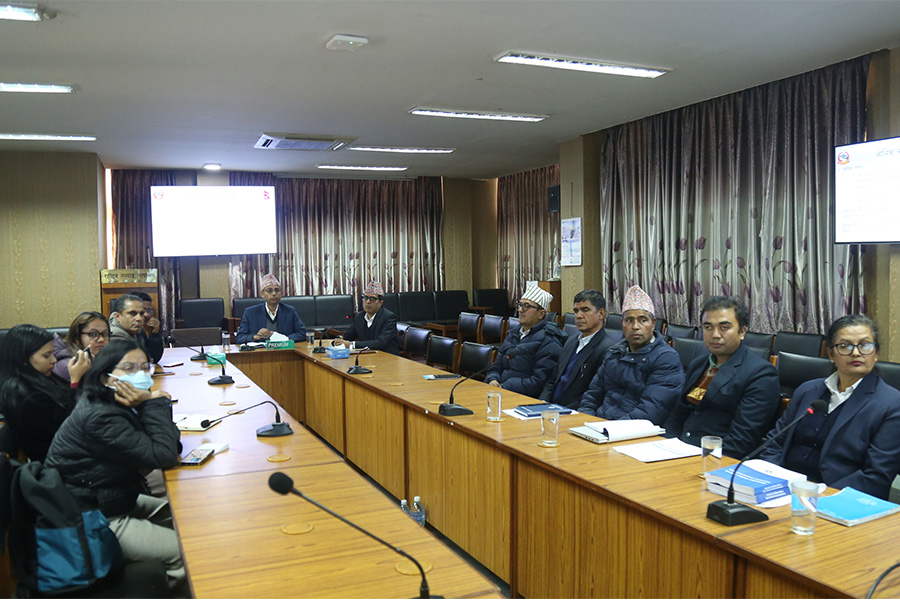
The National Statistics Office (NSO) will conduct the census from March 15 to July 16, 2026, under the theme “Economic Census for Measuring the Economy.” The census schedule, official logo, and theme were formally unveiled at a programme held in Kathmandu on Monday.
According to NSO spokesperson and Deputy Chief Statistician Dhundiraj Lamichhane, the census will serve as a critical foundation for formulating data-driven economic policies. He noted that the detailed results of the census will be published in phases starting from Fiscal Year 2026/27.
The nationwide exercise will collect essential data on the number and nature of economic establishments, levels of investment, employment generation, production activities, and service flows. Coverage will include industries, trade and business firms, service providers, cooperatives, as well as public and private institutions operating across the country.
Chief Statistician Dr Kamal Prasad Pokharel highlighted the broader significance of the census, stating that it would strengthen Nepal’s overall economic statistics system. “The economic census is expected to make vital contributions to both short-term and long-term government economic plans, investment promotion, and employment generation,” he said.
Officials said the census will also play a key role in improving the accuracy of gross domestic product (GDP) estimates, revising the base year of national accounts, supporting policy formulation, and assessing progress toward government-set economic targets.
Nepal carried out its first National Economic Census seven years ago. That census recorded 923,356 business establishments nationwide, employing approximately 3.228 million people. It also revealed that nearly 30 percent of business firms were managed by women, with formal and informal establishments existing in almost equal proportions.
For the upcoming census, economic activities will be classified into 21 sectors in line with international industrial standards. Detailed data will be collected on 18 of these sectors to better assess their contribution to the national economy and to provide a more accurate picture of Nepal’s evolving economic structure.