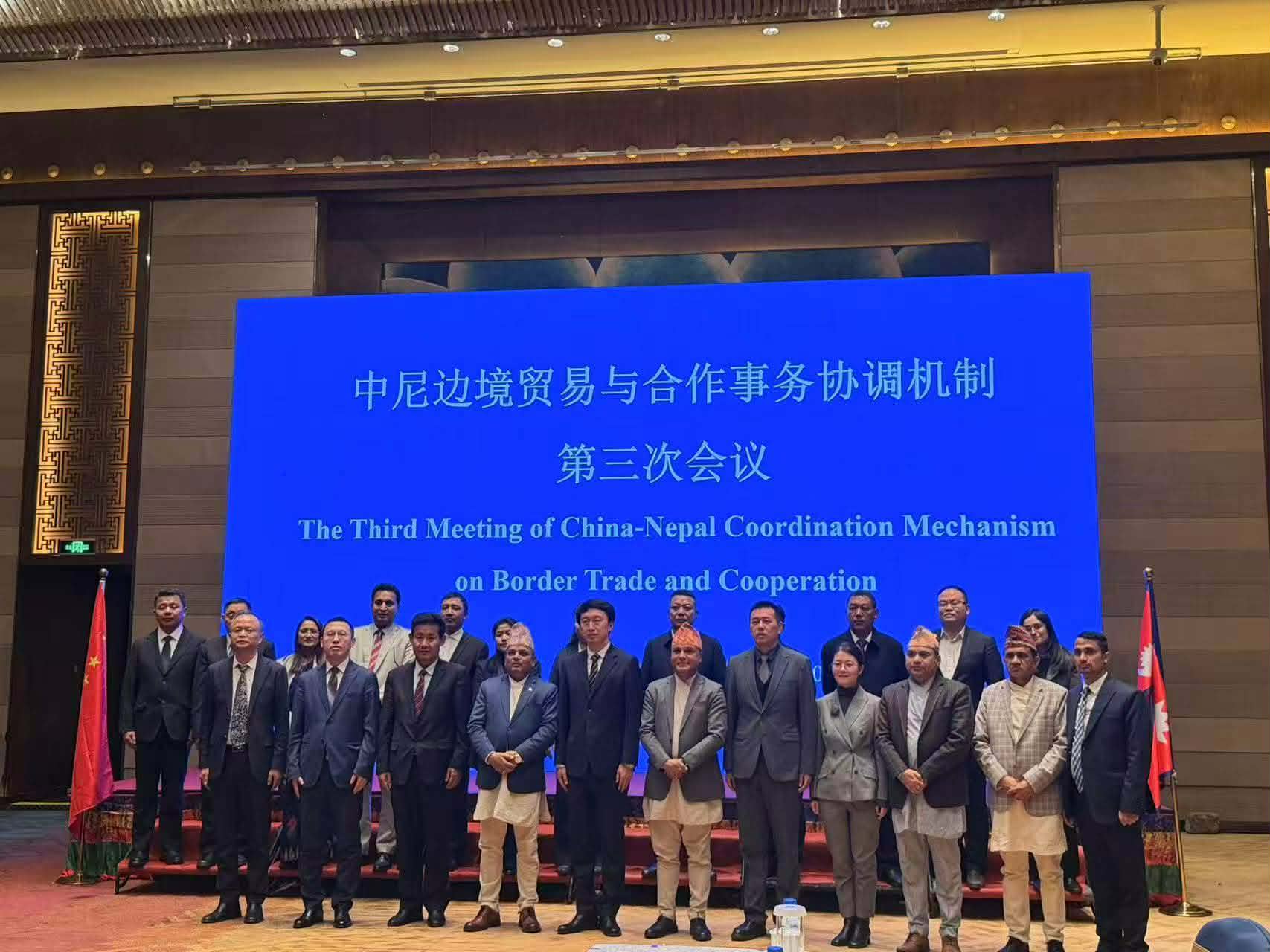
In a recent meeting held in Lhasa, the capital of China’s Tibet Autonomous Region, Nepal and China discussed the potential resumption of the passenger bus service between Kathmandu and Lhasa. The proposal was presented during the Nepal-China border trade and cooperation mechanism meeting, with both sides recognizing the significance of renewing this vital transport link.
The delegation from China, led by Mr. Li Qiang, emphasized the need for consultations on technical, administrative, and legal aspects before the service can be restarted. Specific areas highlighted by China included passenger transportation demand, possible routes, vehicle entry requirements, Nepal’s transport regulations, and mechanisms for resolving potential disputes.
Should the Lhasa-Kathmandu bus service resume, it is anticipated that it will strengthen tourism, people-to-people exchanges, and bilateral relations. The service is expected to particularly promote religious, cultural, and adventure tourism.
The Nepalese delegation, headed by Dr. Ramprasad Ghimire, Secretary of the Ministry of Industry, Commerce, and Supplies, responded positively to the proposal, confirming that necessary internal procedures will be initiated in coordination with relevant ministries and agencies. However, discussions also highlighted the need to address road conditions, weather-related risks, safety measures, and infrastructure readiness before a final decision is made.
The meeting also covered other areas of bilateral cooperation, including trade facilitation, infrastructure development, investment cooperation, and border management. A proposal was made to allow mutual access for freight vehicles, which would help reduce transportation time and customs costs.
China also urged Nepal to streamline the process for importing silage grass. The Ministry of Agriculture and Livestock Development was advised to register the relevant companies with Chinese customs authorities, and to provide facilities such as green channels and exemptions from sample testing.
Additionally, the export of processed goat meat from Nepal to China was discussed. Nepal proposed formally applying to China, and once the necessary standards set by the World Organization for Animal Health are met, modern slaughterhouses and processing industries would be registered with Chinese customs.
The enhancement of customs and transportation capacity at the Liji (Mustang) checkpoint and improved coordination in inspection and quarantine processes were also discussed, with a focus on effective management of driver and transportation systems.
Nepal called for the expeditious operation of the Chentang (Kimathanka) and Rivu (Olangchung) border posts, emphasizing the need for faster infrastructure development. The completion of the Rasuwagadhi-Syabrubesi road project, funded by China, was also prioritized.
A proposal was made to expedite the establishment of a sister district relationship between Jilong (Kerung) in China and Rasuwa in Nepal, with both countries agreeing to advance internal procedures to establish a cross-border tourism cooperation area.
In addition, discussions included the mutual recognition of medical qualifications between Nepal and Tibet and the exchange of traditional Chinese medicine. China also urged Nepal to ensure the timely transfer of remaining land for the China-Nepal high-tech agricultural industrial demonstration park project.
Both countries agreed to strengthen cooperation on border security and law enforcement, with a focus on controlling illegal activities. China also urged Nepal to accelerate the Border Management Cooperation Agreement and the mutual recognition of Authorized Economic Operators (AEOs).
China reminded Nepal to ensure that exported goods meet the necessary technical standards and inspection requirements.
The Nepalese delegation, led by Dr. Ramprasad Ghimire, Secretary of the Ministry of Industry, Commerce, and Supplies, and Bambahadur Mishra, Deputy Governor of Nepal Rastra Bank, visited Lhasa to participate in the high-level discussions aimed at enhancing bilateral trade and cooperation.
( Extracted from Janaastha )