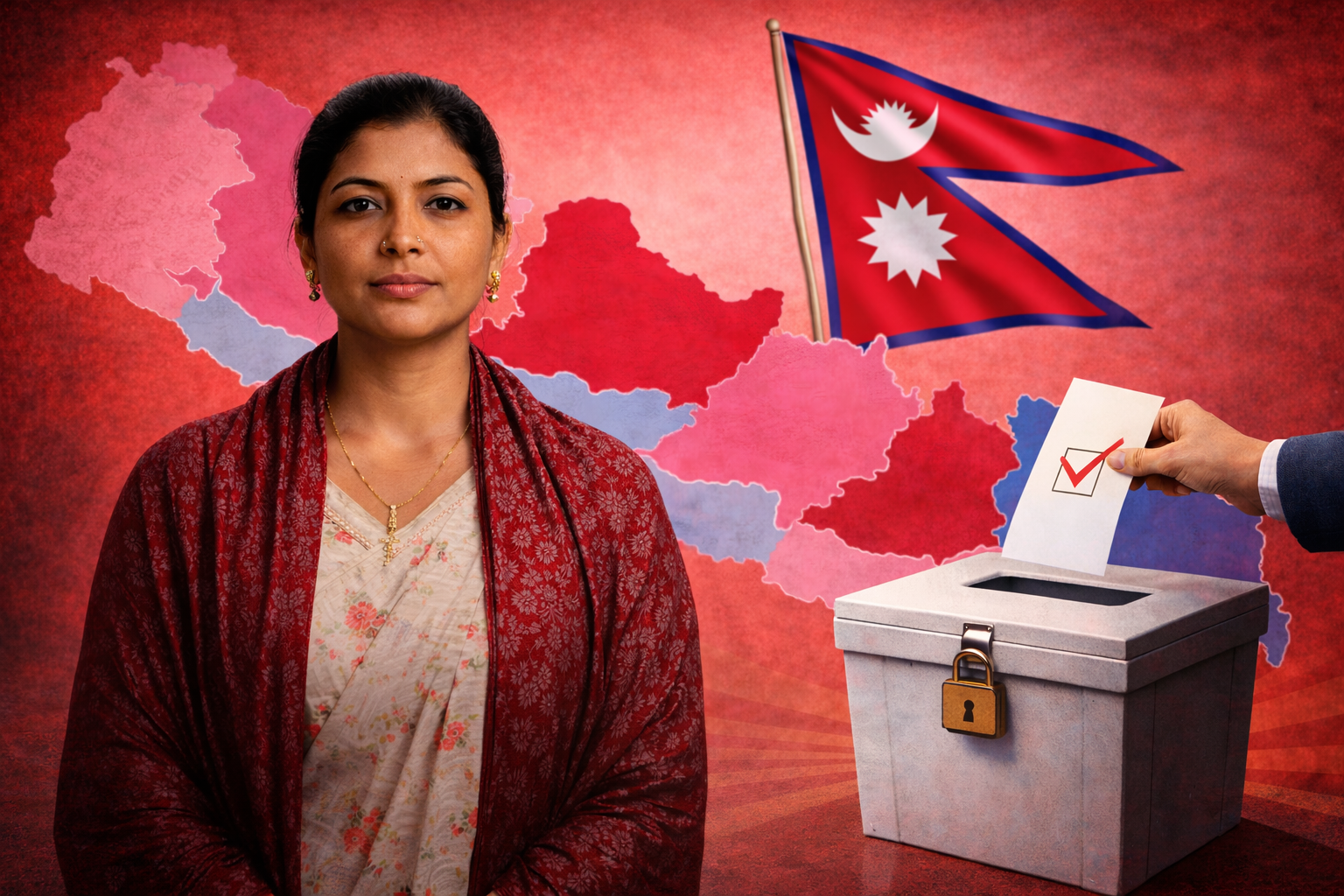
Kathmandu – As election fever is felt in Kathmandu in the lead-up to the March 5 House of Representatives (HoR) election, a concerning trend has been observed regarding gender representation. Despite enthusiastic nominations, the underrepresentation of women candidates remains significant.
It has been highlighted by Mr. Kul Bahadur GC, the Assistant Spokesperson for the Election Commission (EC), that gender inclusivity continues to be absent in the election process. Women’s participation in national politics remains weak, with female members within political parties often being sidelined and lacking influence. Women account for only 11.35% of all candidates, showing a slight increase from 9.3% in the 2079 BS election.
Out of 3,486 candidates vying for the 165 first-past-the-post (FPTP) seats, 3,089 are men, 396 are women, and one represents another gender. Experts have suggested that societal patriarchy and a male-dominated political culture are the primary barriers to gender parity. More campaign resources and favorable strategies continue to be allocated to male candidates, perpetuating gender imbalances.
It has been pointed out by Mr. GC that male dominance within parties is evident. “Even women within the parties have not been empowered by male leadership,” he stated. He further emphasized that the protectionist mindset remains a significant roadblock for women’s advancement, urging that political parties be called upon to boost female representation through proportional representation, as mandated by law for 33% female participation.
Among major political parties, the Nepali Congress (NC) has fielded 11 women candidates, the Communist Party of Nepal-Unified Marxist Leninist (CPN-UML) 10, the Rastriya Swatantra Party (RSP) 15, the Nepal Communist Party (NCP) 12, and the Rastriya Prajatantra Party (RPP) 9. It has been observed that both new and established parties continue to prioritize male candidates, highlighting the lack of female leadership within these organizations.
It was explained by Ms. Radhika Khatiwada, a respected lawyer, that financial constraints also contribute to limiting women’s participation in direct elections. “Women may shy away from direct elections due to a lack of resources, and parties often restrict women to proportional representation,” she said.
It was noted by Ms. Manushi Yami Bhattarai from the Pragatisheel Loktantrik Party that political parties hesitate to field women candidates due to their limited access to campaign funds. “Even when women run, they face lower chances of winning due to financial barriers. While legally, direct and proportional representatives hold equal status, in practice, proportional candidates are often considered secondary,” she stated.
The issue of gender equality was further highlighted when Ms. Srijana Malla of the Nepali Congress withdrew her name from the proportional representation list to contest directly, signaling a desire for equal competition for women in politics.
In terms of age distribution, it has been observed that the majority of candidates (46.18%) are between 36 and 50 years old, indicating a preference for experienced leaders. Candidates aged between 51 and 65 make up 31.26%, those aged 25-35 represent 16.7%, and those over 65 account for 5.76% of all candidates.
Despite some progress, the underrepresentation of women in this election highlights the need for deeper reforms within political parties and society to ensure a more inclusive and balanced political landscape.