
Kathmandu – The Nepal Army has started field deployment from today to strengthen security arrangements for the House of Representatives elections scheduled for March 5.
The security operation is being carried out under the Integrated Security Plan 2082 BS, with coordinated mobilization of the Nepal Army, Nepal Police, Armed Police Force (APF), and the National Investigation Department to ensure the elections are conducted in a free, fair, impartial, and fear-free manner. Election Police, recruited specifically for election duties, will also be deployed.
As part of the layered security framework, Nepal Police and Election Police will handle the inner perimeter of polling stations, while the APF will be responsible for the second-level perimeter in coordination with the Army and Police. The Nepal Army will oversee outer-level security across all 165 constituencies, with bases established as required and joint patrols conducted when necessary.
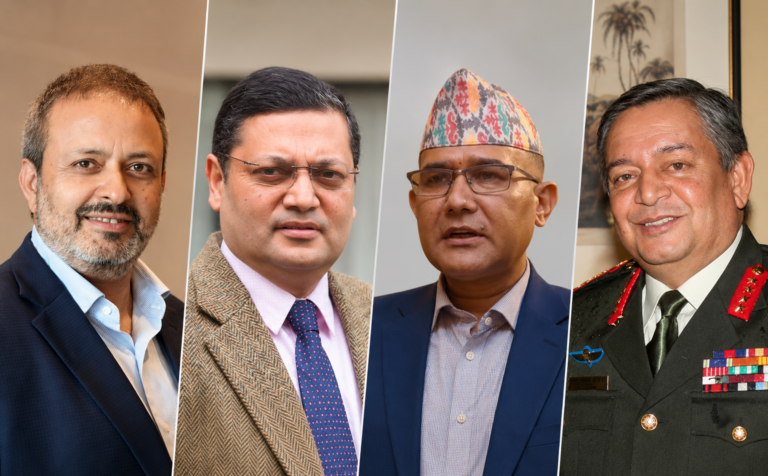
The deployment of the Nepal Army was approved by President Ram Chandra Poudel, following a recommendation from the Prime Minister and a decision by the Council of Ministers. The Army is preparing to mobilize 80,000 personnel in three phases, in line with the approved security plan.
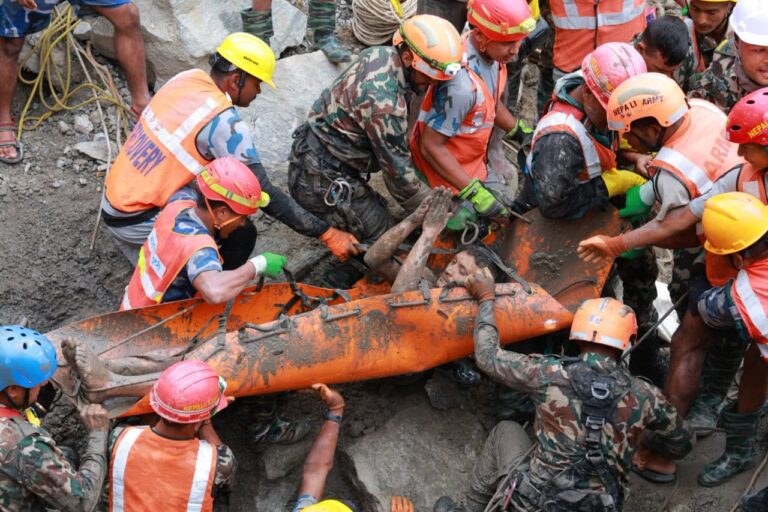
Prior to polling day, the Nepal Army will carry out key election-security responsibilities, including the printing and transportation of ballot papers, security of polling stations and election materials, transport of ballot boxes, and protection of vote-counting centres. Coordination will also be maintained with Nepal Police and the APF to secure critical infrastructure such as airports and prisons.
According to the Election Commission, 3,406 candidates are contesting the elections, while approximately 18.9 million voters are registered nationwide. Polling will take place at 23,112 polling stations across 10,967 locations. To ensure adequate security, 77,000 Nepal Police personnel will be deployed, supported by 133,000 Election Police. Polling stations have been classified as 2,844 normal, 4,444 sensitive, and 3,688 highly sensitive, based on social security risk, with security measures strengthened accordingly.