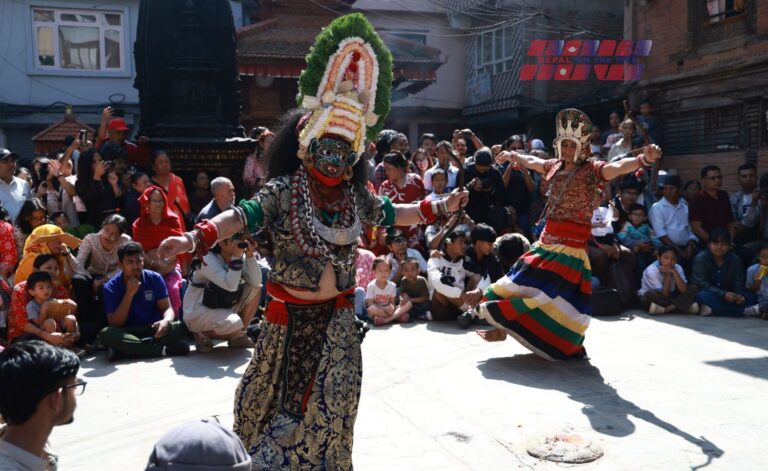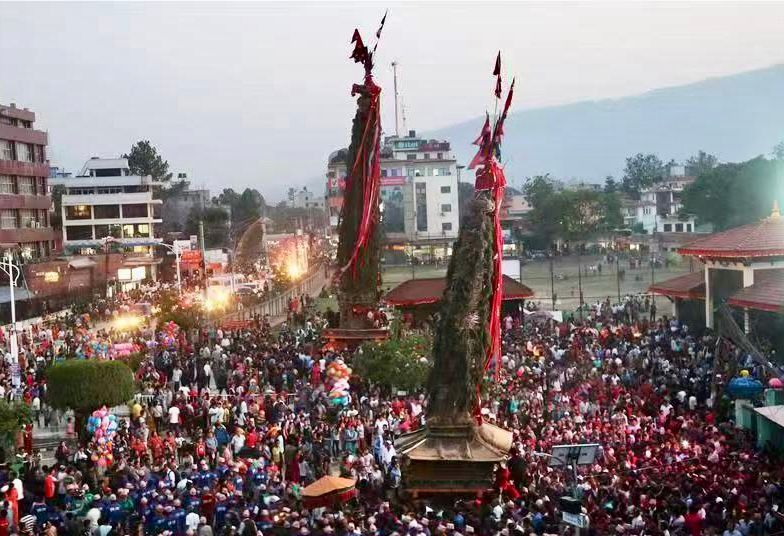
Lalitpur-In the dense, historic streets of Lalitpur, where temple bells echo through ancient courtyards and incense drifts into the open air, a towering wooden chariot begins its slow and deliberate journey. This is Rato Machhindranath Jatra, one of Nepal’s oldest and longest running festivals, and a powerful expression of how culture, religion and nature remain deeply intertwined in everyday life.
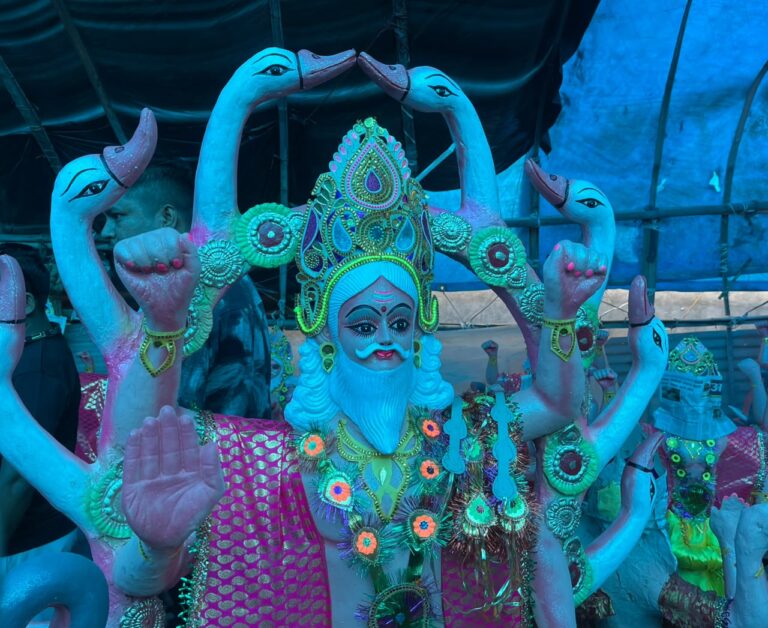
Each year, for nearly two months, this festival transforms the city into a moving landscape of devotion and shared identity. The massive chariot, constructed entirely through traditional craftsmanship, carries the deity Rato Machhindranath through neighborhoods that have preserved their cultural rhythms for centuries. To Hindus, he is the god of rain and prosperity. To Buddhists, he is a manifestation of compassion, often associated with Avalokiteshvara. In this rare convergence, the festival stands as a living example of religious harmony, where belief does not divide but unites.
The story behind the festival blends history and mythology in a way that reflects Nepal’s cultural depth. It is said that the Kathmandu Valley once suffered a prolonged drought that threatened survival itself. Crops failed, water sources dried up and communities struggled. The arrival of Machhindranath was believed to have restored rainfall and revived life. Whether understood as legend or symbolic truth, the narrative reveals a deeper reality. In Nepal, human life has always been inseparable from nature, and this festival is an enduring reminder of that connection.
As the chariot moves through areas such as Pulchowk, Mangal Bazaar, Lagankhel and Jawalakhel, it does more than follow a route. It creates a sacred geography, blessing the land and the people who depend on it. Residents gather along the way with offerings, music and communal meals, turning streets into spaces of worship. The journey becomes a shared experience, not confined to temples but woven into the daily lives of the community.
One of the most striking aspects of the festival is the act of pulling the chariot. Hundreds of people come together, holding the same ropes, moving in unison. There are no divisions of class or status in this moment. The physical effort required to move the structure becomes a symbol of collective responsibility. It reflects a deeper cultural value in Nepal, where community cooperation and shared effort are essential to survival and social harmony.
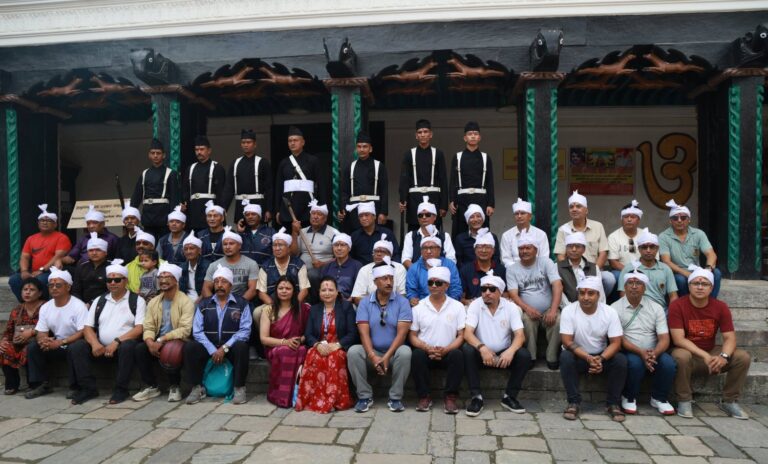
The festival reaches its dramatic conclusion with Bhoto Jatra, a ritual that carries both mystery and meaning. A jewel adorned vest is displayed before the public, linked to a centuries old story of loss and disputed ownership. The question of who the vest belongs to remains unanswered, preserved as part of the tradition since the time of Gunakamadeva. Today, the ritual continues in the presence of national leaders, bridging ancient customs with modern identity.
This moment is not simply ceremonial. It reflects a cultural philosophy that accepts uncertainty and values continuity over final answers. In a world that often seeks clear ownership and resolution, this tradition stands apart, reminding people that not all truths need to be concluded to remain meaningful.
Rato Machhindranath Jatra is more than a religious celebration. It is a living system of culture that connects people to their past, their environment and one another. It demonstrates how tradition can remain relevant without losing its essence. The festival teaches humility by reminding communities of their dependence on nature. It encourages coexistence by bringing different beliefs together under a shared purpose. It strengthens identity not through isolation, but through unity.
What makes this festival truly unique on a global scale is its ability to hold multiple meanings at once. It is spiritual yet social, historical yet alive, local yet universally relatable. It is not performed for an audience but lived by a community. In doing so, it offers a powerful lesson to the world. Culture is not something to display. It is something to practice, to protect and to pass on.
As the chariot completes its journey and the crowds slowly disperse, the significance of the festival does not fade. It continues quietly in the lives of the people who participated, shaping their sense of belonging, their respect for nature and their understanding of unity. In that sense, Rato Machhindranath Jatra is not just an event. It is a reflection of Nepal itself, grounded in tradition, guided by faith and sustained by the enduring strength of community.