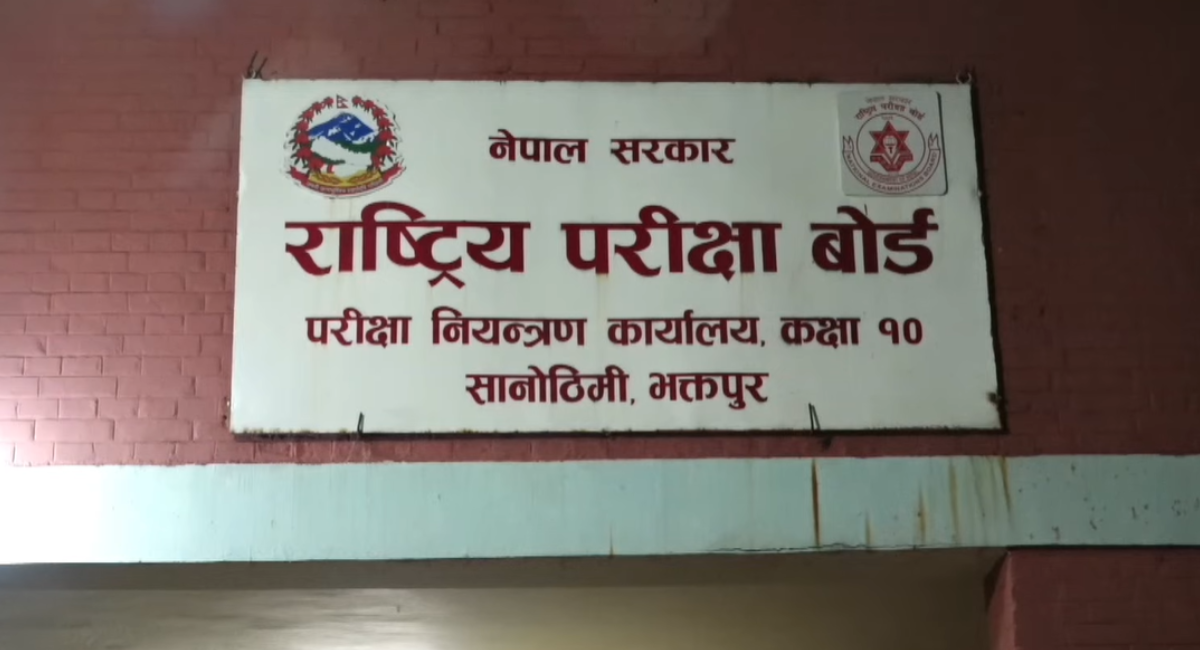
Kathmandu– The National Examination Board has published the results of the Secondary Education Examination (SEE) 2082 within 29 days of the exams, with 65.98 percent of students securing graded results, marking an improvement of 4.17 percentage points compared to last year.
According to the board, 430,667 students appeared in this year’s SEE examinations. Among them, 48,392 students achieved the highest GPA range of 3.60 to 4.00, the largest group among all grading categories.
A total of 80,372 students secured GPAs between 3.20 and 3.60, while 94,222 students obtained GPAs between 2.80 and 3.20. Similarly, 55,977 students scored between 2.40 and 2.80 GPA. The board stated that 5,190 students received GPAs between 2.00 and 2.40, while only seven students scored between 1.60 and 2.00.Province-wise, Bagmati Province recorded the highest number of graded students with 77,113, followed by Koshi with 50,890, Madhesh with 44,592, Lumbini with 44,256, Gandaki with 26,550, Sudurpashchim with 21,664, and Karnali with 19,095 students.Examination Controller Tuka Raj Adhikari said the results were published within the government-mandated one-month deadline. He credited the quicker publication to on-site answer sheet checking at examination centers.
“In previous years, results used to take nearly three months to be published. This year, answer sheets were checked directly at exam centers, which made it possible to release the results within 29 days,” he said.The board also announced supplementary examinations for non-graded students from Asar 1 to Asar 9Education expert Dr. Bidyanath Koirala attributed the improved results to three major factors: intensive school-based preparation programs, answer sheet evaluation at exam centers, and students being familiar with question paper models beforehand.
Despite the improved results, 146,507 students remained non-graded. Madhesh Province recorded the highest number of non-graded students at 31,725 out of 76,317 examinees. Other provinces also reported significant numbers of non-graded students, including 27,893 in Lumbini and 21,704 in Bagmati.Dr. Koirala stressed the need for government plans targeting students who failed to secure graded results. “The government now needs to think about what opportunities can be created for these students and how they can become self-reliant,” he said.
The board has also opened the re-totaling process from Jestha 1 to Jestha 7 for students dissatisfied with their results. Officials said corrections would be made if any errors are found.
The board has yet to release separate pass percentages for community and private schools, as well as the number of students securing a perfect 4.0 GPA. Officials said those details would be made public later.