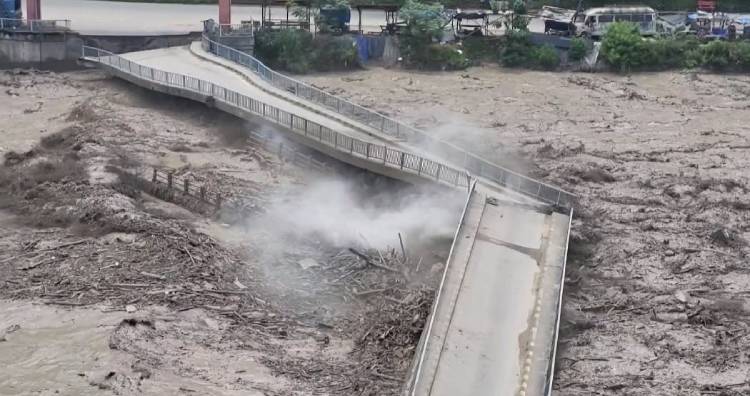
Ten days have passed since the devastating Bhotekoshi flood. But for hundreds of families, time has not brought answers. Their loved ones disappeared at hydropower projects, inside tunnels, underground powerhouses and workers’ camps and many families are still waiting for a phone call that may never come.
For 28-year-old Suyendra Pandey, however, a small hope that his elder brother may still return remains alive.His brother had gone to the Chilime Hydropower Project as part of the rescue effort. Since the flood, the family has had no clear information about where he is or what condition he may be in.That uncertainty has been painful. But Friday morning brought a moment of hope.The rescue of two Nepal Electricity Authority employees alive from the Upper Trishuli-3A Hydropower Project tunnel after 216 hours has given families like Suyendra’s a reason to believe that their loved ones could still be alive.
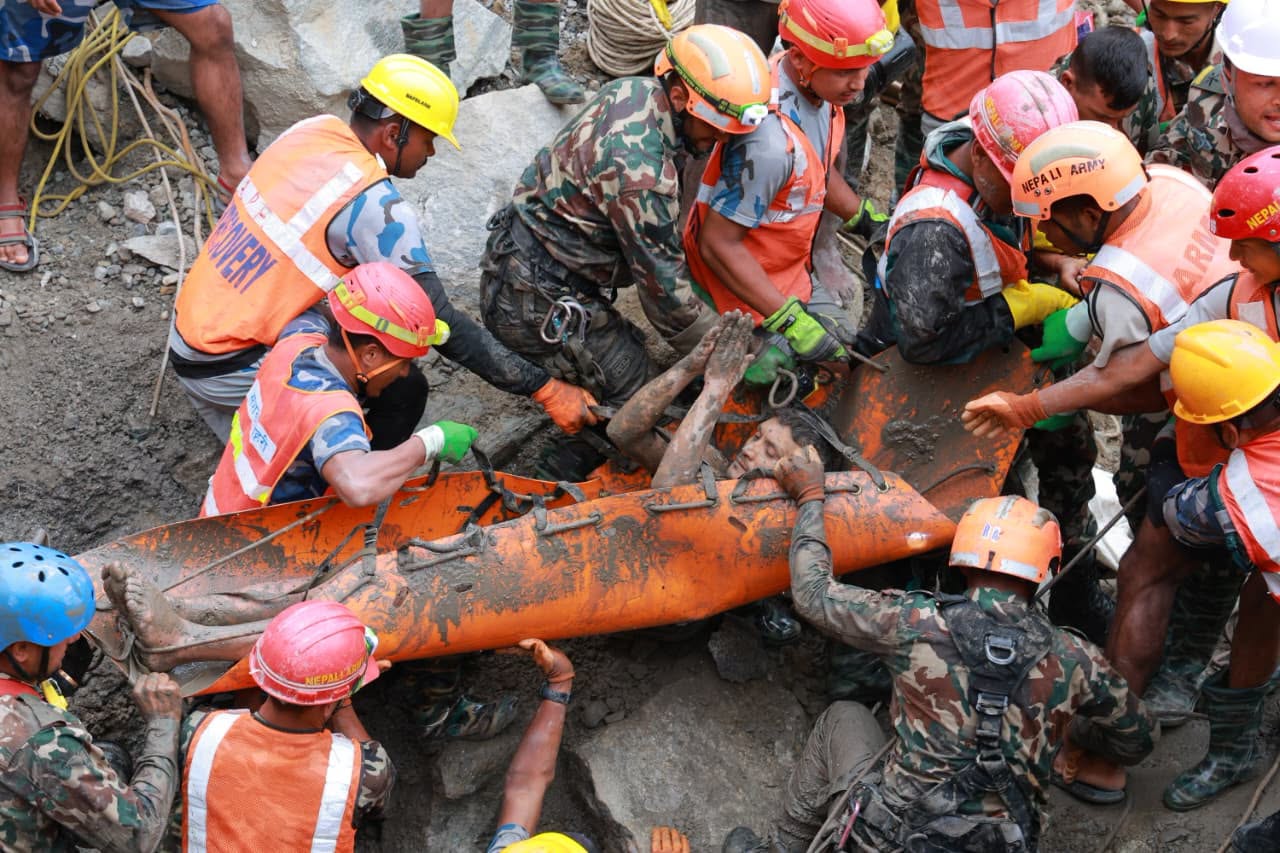
Photo :Nepal Army
Sanjay Shah and Kabir Maharjan were rescued alive from the tunnel on Friday morning, becoming a powerful reminder that survival is possible even after days trapped underground.
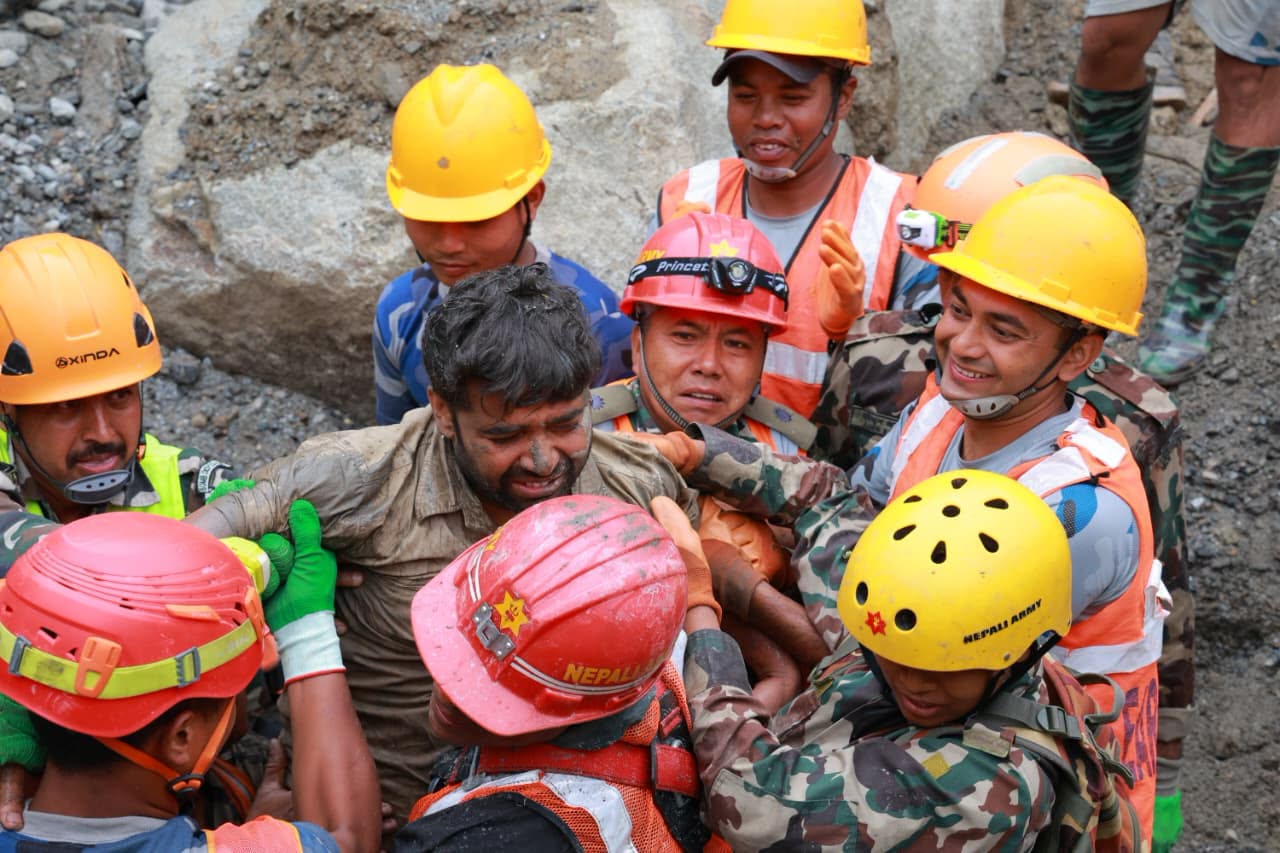
Photo:Nepal Army
For families waiting outside the tunnels, the rescue was more than a success story. It was a message of hope.
Hydropower Projects Become the Centre of a Massive Search
The Bhotekoshi flood has severely affected the hydropower sector in Rasuwa and Nuwakot, with several projects damaged and hundreds of workers reported missing. At some projects, access roads have been completely destroyed. At others, tunnels and underground powerhouses have been filled with mud, rocks, sand and water.Rescue teams are using excavators, compressors, breakers, cameras, drones, rubber boats, trained dogs and specialist teams to reach areas where workers are believed to be trapped. At Upper Trishuli-3A, 42 people were initially reported missing. Two have now been rescued alive and one body has been recovered, leaving 39 people still unaccounted for.At Upper Trishuli-3B, 191 people remain unaccounted for, according to project information.At Upper Trishuli-1, the promoter has reported 557 workers and employees still missing.At RasuwaGadhi Hydropower Project, 93 people remain unaccounted for, while six people are missing from the operational Chilime Hydropower Project.At the Langtang Khola Hydropower Project, two bodies have already been recovered from inside the tunnel.The search is continuing across these projects, but the conditions remain extremely dangerous.
Families Search Hospitals, Tunnels and Morgues
For Dev Kumar Dhami of Sunsari, the search for his 22-year-old daughter has taken him across several districts. His daughter had gone to Rasuwa for work at a hydropower project. After the flood, she disappeared.For the past ten days, Dev Kumar has travelled between Chitwan, Kathmandu and Rasuwa, visiting hospitals and searching for any information about his daughter.
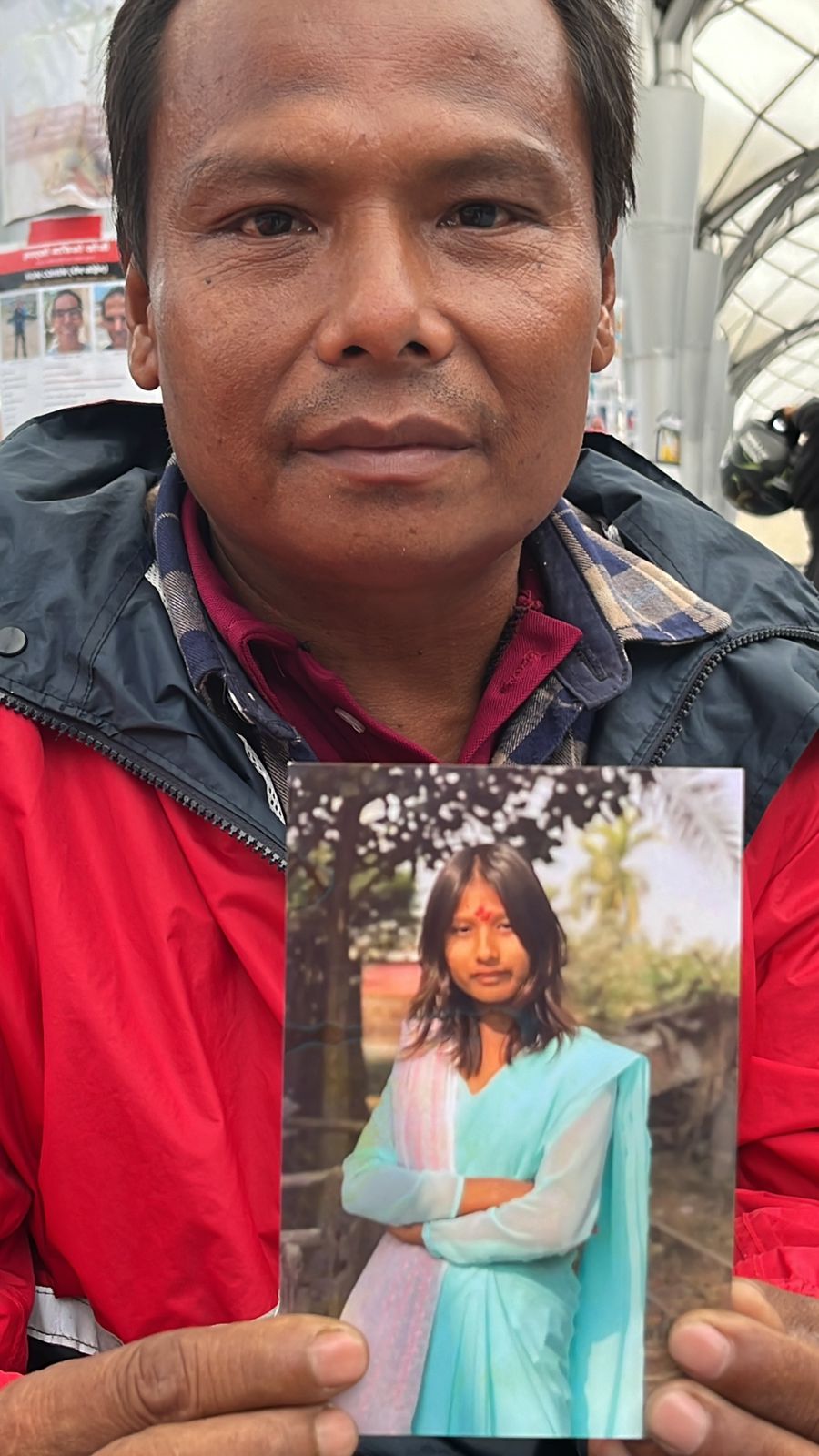 He even travelled to Chitwan to provide a DNA sample in the hope that authorities could identify her if her body had been recovered.But despite the uncertainty, he has not given up hope.He still believes his daughter may be alive.
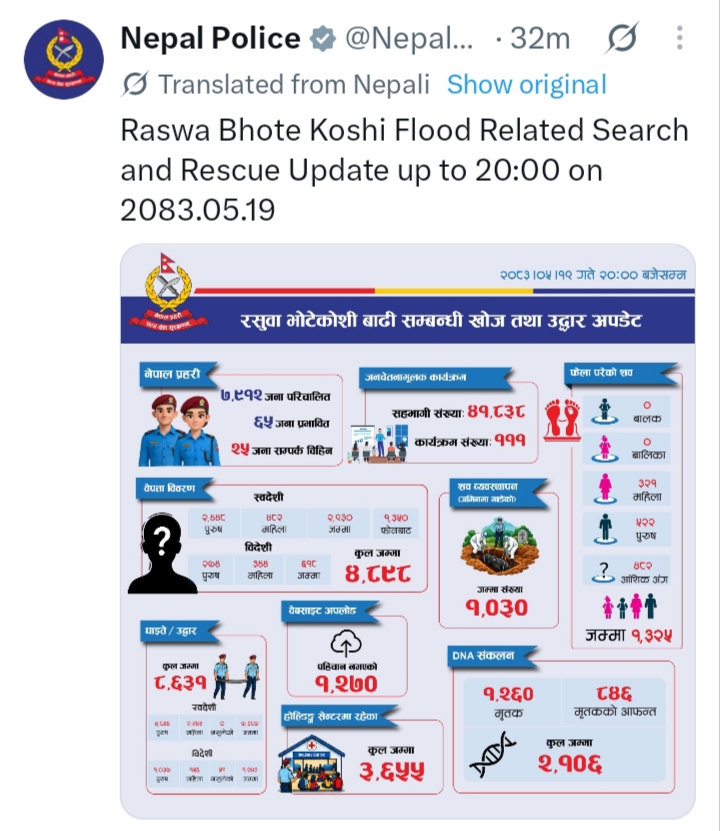
His story reflects the situation of thousands of families who are caught between hope and grief without knowing whether to wait for a rescue or prepare themselves for the worst.1,325 Dead, 4,898 Still MissingThe scale of the disaster is reflected in the latest figures.So far, 1,325 people have died, while 4,898 people remain missing. Authorities have also begun a large-scale DNA collection process to help identify recovered bodies and match them with families searching for their loved ones. DNA samples have been collected from 1,260 deceased people and from 846 family members.For families who have spent days searchinghospitals, rescue centres and affected project sites, DNA identification may be the only way to receive a definitive answer. But for many, that answer is still missing.
The Search Inside the Tunnels Continues
At the hydropower projects, rescue workers are fighting against difficult terrain and damaged infrastructure.At Upper Trishuli-3A, teams are breaking through rocks and clearing mud and debris to move deeper into the tunnel.At Upper Trishuli-3B, rescuers are struggling to bring heavy machinery to the affected areas because the access road has been destroyed.
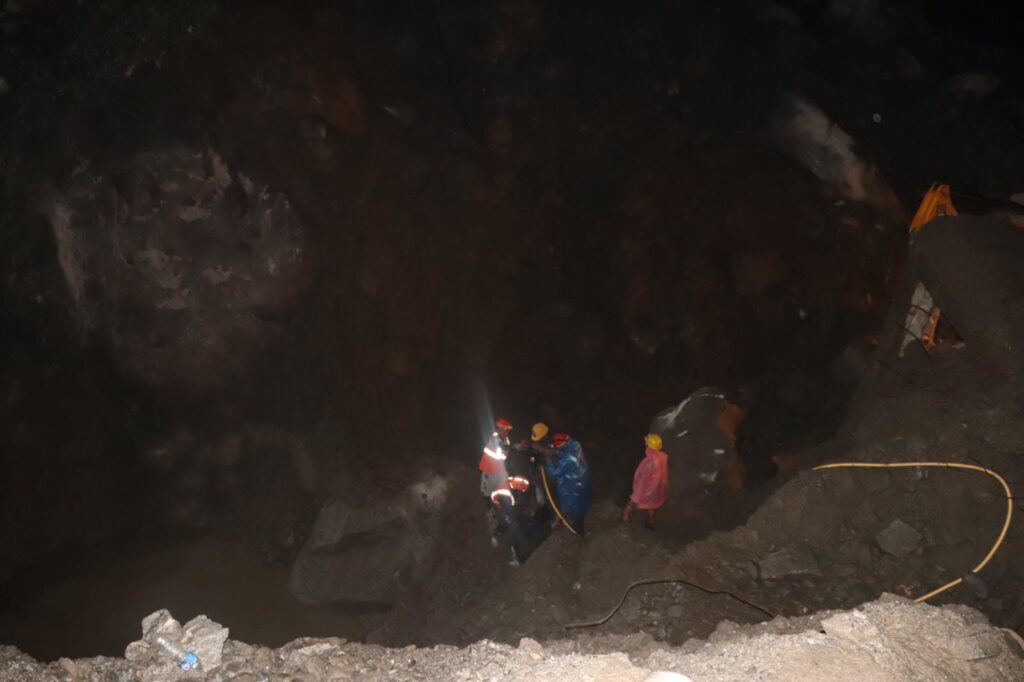 Photo :Nepal Army
Authorities are even considering dismantling a large excavator into smaller parts so it can be transported to the site and reassembled.At Upper Trishuli-1, rescuers have entered through access and audit tunnels, using rubber boats and specialized equipment to search blocked sections.At Chilime and other projects, underground powerhouses and tunnels remain areas of particular concern.
The disaster has also raised serious questions about the safety of underground hydropower infrastructure and the preparedness of projects for extreme flood events.
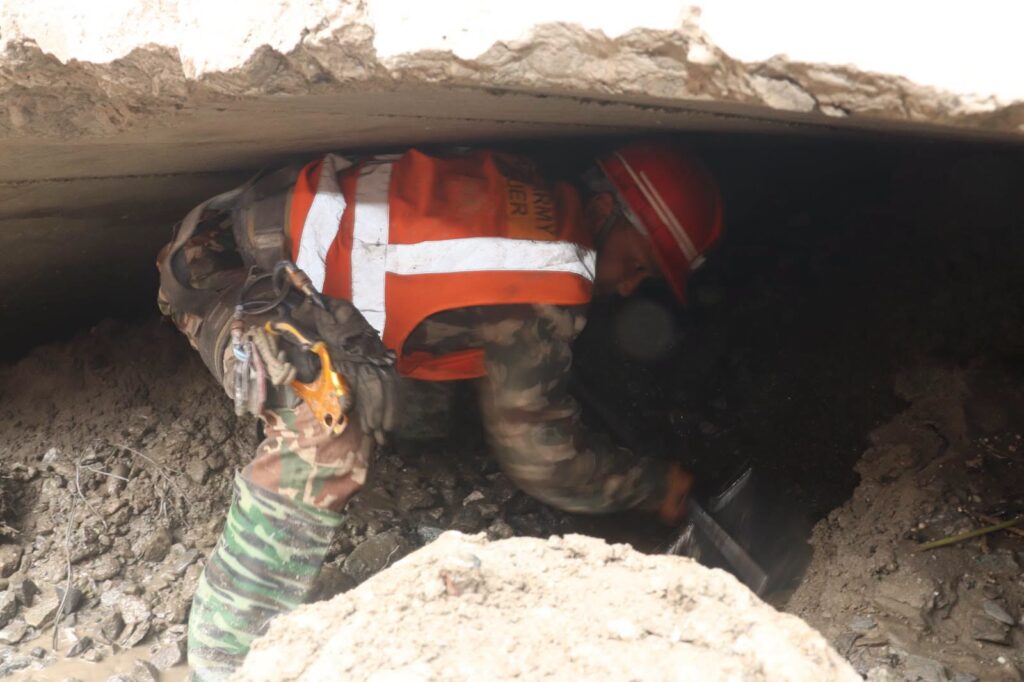
Photo:Nepal Army
A Disaster Measured in Numbers and in Families
The numbers are enormous: 1,325 dead. 4,898 missing. Thousands of families waiting. But behind every number is a person.A brother like Suyendra is waiting for.A daughter like Dev Kumar is searching for.A worker who went to a hydropower project to earn a living.A colleague who went to help rescue others.Ten days later, the search continues.And after two workers were found alive after 216 hours inside a tunnel, families across Rasuwa and Nuwakot are holding on to one message:
The search is not over yet.
For those still waiting outside the tunnels, hope remains the only thing they can hold on to.