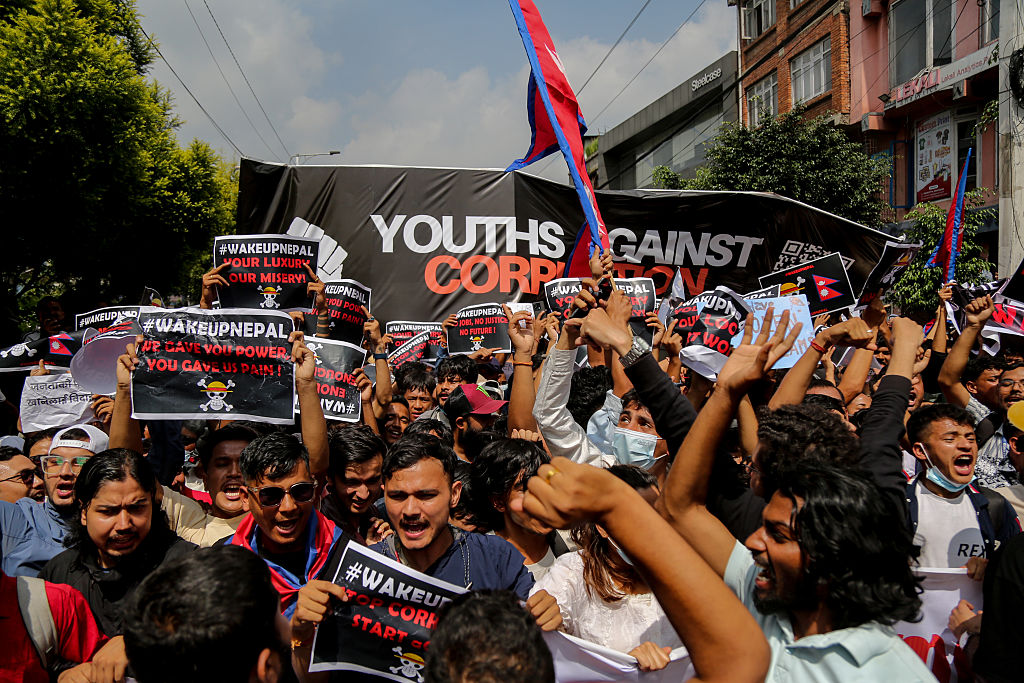
Kathmandu-A year ago, Rakesh Mahato went into the streets believing that something in Nepal could finally change.Young people were protesting a government decision to restrict social media, but their anger quickly grew beyond the digital world. They were demanding an end to corruption and political impunity, better jobs and public services, and a government that would listen to a generation that had grown accustomed to expressing itself online.
The protests would shake Nepal’s political order.Today, Mr. Mahato is still in a hospital bed.
The political landscape around him has been transformed. Governments have changed. New political figures and parties have risen. The demands of the young protesters have become part of the country’s central political debate.
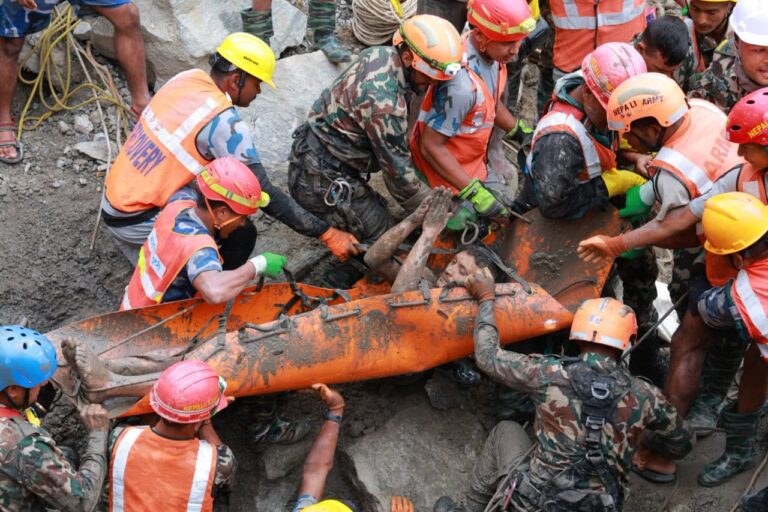
But for Mr. Mahato and many other people injured during the uprising, the revolution has a more intimate measure: hospital bills, unfinished treatment, lost income and the lingering question of whether the sacrifice was worth it.He says he is largely satisfied with what the movement achieved. But he is frustrated that injured protesters still have to repeatedly write to the government asking for the issues that brought them to the streets in the first place to be addressed.
The government has told the hospital that treatment costs will be covered for six months, he says. What happens after that is uncertain.His hope is simple: that the state will not abandon those who were injured while demanding that it change.His story is one of the unfinished chapters of Nepal’s youth uprising.
From a social-media ban to a national revolt
The movement began with a decision that might once have seemed relatively narrow: the government restricted major social-media platforms.For Nepal’s digital generation, however, social media was not simply a place for entertainment. It had become a tool for communication, education, business, employment, information and political expression.The restriction was therefore perceived by many young people as an attack on their freedom of expression and digital rights. On Sept. 8, 2025, young protesters took to the streets of Kathmandu. What began as an online grievance quickly became a broader revolt against corruption, poor governance, political privilege, unemployment, inequality and a political system that many young Nepalis felt had failed them.The first day ended in bloodshed.
Nineteen people were killed after police opened fire on protesters in Kathmandu, including young people who had come out in school uniforms. Anger intensified. The following day, protests spread across the country.
By the end of two days, 76 people, including protesters and security personnel, had died.Government buildings, political party offices, private businesses and the homes of political leaders were attacked. Fires burned through parts of the country’s institutional infrastructure.The uprising succeeded in doing what few expected when young people first gathered in the streets: it forced a dramatic political transition.But it also left behind a trail of destruction that is still visible.
A revolution measured in ashes
A year later, some of the buildings damaged during the uprising still bear its scars.
The International Convention Centre in New Baneshwor which had served as Nepal’s Parliament for nearly two decades remains a particularly powerful symbol.
Built with Chinese assistance in the early 1990s at a cost of about 1.15 billion rupees, the complex had become closely identified with Nepal’s parliamentary history. The first Constituent Assembly, with 601 elected members, met there because there was no other facility large enough to accommodate it.The building was set on fire during the uprising.Parliament has since moved inside the Singha Durbar complex, while the convention center remains a reminder of how quickly political anger can turn against the institutions it seeks to reform.
Singha Durbar itself, Nepal’s administrative heart, was also attacked. Built in 1903 and containing roughly 1,700 rooms, it continued functioning after the fire. But government records were destroyed.The damage went beyond walls and windows.
Court records were burned. About 936,000 case files and documents were destroyed during the unrest, according to records cited in reporting on the aftermath. The judiciary returned to normal operations, but the destruction of files has had consequences for the pace at which cases could be resolved.In the 2021-22 fiscal year, about 65.69 percent of cases were settled. The figure fell to about 55 percent in the following fiscal year.The numbers offer a less visible measure of the uprising: some of its consequences cannot simply be rebuilt with concrete and paint.
The businessman who rebuilt
Few private businesses paid a heavier price than Bhat-Bhateni Supermarket.Four decades ago, businessman Min Bahadur Gurung rented a small shop in Kathmandu’s Naxal neighborhood. From that modest beginning grew one of Nepal’s largest retail chains, employing thousands and becoming a symbol of domestic entrepreneurship.Then came the uprisingTwelve Bhat-Bhateni outlets were completely destroyed by fire, while several others were looted or vandalized. The Naxal headquarters, Maharajgunj, Bouddha and Koteshwor stores and a warehouse in Baluwatar were among those attacked. Major stores in Pokhara, Chitwan, Hetauda, Birtamod, Damak, Biratnagar and Dharan were also destroyed.The company estimates that it suffered about 11 billion rupees in damage.Rebuilding cost even more.According to the company, reconstruction required an additional 20 to 30 percent above the original losses, bringing the total cost to roughly 14 billion rupees.Yet the company did not lay off its workers.Most employees were brought back. Salaries were not cut, and workers received their festival bonuses.For Bhat-Bhateni’s chief operating officer, Panu Poudel, rebuilding was not simply a business decision.The company, he said, had employees and customers who had stood by it. The response was to forget the destruction and start again.A year later, most of its stores have reopened.The supermarket’s recovery is perhaps one of the clearest examples of Nepal’s ability to rebuild after the uprising. But it also raises another question: What about the people who cannot rebuild as easily as a supermarket?
The injured are still waiting
That question brings the anniversary back to people like Mr. Mahato.For those injured during the protests, the political transformation can feel distant from the hospital ward.Badal Rai, president of an association representing injured protesters, says injured people and their families have been neglected.They need continued medical treatment, he says, but they also need jobs and long-term support to rebuild their lives.For Mr. Rai, the problem is not simply that the government has failed to provide enough assistance. It is that the new political order appears, in important ways, to be following the old habits.The movement was supposed to break that cycle.Instead, injured protesters are still asking the government to listen.
What changed?
The political consequences of the uprising were extraordinary.A movement that began with young people objecting to a social-media restriction helped produce a dramatic change in political leadership. New figures emerged, including Balendra Shah, who later became prime minister after winning popular support in the changed political landscape.The movement also opened space for new political forces and made questions of governance and accountability central to national politics.But political change is easier to see than institutional change.Former Prime Minister Sushila Karki, reflecting on the anniversary, said the movement had sent the state and political leadership a clear message: parliamentary arithmetic alone cannot guarantee stability if there is no good governance.Her point goes to the heart of the anniversary.The protesters were not simply asking for new faces.They were asking for a different way of governing.They wanted corruption controlled, public institutions strengthened, political leaders held accountable, jobs created and opportunities made more equal.One year later, some of those demands have entered the language of government.Whether they have entered the machinery of government is a different question.
A generation remembers
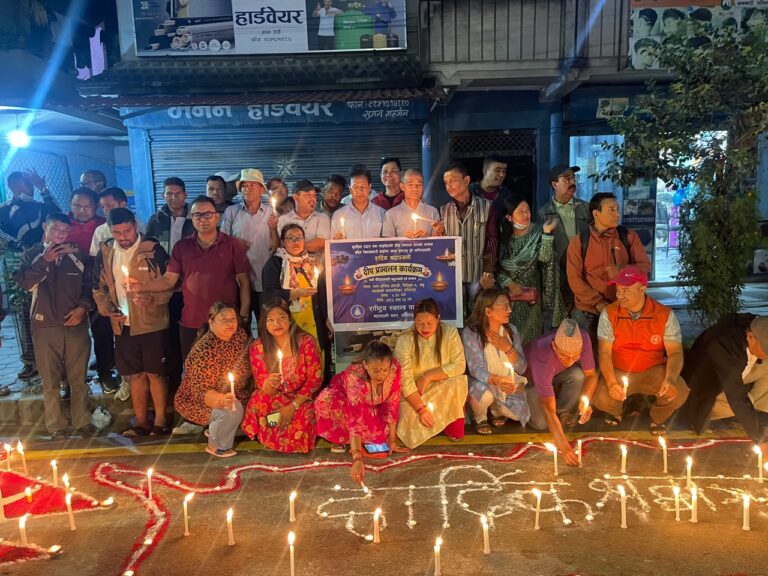
On the anniversary, young people have gathered again in Kathmandu.They came to remember those who died, to recall the hopes of a year ago and to ask what became of the promises made in the streets.Some say they remain hopeful. Others are disappointed.For the injured, the anniversary is more complicated.There is pride in having participated in a movement that changed Nepal.There is also pain.Mr. Mahato’s hospital bed offers a reminder that revolutions are not experienced equally. For some, political change means a new government and new leaders. For others, it means a scar, a medical bill, a lost livelihood or a family still waiting for help.A year after Nepal’s youth uprising, the country has rebuilt some of its buildings, reopened its businesses and changed its political leadership.But the deeper question remains unresolved.
Can a movement that demanded a new way of governing produce a state that treats its own wounded differently from the one that came before it?
For the young people who filled Nepal’s streets a year ago, that may ultimately be the measure of whether their uprising changed the country or merely changed who was in charge.