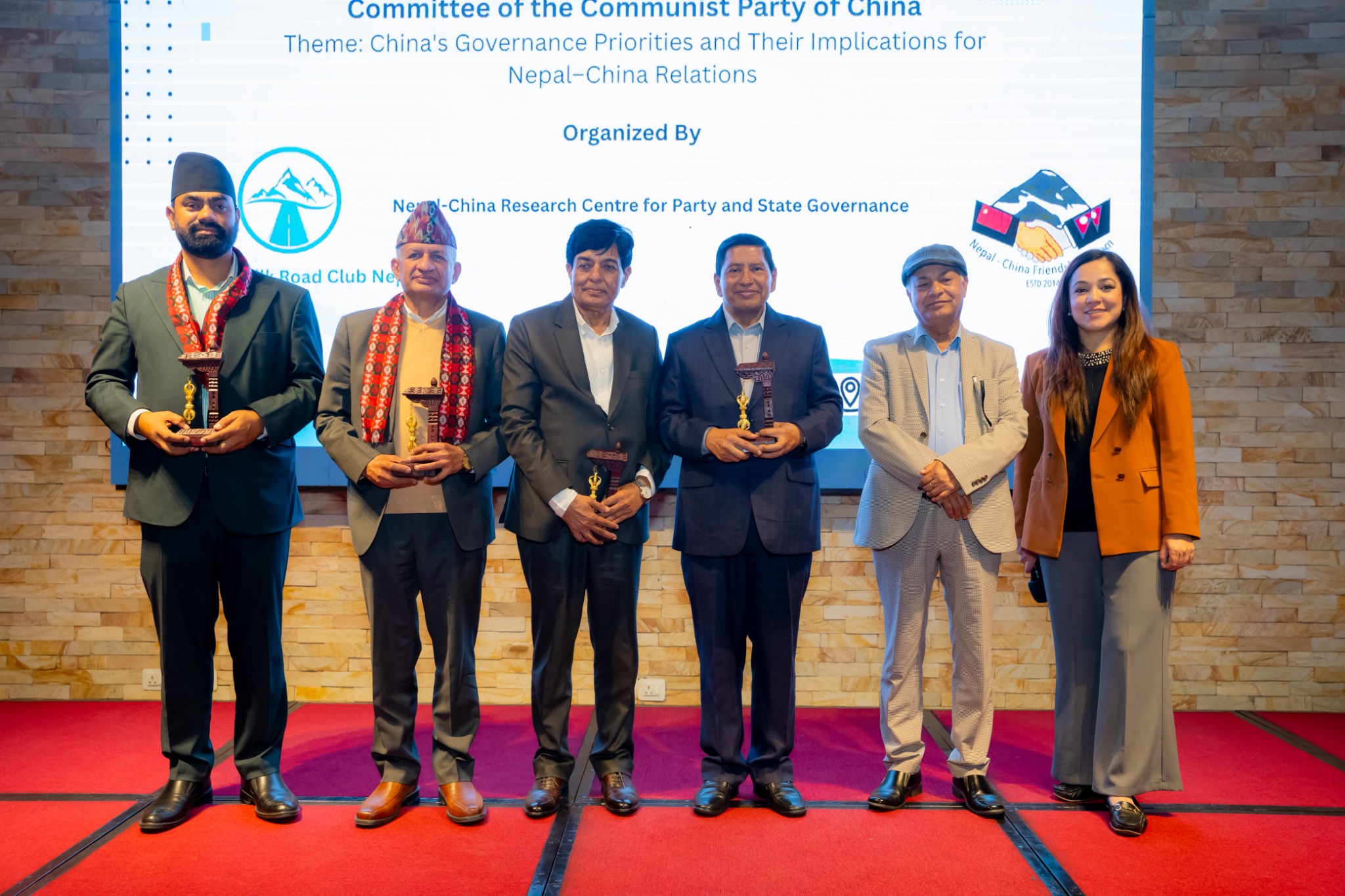
Kathmandu – Political leaders, diplomats, scholars and policy experts gathered in Kathmandu to discuss China’s governance priorities and their potential implications for Nepal-China relations.
The seminar, held at Hotel Malla in Lainchaur on November 2, focused on the Fifth Plenary Session of the 20th Central Committee of the Communist Party of China, held in Beijing from October 26 to 29.
Organized jointly by Friends of Silk Road Club-Nepal, the Nepal-China Research Centre for Party and State Governance and the Nepal-China Friendship Forum, the event explored opportunities for cooperation in trade, connectivity, investment, tourism, education and cultural exchange.
Opening the programme, Bashu Dev Mishra, senior advisor at Friends of Silk Road Club-Nepal and former Nepali ambassador to Sri Lanka, emphasized the importance of constructive dialogue while respecting Nepal’s constitution, democratic system and independent foreign policy.
The discussion brought together representatives from different political parties, including Nepali Congress Central Committee Member Dr. Shovakar Parajuli, Rastriya Prajatantra Party Central Committee Member Khusbu Oli and Rastriya Swatantra Party Central Committee Member Krantishikha Dhital.
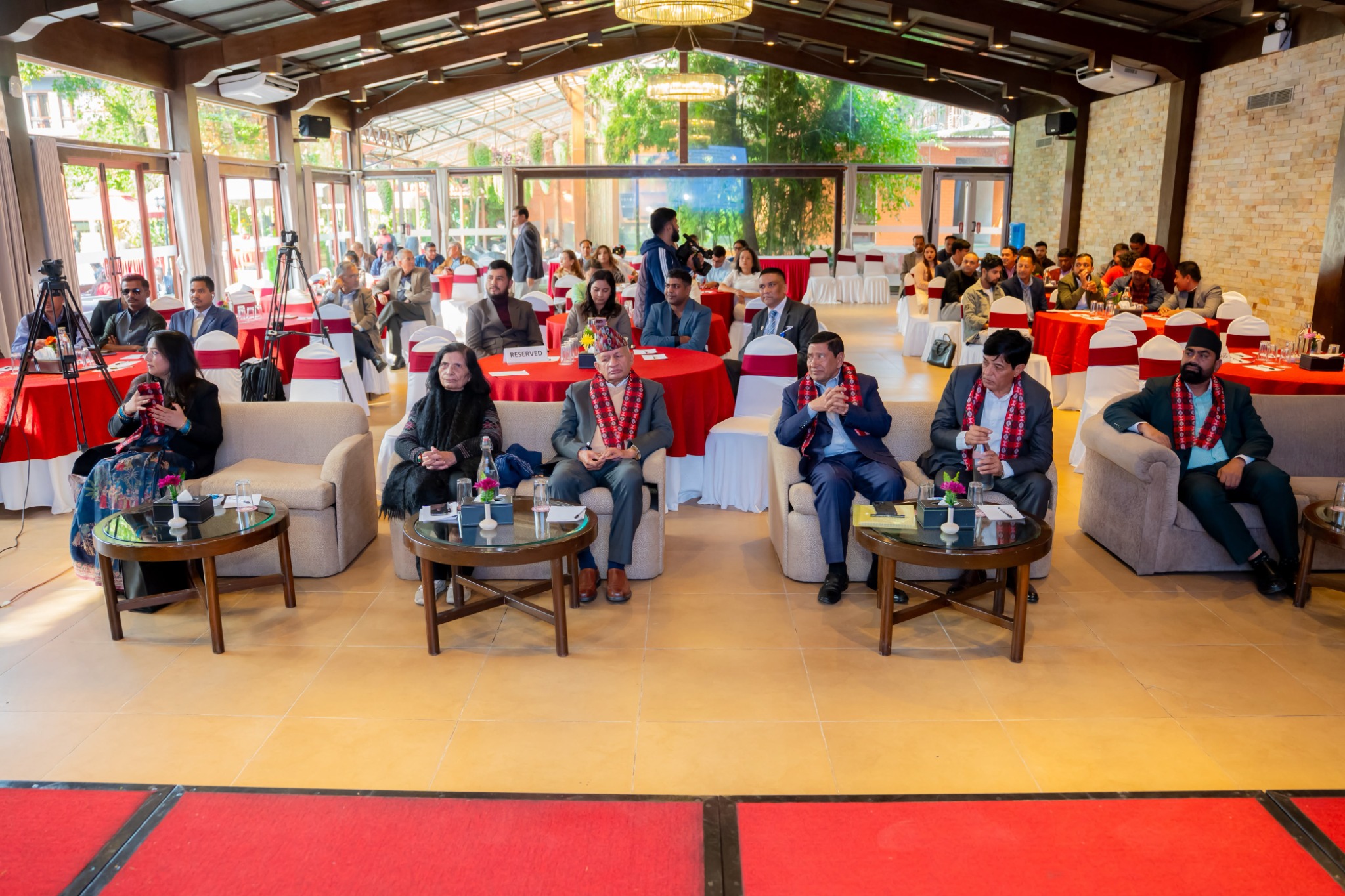
Former Foreign Affairs Minister Pradeep Gyawali and former Deputy Prime Minister Narayan Kaji Shrestha also participated, contributing perspectives on governance, development priorities and international cooperation.
Speakers highlighted the importance of institutional discipline, accountability, corruption prevention and long-term planning. Parajuli emphasized that Nepal should adopt useful practices from other countries without copying their political systems, while maintaining its constitutional and democratic foundations.
Oli said China’s emphasis on institutional reform and discipline offered lessons worth examining for Nepali political parties. Shrestha stressed that maintaining public trust, organizational integrity and accountability was essential for meaningful national progress.
Participants also discussed how sound governance and policy continuity could help turn Nepal-China cooperation into practical achievements. The discussions focused on possible opportunities rather than announcing new bilateral agreements.
The programme concluded with an interactive question-and-answer session, closing remarks and a vote of thanks. Representatives from diplomatic missions, universities, research institutions, government agencies, business organizations and the media attended the event.