Kathmandu- At COP31 in Turkey, Nepal called for climate justice, dedicated funding and a separate action plan for mountain regions. But its proposal for a formal Himalayan agenda was not approved.Nepal arrived at the United Nations climate conference with a clear demand: the world must do more to protect the Himalayas, where rising temperatures are accelerating the loss of glaciers, disrupting water systems and increasing the risk of devastating disasters.
But its effort to secure a separate agenda for mountain regions at COP31 fell short, exposing the difficulty of turning the concerns of vulnerable countries into formal commitments at global climate negotiations.
The conference, which opened on November 9 in Antalya and runs through November 20, has brought together delegates from nearly 190 countries to discuss emissions reductions, climate adaptation, clean energy and financing for countries bearing the greatest costs of a warming planet.
Nepal, Bhutan and Kyrgyzstan had jointly proposed a separate agenda on the effects of rising temperatures in mountain regions, particularly the threat posed by warming beyond the 1.5-degree Celsius threshold. The proposal was not accepted as a formal item on the conference agenda.
After lengthy negotiations that continued until around 2 a.m. local time, the countries reached an understanding to keep the Himalayan issue under discussion through a series of consultations and future dialogues.
Under the arrangement, the COP31 president, Murat Kurum, will continue consultations on the mountain agenda. Two dialogues on mountain regions and climate change are expected to take place in Bonn, Germany, in 2027 and 2028. The countries will also seek to include mountain-related issues in a scientific dialogue under the Subsidiary Body for Scientific and Technological Advice.
A high-level event titled “Advancing the Mountain Agenda,” organized by Nepal, Bhutan, Pakistan, Tajikistan and Kyrgyzstan, is scheduled for November 12 during the conference.
The understanding offers Nepal a way to keep the issue alive, but it falls short of the formal negotiating track the country had sought. Nepal is now hoping that mountain concerns will be reflected in the final cover decision of COP31 or lead to a dedicated programme. Any such outcome would require agreement among the participating countries.
Nepal calls for climate justice
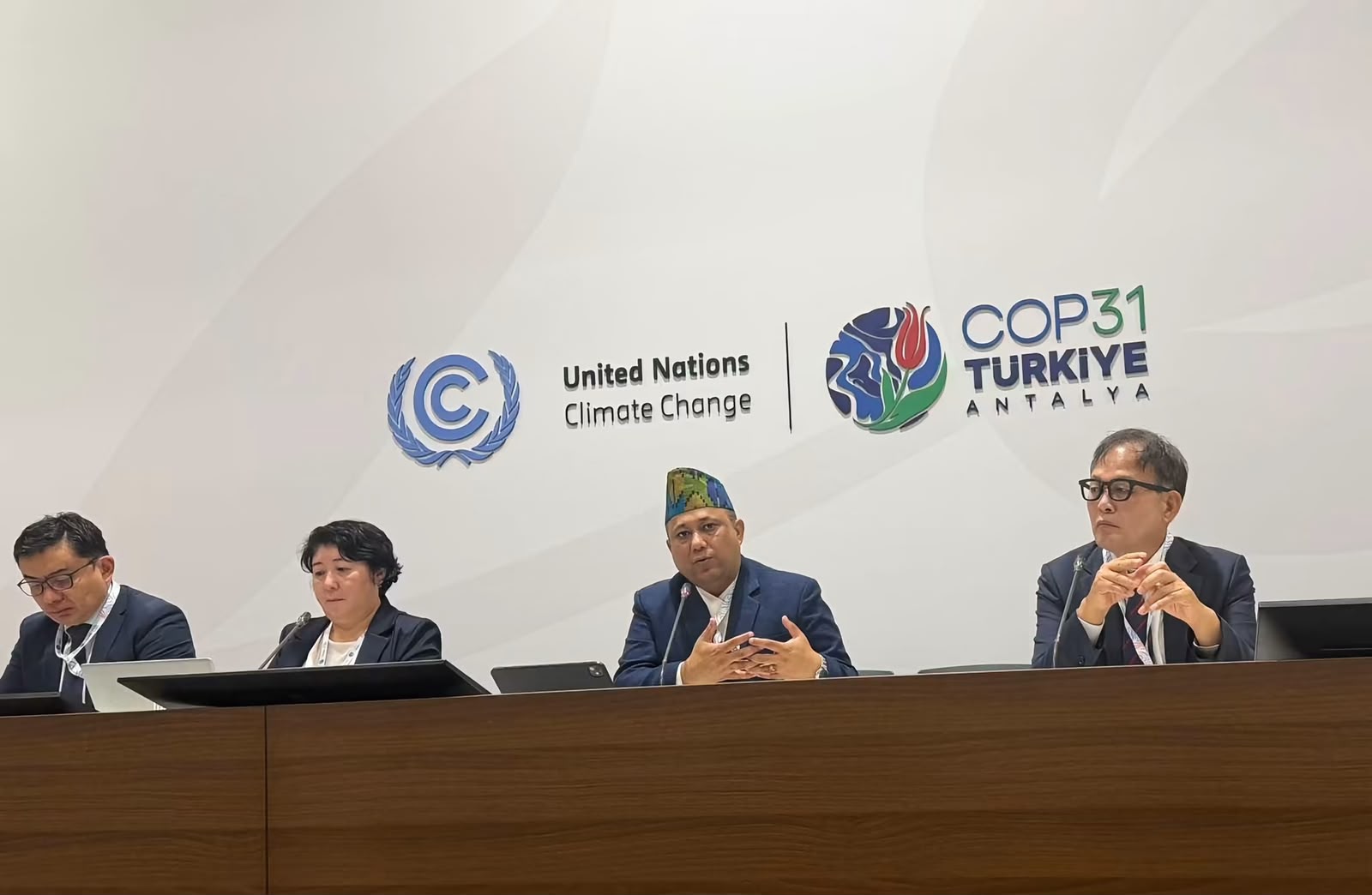
Addressing the opening plenary, Nepal’s Foreign Minister, Shishir Khanal, urged the international community to recognize the disproportionate risks facing Himalayan countries.
Nepal contributes negligibly to global greenhouse gas emissions, he said, yet its mountains and the communities that depend on them are experiencing the consequences of climate change at an accelerating pace.
Mr. Khanal called for three measures: giving mountain regions priority in efforts to limit global warming to 1.5 degrees Celsius; developing a separate climate action plan for mountain areas; and incorporating mountain-specific indicators into global adaptation targets and the new collective quantified climate finance goal.He also pointed to Nepal’s efforts to address climate change, including community-managed forests, hydropower development and the growing use of electric vehicles. More than 70 percent of newly purchased consumer vehicles in Nepal are electric, according to the figures presented by the minister.
“Sympathy must be converted into systems and commitments into implementation,” was the message behind Nepal’s appeal for stronger international support.
Mr. Khanal also raised concerns about changes in snow cover, glaciers and frozen water systems, warning that these shifts are increasing disaster risks in the mountains and threatening communities downstream.
Referring to the recent disaster in the Bhotekoshi area, he described the devastation as a “Himalayan tsunami.” He called for easier access to international climate finance and the Loss and Damage Fund for countries suffering the consequences of climate change despite contributing little to the problem.
A pavilion to highlight Nepal’s climate challenges
On the opening day, Mr. Khanal inaugurated Nepal’s pavilion at the conference, which is intended to showcase the country’s climate commitments, biodiversity protection, community-based adaptation efforts and need for international support.The pavilion is also being used to draw attention to the vulnerability of Himalayan ecosystems and the financial resources needed to protect them.
For Nepal, access to climate finance is a central concern. Countries facing climate-related losses often encounter difficulties in securing timely and accessible funding, even as floods, landslides and other disasters place growing pressure on communities and public infrastructure.
Climate finance and global commitments under scrutiny
The Himalayan agenda is only one part of a wider debate at COP31 over who should pay for climate action and how quickly countries must reduce emissions.
United Nations Secretary-General António Guterres urged governments to accelerate emissions cuts, expand clean energy and deliver on climate finance commitments. Simon Stiell, the executive secretary of the United Nations climate change body, warned that global progress remained far behind what was needed.The conference has also drawn attention because several major world leaders, including President Donald Trump of the United States, President Xi Jinping of China, Prime Minister Narendra Modi of India, President Emmanuel Macron of France and Chancellor Friedrich Merz of Germany, are not attending the leaders’ gathering. Their countries, however, have sent ministerial or negotiating delegations, with the exception of the United States federal government, which has not sent an official delegation for the second consecutive year.
More than 90 heads of state and government are expected at the leaders’ summit on November 11 and 12, according to the information provided ahead of the gathering.The absence of several major leaders comes as countries face growing pressure to turn the goals of the Paris Agreement into concrete action. The agreement aims to keep global warming well below 2 degrees Celsius while pursuing efforts to limit the increase to 1.5 degrees.
Turkey, the host country, has promoted a campaign to increase electricity’s share of the global energy mix from about 21 percent to 35 percent by 2035. Environmental groups have questioned whether that expansion will be powered by clean energy.
A continuing effort for the Himalayas
Nepal has been raising the concerns of mountain countries at successive climate conferences, including COP28 in Dubai in 2023, COP29 in Baku in 2024 and COP30 in Belém, Brazil, in 2025. Previous efforts also failed to secure a separate formal agenda.
The latest outcome is therefore both a setback and an opening. The proposal did not become an official negotiating item, but the consultations, planned dialogues and high-level event provide further opportunities to press the case.
For Nepal, the challenge now is to ensure that the concerns of mountain communities do not remain confined to conference speeches and side events. The country is seeking a place for the Himalayas in global climate decisions and financial commitments that can help protect the people and ecosystems already living with the consequences of a warming world.