More than 800 days of joint research and field trials culminate in a successful harvest, opening new prospects for agricultural technology cooperation between Nepal and China.
Chitwan — A China-Nepal hybrid rice demonstration project in Chitwan has recorded a seasonal yield of 6.86 tonnes per hectare, marking a significant achievement in agricultural research and technology cooperation between the two countries.
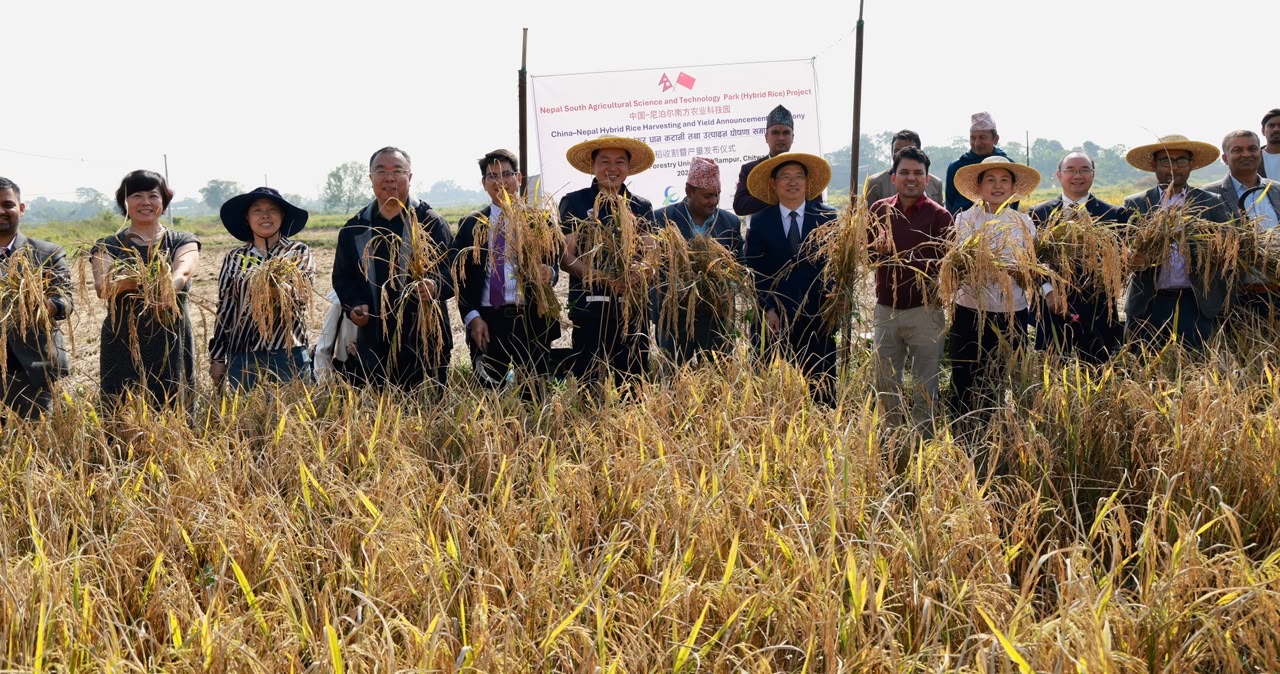
The result was announced on Wednesday during a harvesting ceremony at the China-Nepal Southern Agricultural Science and Technology Park, a Chongqing-supported agricultural demonstration centre in Chitwan. Agricultural scientists, government representatives, university officials and nearly 100 local farmers gathered to witness the outcome of more than 800 days of joint research, field experiments and crop management.
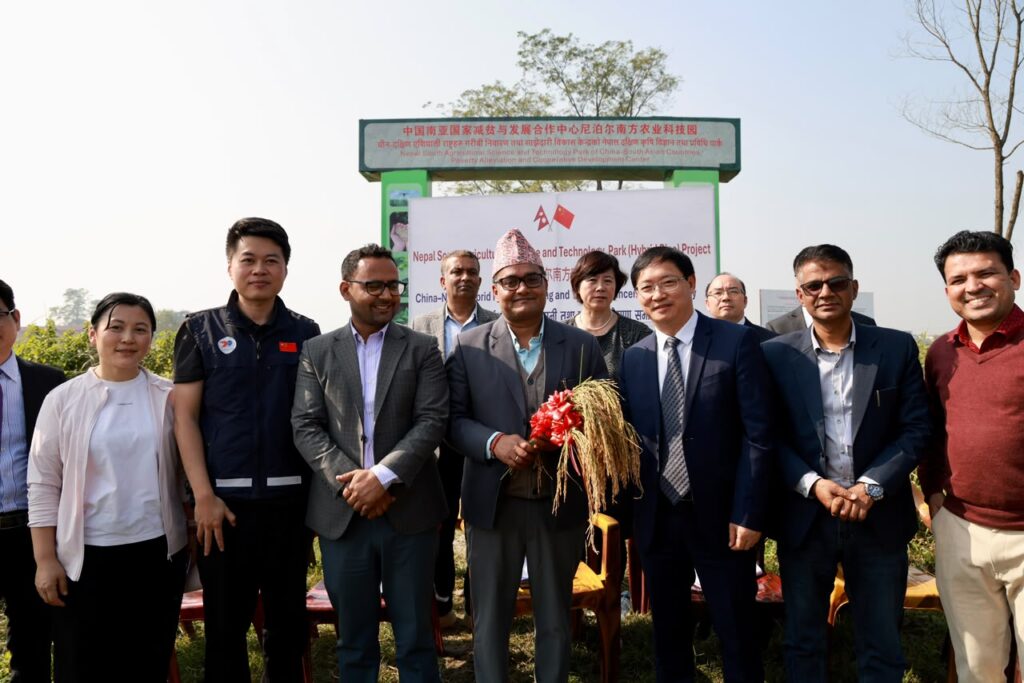
Wang Qian, director and rice expert at the Chongqing Academy of Agricultural Sciences, announced the yield, crediting technical guidance from Chinese specialists and the collaborative efforts of Chinese and Nepali agricultural experts.
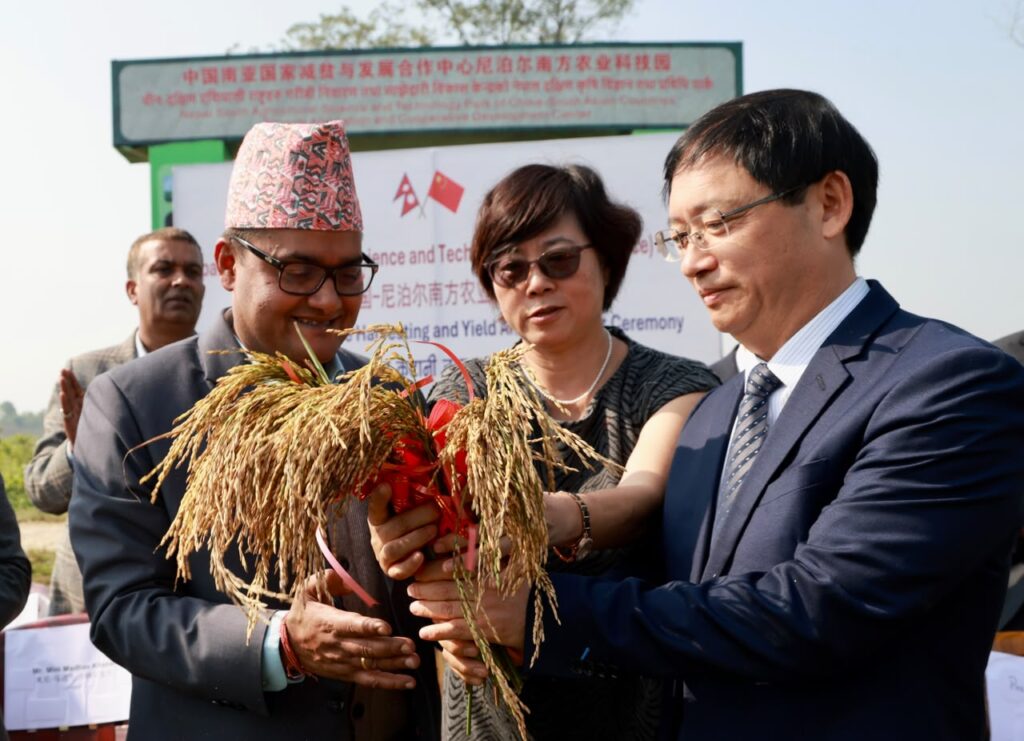
The announcement was welcomed by participants as an encouraging outcome for efforts to introduce and adapt advanced agricultural technologies to Nepal’s farming conditions.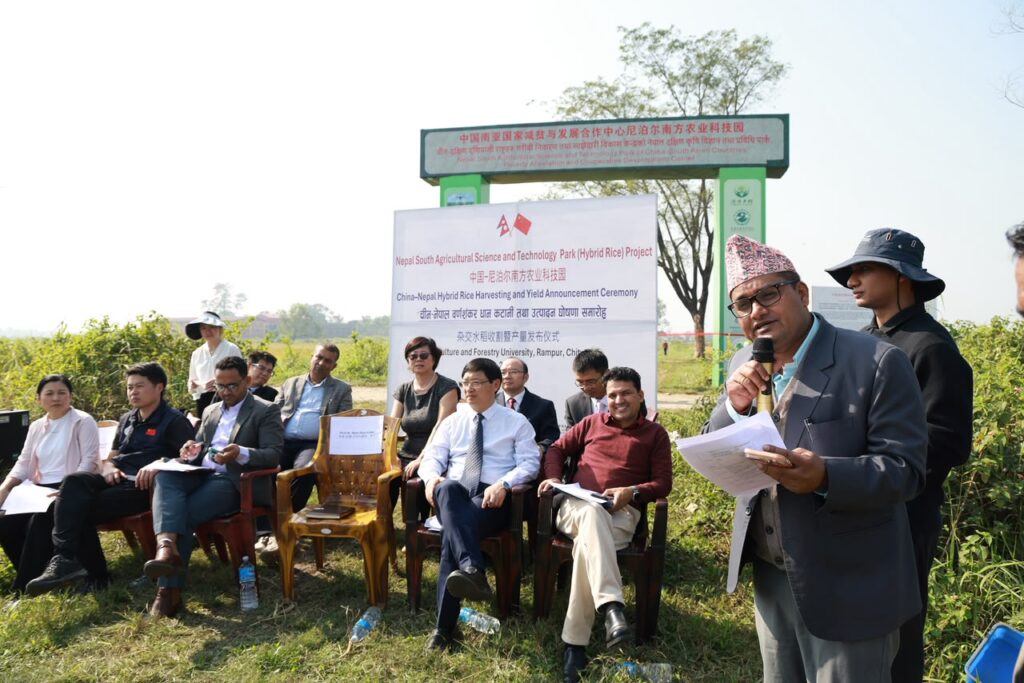
Professor Rishi Ram Kattel, Vice-Chancellor of Agriculture and Forestry University (AFU), thanked the Chongqing experts for sharing their technical knowledge and working alongside Nepali researchers in joint breeding research and scientific experiments.
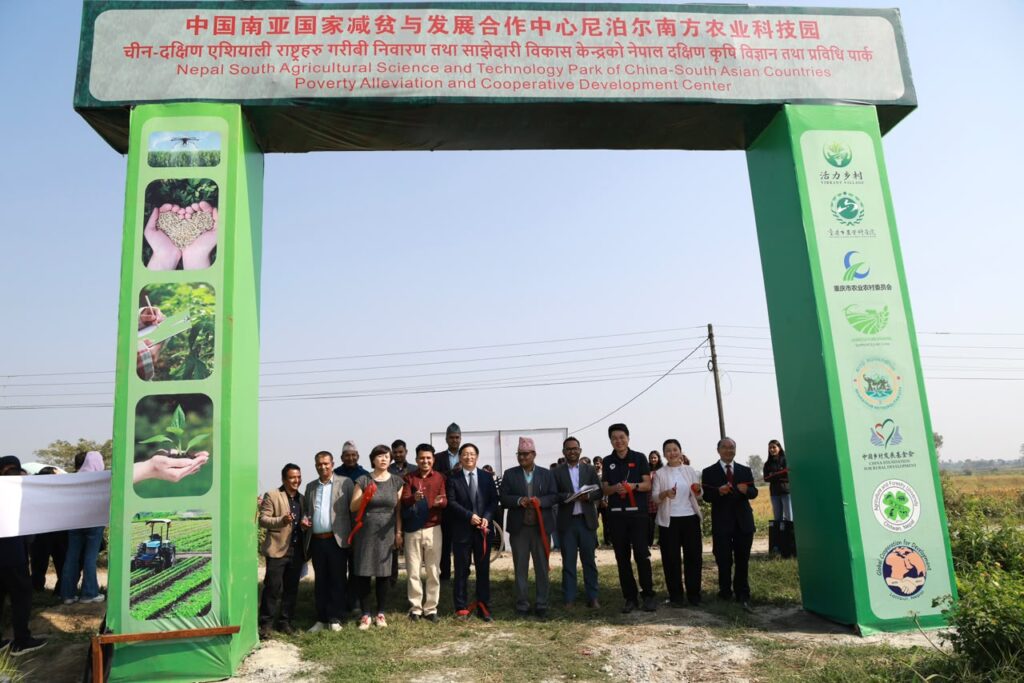
He said the achievement demonstrated the value of sustained collaboration and could create new opportunities for agricultural research and technology cooperation between Nepal and China.
“After more than 800 days of dedicated research, repeated trials and careful crop management, the collaborative efforts have resulted in a successful harvest,” he said.
Tan Ping, vice-president of the Chongqing Academy of Agricultural Sciences, praised the commitment and teamwork of scientists from both countries in addressing technical challenges. He described the result as an important step forward in bilateral agricultural science and technology cooperation and a source of practical experience for future joint initiatives.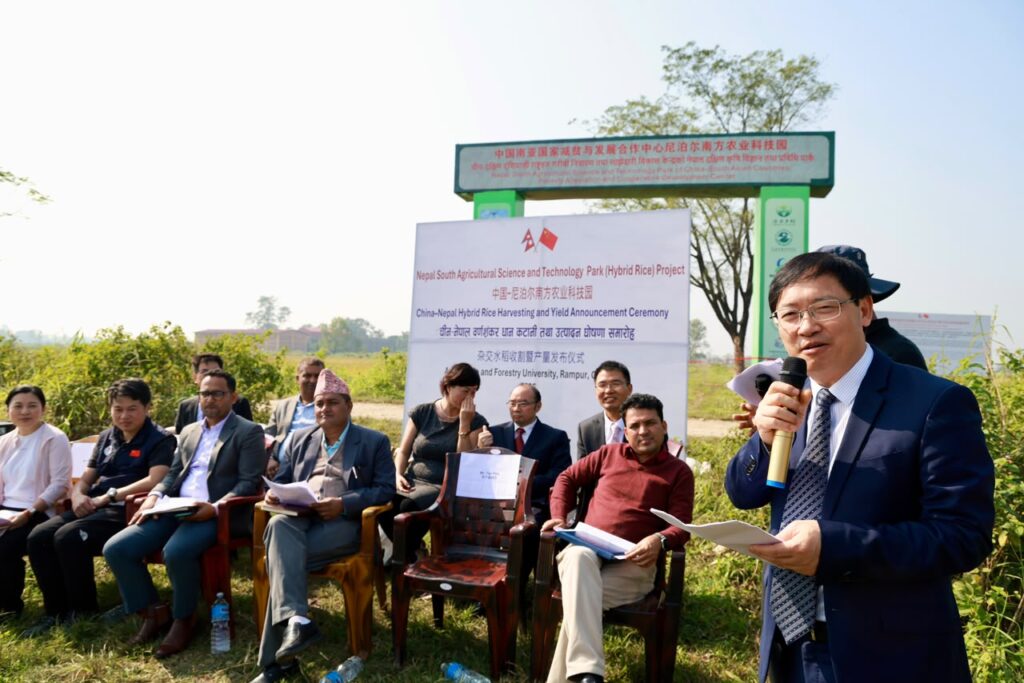
The ceremony was attended by Tan Ping; Kattel; Professor Sundar Tiwari, registrar of AFU; Yu Pengcheng, director at the Chinese Embassy in Nepal; Zou Zhiqiang, country director of the China Foundation for Rural Development (CFRD) Nepal Office; Mini Madhav Khanal, Chitwan district chairperson of the Rastriya Swatantra Party; members of the Chongqing agricultural delegation, university representatives, agricultural experts and local farmers. Muti, secretary-general of the Global Development Association of Nepal, and members of the project team were also present.
From research plots to farmers’ fields
The demonstration project is part of the broader Chongqing-supported Southern Agricultural Science and Technology Park initiative, launched in July 2023 during the visit to Nepal by Yuan Jiajun, member of the Political Bureau of the Communist Party of China Central Committee and secretary of the CPC Chongqing Municipal Committee.
Under the initiative, agricultural scientists from Chongqing, working with Nepal’s agricultural authorities and experts from AFU, have established three demonstration centres in Nepal focusing on rice cultivation, buffalo farming and vegetable production.
The vegetable demonstration programme has recorded successful harvests for two consecutive years and supported participating farmers in exporting vegetables to Qatar and other Middle Eastern markets.
The latest hybrid rice achievement adds another dimension to the initiative, highlighting the potential of scientific cooperation to improve agricultural production and strengthen local research capacity.
Zou Zhiqiang of CFRD Nepal said she was honoured to be part of the collaborative project. She noted that scientists from both countries had worked through language, cultural and technical challenges to conduct research and practical field activities.
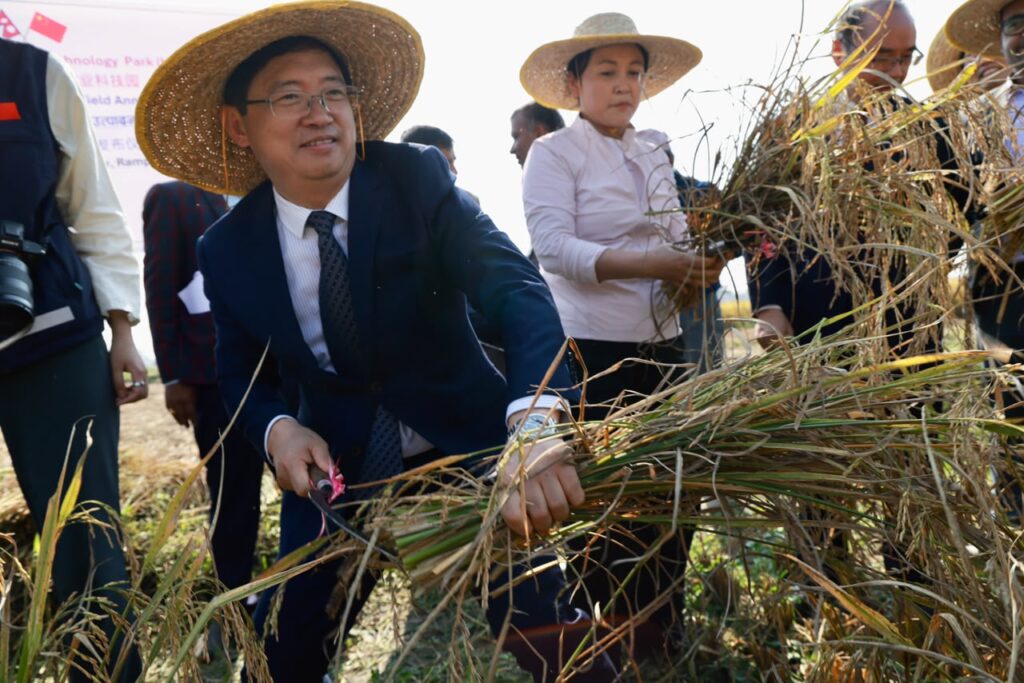
Following the harvesting ceremony, Chinese and Nepali representatives jointly harvested rice from the demonstration plots. The delegation also inspected the experimental fields to assess crop performance and examine the adaptability, growth and development of the introduced hybrid rice varieties under local agroecological conditions.
Expanding agricultural research cooperation
The visit also included technical discussions between the Chongqing delegation, AFU leadership and project representatives on research progress, project implementation and future cooperation.
The delegation visited university laboratories, agricultural demonstration fields and training facilities to learn about AFU’s research capacity, hybrid rice production and varietal development.
Both sides discussed opportunities to expand collaboration in hybrid rice research, rapeseed cultivation and institutional exchanges, as well as the transfer of appropriate agricultural technologies.
The wider China-Nepal agricultural science and technology cooperation initiative seeks to strengthen research capacity, introduce suitable production technologies and improve the technical skills of local agricultural institutions and farmers through demonstrations, expert collaboration and knowledge exchange.
For Nepal, where agriculture remains an important source of livelihoods and rural employment, the practical adaptation of improved crop varieties and farming techniques could offer opportunities to enhance productivity and strengthen food security.
The Chitwan harvest represents a promising step in that direction. However, the wider impact will depend on further trials, assessment of performance across different agroecological conditions and the ability to make suitable technologies accessible to local farmers.
Both sides have expressed their commitment to continuing cooperation in agricultural research, technology transfer and institutional partnerships, with the aim of translating scientific achievements into practical benefits for Nepal’s farming communities.