
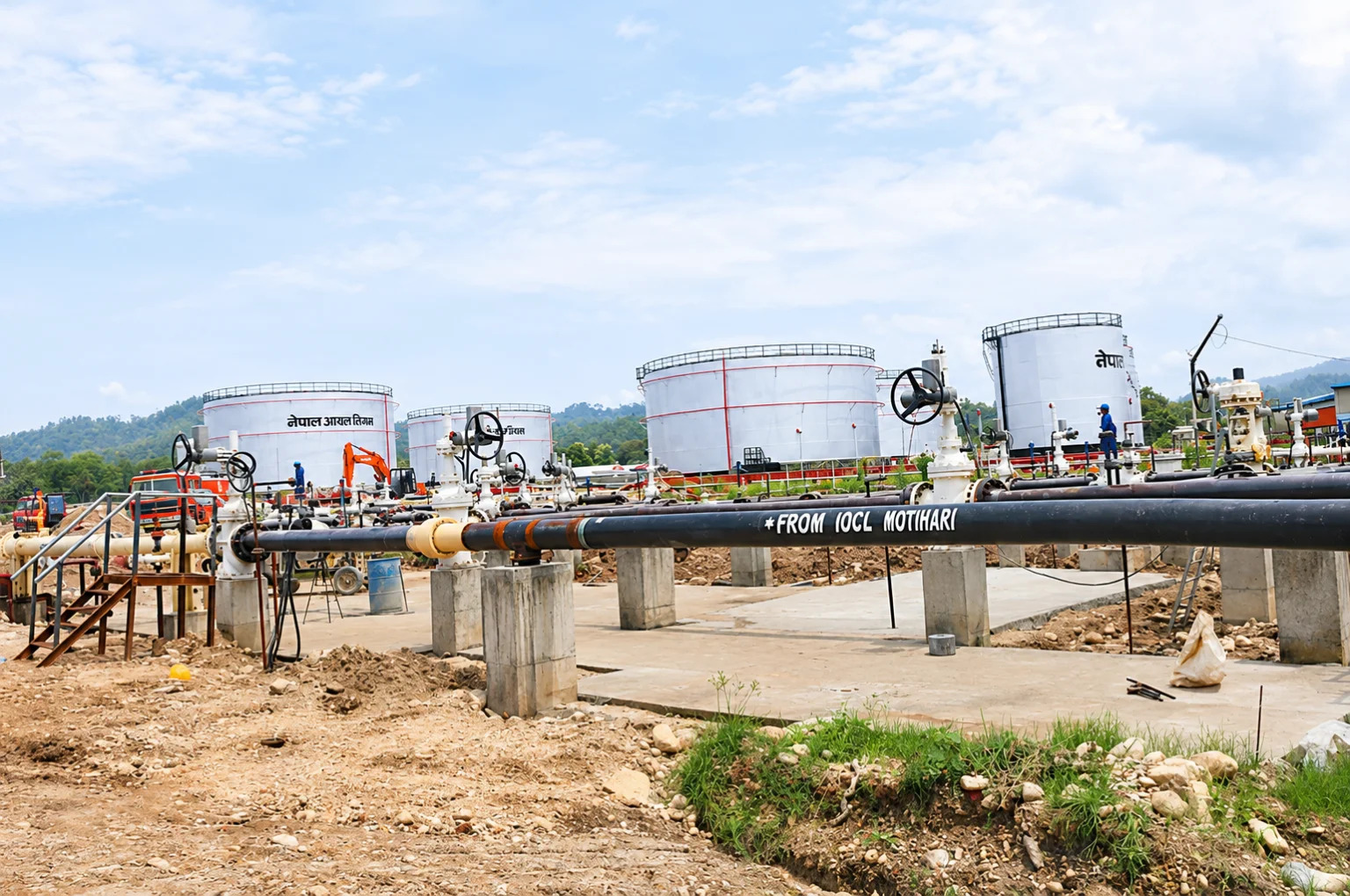
Kathmandu – Nepal’s growing investment in petroleum infrastructure has raised concerns among energy experts and environmentalists over the country’s long-term commitment to renewable energy and carbon emission reduction.
During Prime Minister Balendra Shah’s recent visit to India, the foundation stone for a petroleum terminal in Jhapa was virtually laid, while both countries emphasised advancing the proposed Siliguri–Charali petroleum pipeline.
India also handed over the second phase of the Motihari–Amlekhgunj petroleum pipeline project to Nepal, further strengthening the country’s fuel supply infrastructure.
Experts have warned that expanding petroleum infrastructure could prolong Nepal’s dependence on imported fossil fuels and divert investment away from electricity distribution, hydropower and electric mobility.
Nepal aims to develop 30,000 megawatts of electricity by 2035 and achieve net-zero greenhouse gas emissions by 2045.
Petroleum imports remain a significant economic burden, with Nepal importing petroleum products worth Rs 349.73 billion in the previous fiscal year.
Environmentalists have called for a clearer national energy strategy that balances immediate fuel requirements with long-term clean energy commitments.