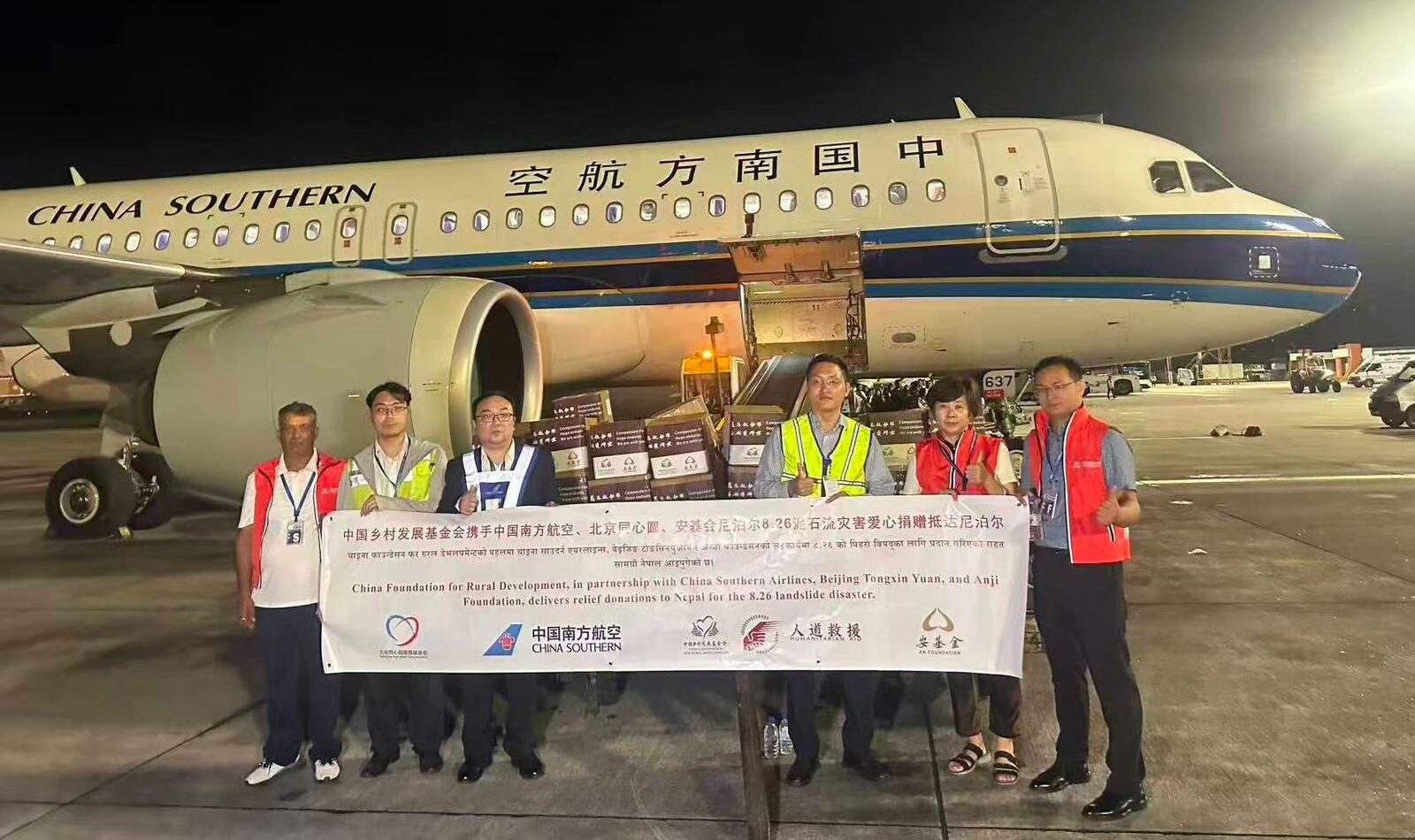
KATHMANDU: The China Foundation for Rural Development (CFRD) has delivered its first batch of emergency relief supplies from China to Nepal to support communities affected by the August 26 disaster in Rasuwa and surrounding areas. The shipment arrived at Tribhuvan International Airport on September 3 and will be distributed according to needs identified in coordination with Nepal’s disaster response authorities.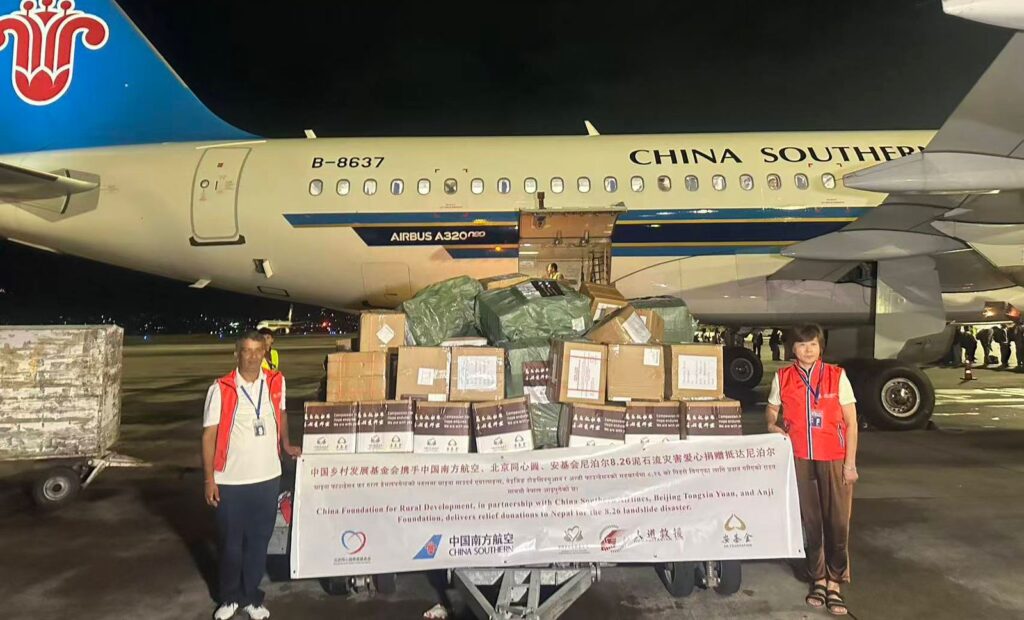
The shipment consists of approximately 27 tonnes of humanitarian assistance valued at more than one million Chinese yuan. According to CFRD, it includes 175 tents, 1,000 quilts, 1,000 cotton coats, 1,000 emergency humanitarian relief boxes and 6,000 medical packing bags. The supplies were donated by Chinese companies and individuals, while China Southern Airlines provided free transportation support to bring the materials to Nepal.
CFRD said its Nepal office activated an emergency response mechanism immediately after the disaster and deployed teams to assess conditions in affected areas, including Nuwakot. Following consultations with Nepali authorities, the organisation began providing emergency assistance that includes 14 tents, 500 food packages containing rice, oil and beans, 500 family living kits and 5,000 solar lamps to support affected communities.
The August 26 disaster followed a major ice-and-rock collapse in the Himalayan border region, triggering destructive debris flows and flash flooding. The disaster caused extensive damage to settlements, roads, bridges and other infrastructure, with Rasuwa and Nuwakot districts among the areas affected. The newly arrived assistance is expected to support temporary shelter, essential daily needs and ongoing emergency response operations.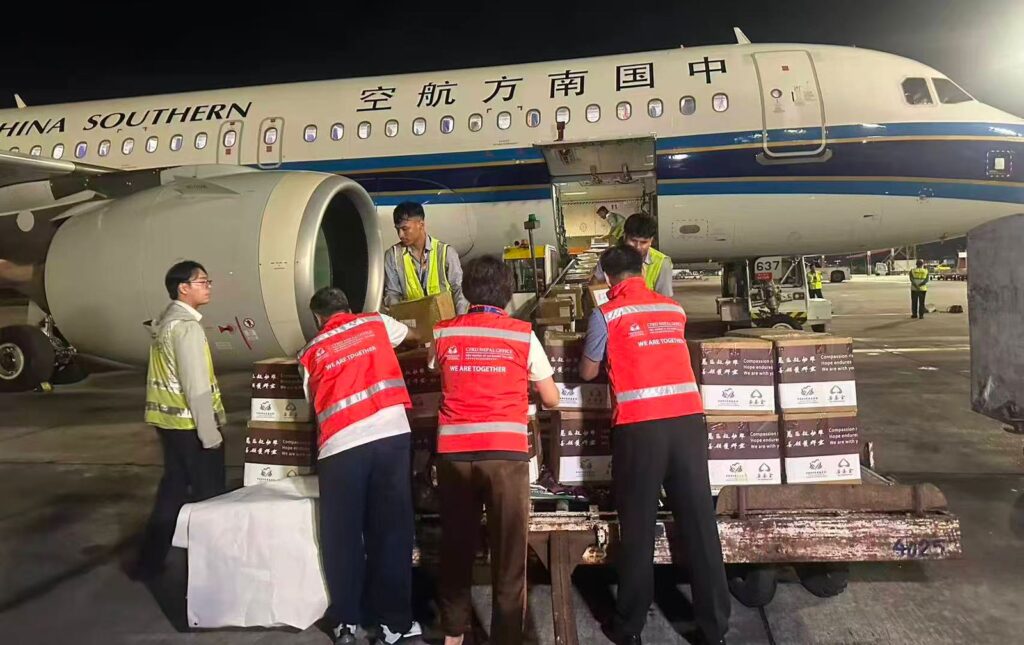
CFRD has been working in Nepal since the 2015 earthquake, when it became involved in emergency relief and post-disaster reconstruction. Its activities have since expanded to community development, youth skills training, clean water initiatives and agricultural development, alongside humanitarian assistance during emergencies including the COVID-19 pandemic and disasters in Jajarkot, Sindhupalchok and Gorkha.
The organisation said it will continue coordinating with Nepali authorities and local partners as conditions in disaster-affected areas evolve. Further humanitarian assistance will be provided based on assessments of actual needs, with a focus on helping affected families meet immediate requirements and supporting longer-term recovery.