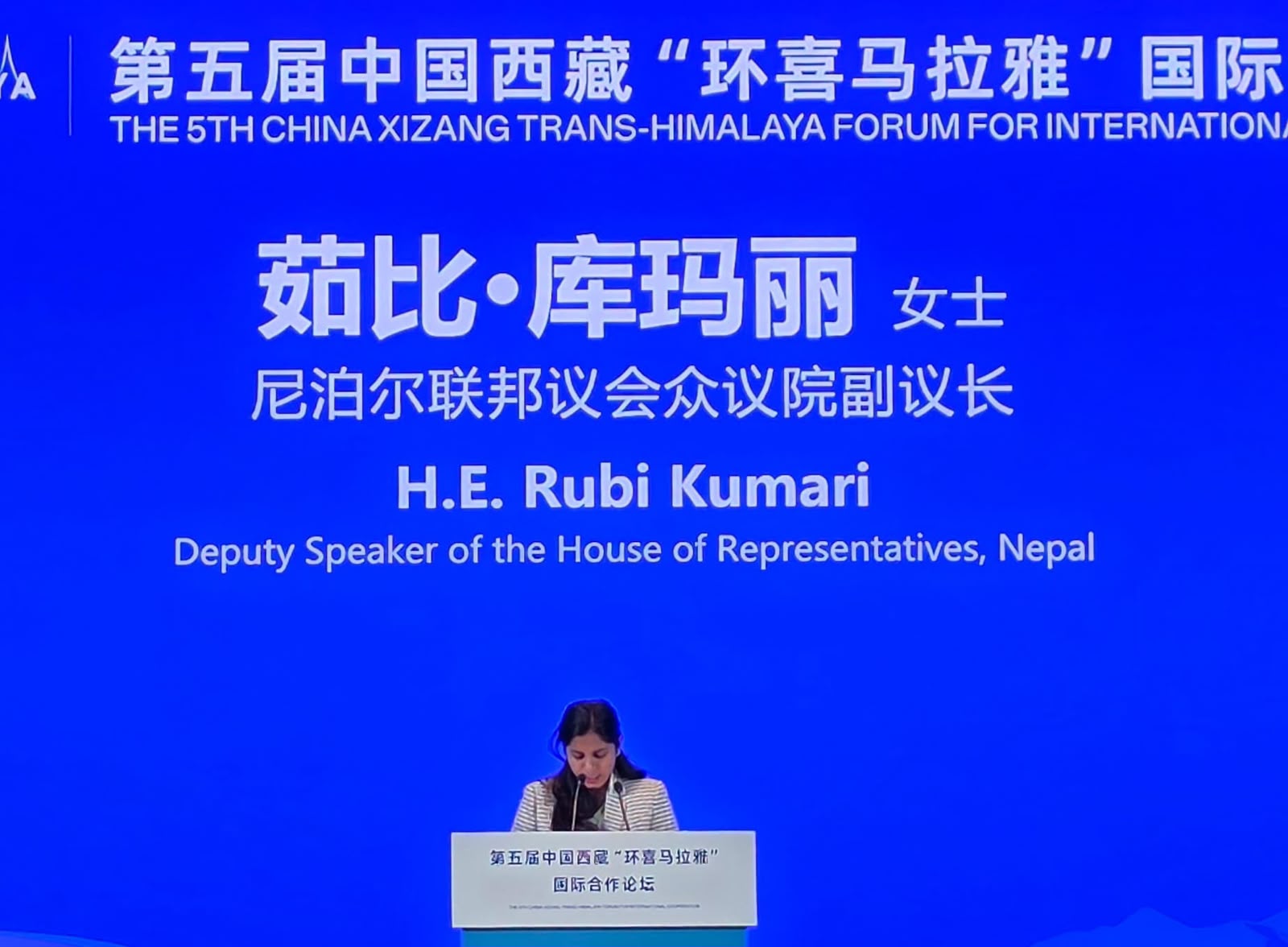
Linzhi: Nepal’s Deputy Speaker Rubi Kumari Thakur has described the Trans-Himalayan region as a shared historical heritage that has long connected civilizations, cultures, knowledge, trade and people-to-people relations.
Addressing the fifth China-Xizang Trans-Himalayan Forum for International Cooperation in Linzhi on Friday, Thakur said the region serves as an important bridge of mutual trust, cooperation and peaceful coexistence.
She stressed that protecting, promoting and sustainably using the region’s shared natural and cultural heritage is a common responsibility. She added that these valuable resources must be preserved for future generations.
The Deputy Speaker praised China’s progress in poverty reduction, modernization, infrastructure development, science and technology, and the improvement of people’s living standards. She said China’s social and economic transformation over recent decades has become a source of inspiration for the international community.
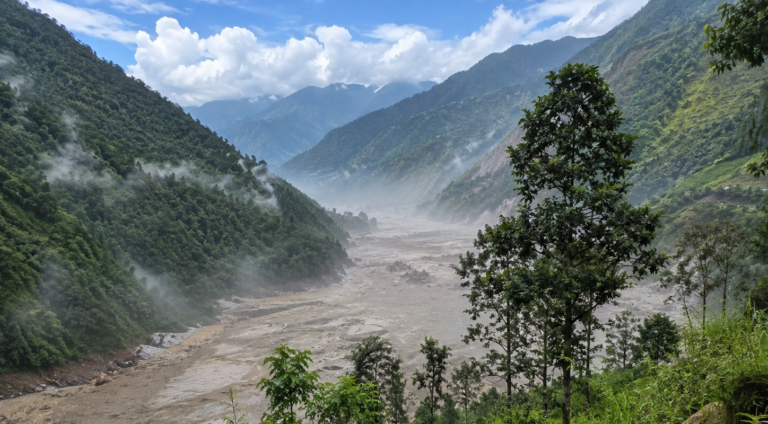
Highlighting the growing threat of climate change, Thakur said the Himalayan region is among the most environmentally vulnerable areas in the world. She noted that melting glaciers, glacial lake outburst floods, floods, landslides, biodiversity loss and increasing pressure on water resources are affecting countries across the region.
She said these challenges extend beyond national borders and require stronger regional cooperation, shared knowledge and coordinated action.
Thakur also described Nepal as a natural bridge connecting South Asia, East Asia, Southeast Asia and Central Asia. She said the development of multidimensional Trans-Himalayan connectivity is therefore especially important for Nepal.
As a participant in China’s Belt and Road Initiative, Nepal wants to expand practical cooperation in infrastructure, trade, investment, energy, tourism and people-to-people exchanges, she said. She also reaffirmed Nepal’s commitment to the One-China policy.
According to Thakur, progress in bilateral trade, infrastructure development, border connectivity, energy, tourism and cultural exchange has further strengthened friendship and cooperation between Nepal and China.
She added that Nepal remains committed to working with China and other regional and international partners to promote shared development, regional cooperation and mutual benefit.
The forum was attended by senior Chinese government and party officials, including Xizang Executive Vice Chairman Ren Wei, Xizang Party Secretary Wang Junzheng and Wang Guangqian, Vice Chairman of the National Committee of the Chinese People’s Political Consultative Conference.
Representatives from several countries, including Sri Lanka, Pakistan and Bangladesh, also addressed the forum, according to the Consulate General of Nepal in Lhasa.