Kathmandu– European Union Ambassador to Nepal Veronique Lorenzo has said Nepal continues to uphold freedom of expression and democratic openness despite rising concerns over digital disinformation, online gender based violence, and challenges in the aviation sector.
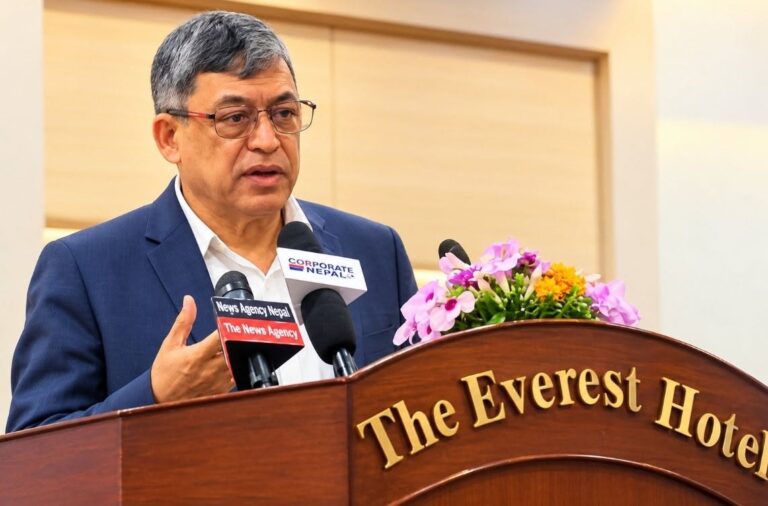
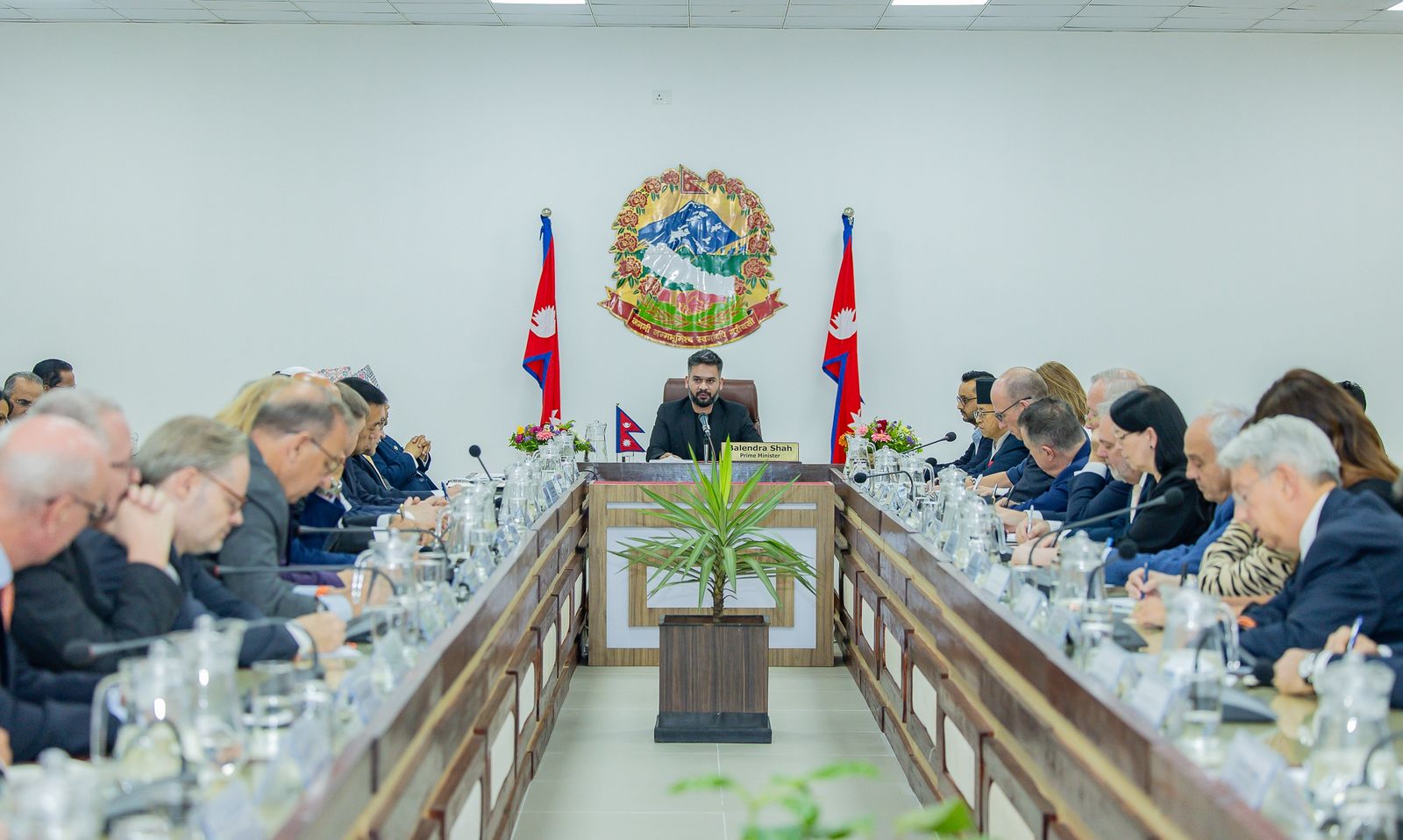
Speaking at a press conference following her meeting with Prime Minister Balendra Shah on Tuesday, Ambassador Lorenzo said Nepal’s vibrant culture of criticism and public debate reflects the strength of its democratic values.
She noted that active criticism and analysis of government policies, even under a government enjoying a two thirds majority and led by a highly popular prime minister, demonstrates the vitality of free speech in Nepal. According to her, the country’s willingness to tolerate dissent and criticism remains one of its most valuable democratic strengths.
Ambassador Lorenzo also said the European Union hopes Nepal will continue making proactive progress in protecting press freedom and freedom of expression in the years ahead.
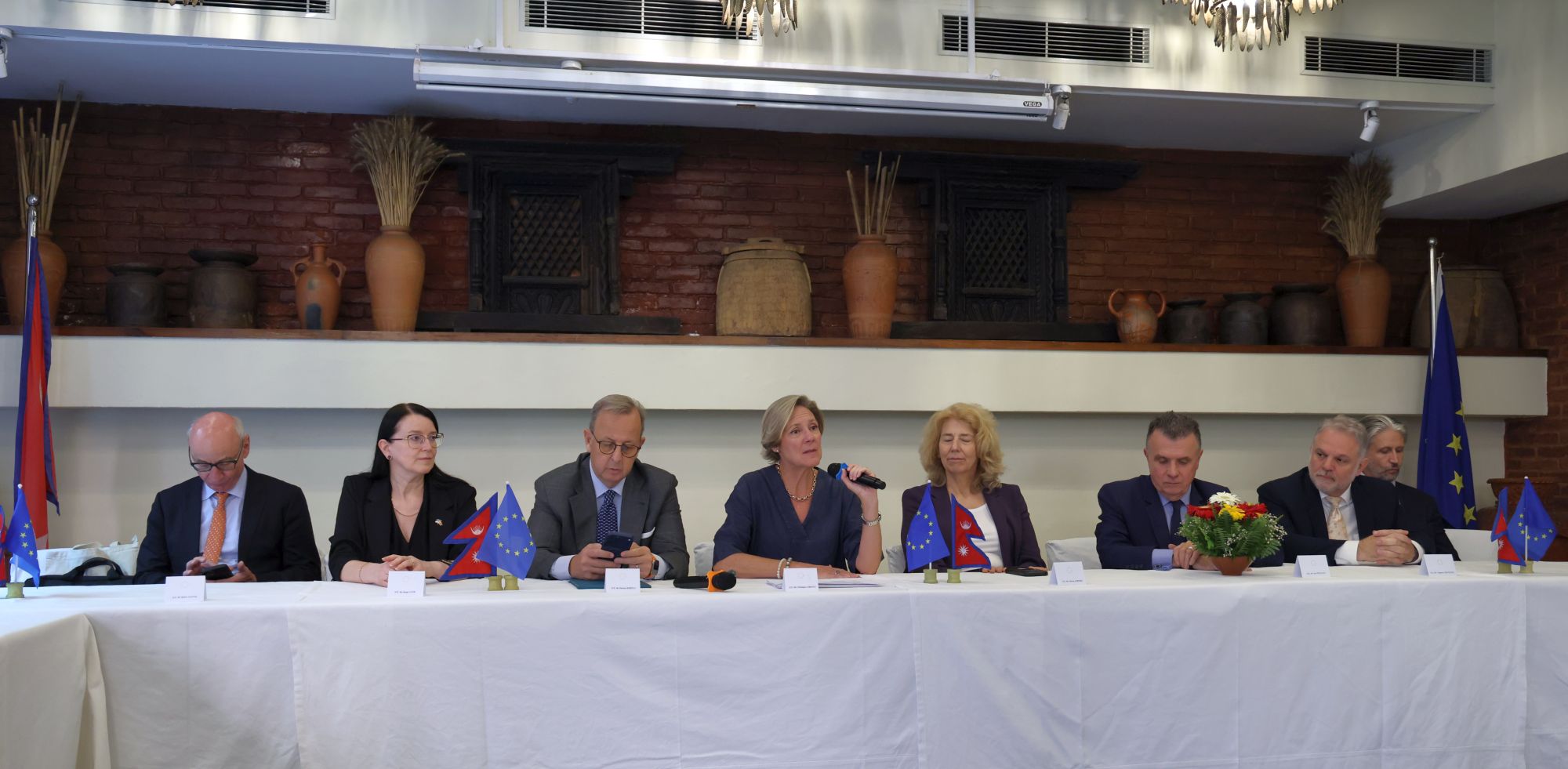
Responding to allegations that the recent “Gen Z” movement in Nepal was influenced by foreign intervention, she rejected the claims as attempts to distort information. She clarified that the EU’s “Youth Sounding Board” initiative is intended solely to gather perspectives from young people and should not be viewed as political interference.
Referring to EU supported programs in the Kanchenjunga Conservation Area, Ambassador Lorenzo said cooperation with local governments, youth groups, and civil society organizations helps strengthen mutual understanding and supports community based development.
On Nepal’s graduation from the category of Least Developed Countries (LDCs), she acknowledged that the transition would bring significant economic challenges. Citing a study by the International Labour Organization, she warned that between 130,000 and 140,000 jobs could be at risk in sectors lacking strong competitive capacity after graduation.
She stressed that preparation and structural reform are more important than the exact timing of graduation itself. According to her, the Nepali government is aware of these risks, and the European Union remains confident Nepal will continue necessary reforms and groundwork.
Ambassador Lorenzo also addressed Nepal’s ongoing aviation safety concerns and the country’s continued inclusion on the European Union air safety list. She clarified that the EU has never specifically demanded a legislative split between aviation regulation and supervision bodies. Instead, the EU’s consistent position has been that both functions must operate independently to avoid conflicts of interest.
“It has never been about forcing a legislative division,” she said. “What the EU has insisted on is genuine independence between the regulatory and oversight functions.”
According to Lorenzo, Nepal’s former Director General of Civil Aviation had claimed such independence already existed, but EU assessments later found that the arrangement was not functioning effectively in practice. She emphasized that it is ultimately Nepal’s responsibility to determine how best to ensure institutional independence within the aviation sector.
The ambassador noted that many aircraft operating in Nepal, including ATR and Airbus planes, are European made, and many pilots receive training in Europe. However, she stressed that the use of European aircraft or training systems alone does not automatically ensure compliance with international safety standards.
She said Nepal’s civil aviation authority and airlines must fully comply with international safety provisions, including pilot licensing, continuous training, certification procedures, and effective oversight mechanisms.
Referring to an aviation safety assessment conducted in 2023, Ambassador Lorenzo said the EU had hoped Nepal had made sufficient progress to be removed from the safety list. However, the evaluation concluded that required standards had still not been met.
Following the assessment, recommendations were issued and a corrective action plan was developed. But Lorenzo expressed disappointment over what she described as “hardly any progress” over the past two and a half years.
She noted that the European Union has been providing technical assistance to Nepal since 2015 to support aviation reforms and improve compliance with international safety standards.
With Nepal recently appointing a new Director General of Civil Aviation, the ambassador said the EU hopes cooperation will now accelerate and that meaningful progress can be achieved in implementing the corrective action plan.
“We share the same objective,” she said. “The European Union is not pleased that there is a safety list at all. Our common goal is to restore confidence in Nepal’s aviation industry and eventually remove Nepal from the EU safety list.”
Cyprus Envoy Says Alternative Channels Available Despite No Embassy in Kathmandu
Cyprus’ non resident ambassador to Nepal, Evagoras Vryonides, said Nepali citizens can continue accessing information and consular services through alternative diplomatic channels despite the absence of a resident Cypriot embassy in Kathmandu.
He explained that Cyprus, despite its relatively small population of around one million people, operates nearly 60 diplomatic missions worldwide with limited resources. The Cypriot Embassy in New Delhi currently oversees relations with Nepal and several other countries.
Ambassador Vryonides said Nepalis requiring consular support can contact the embassy in New Delhi directly, while Nepal’s honorary consulate in Cyprus also assists in facilitating bilateral communication and services.
Sweden Says Stronger Cooperation Needed Before Opening Embassy in Nepal
Sweden’s non resident ambassador to Nepal, Jan Thesleff, said stronger bilateral engagement and deeper cooperation are necessary before establishing a Swedish embassy in Nepal.
According to Ambassador Thesleff, opening and maintaining a diplomatic mission requires substantial practical cooperation and sustained engagement between the two countries. He said stronger institutional and economic ties would naturally make such a step easier in the future.
He highlighted Sweden’s interest in expanding partnerships with Nepal in science, technology, innovation, and business sectors. Sweden is also interested in encouraging Swedish companies to invest in Nepal while helping Nepali entrepreneurs and innovators access Swedish markets.
Ambassador Thesleff emphasized that the quality and depth of bilateral relations matter more than the physical presence of diplomatic structures alone.