Kathmandu – The Federation of Nepalese Chambers of Commerce and Industry (FNCCI) and the Confederation of Indian Industry (CII) have signed a memorandum of understanding to cooperate on flood relief, rehabilitation and the revival of local economic activity in affected parts of Nepal.
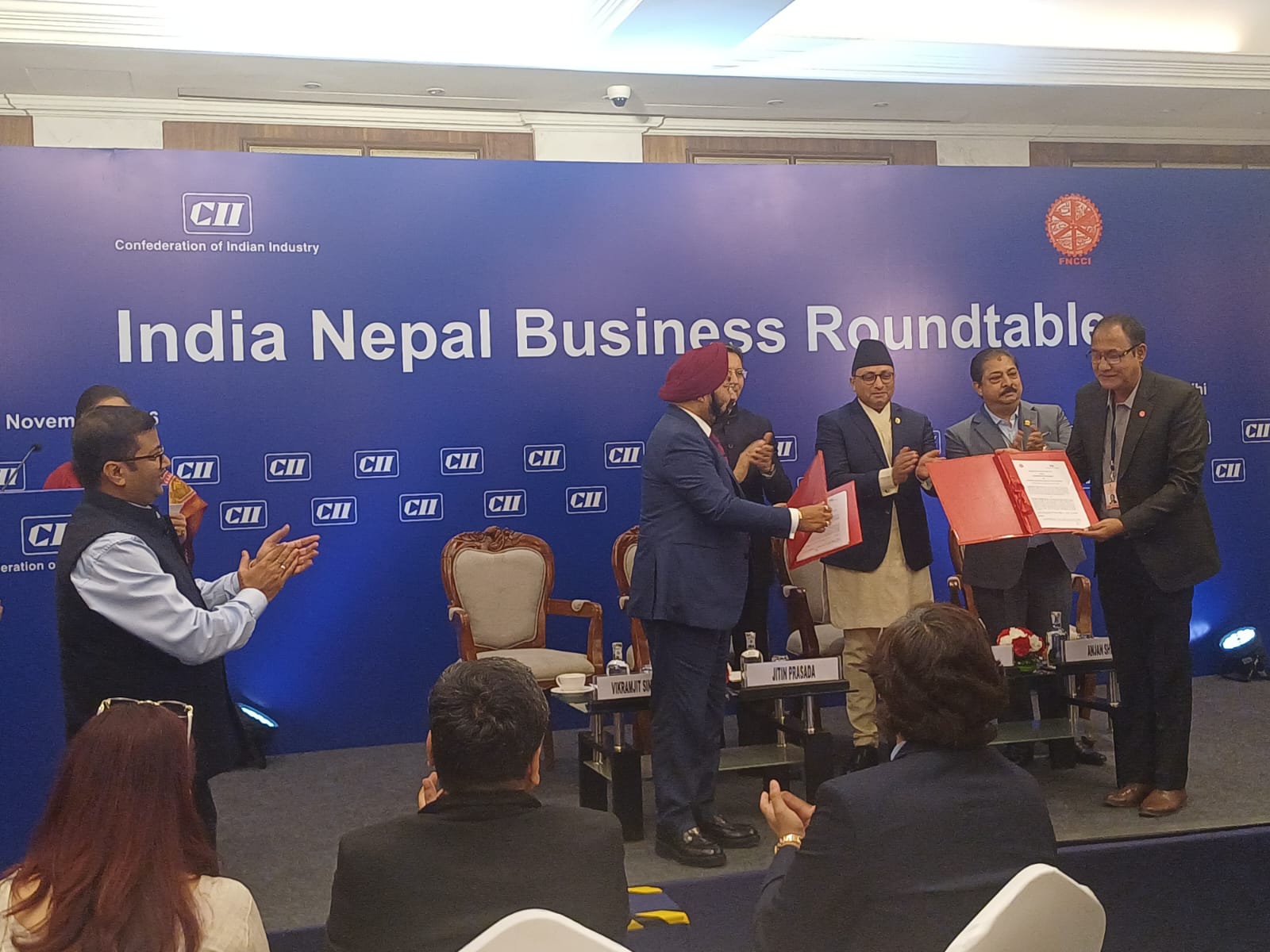
The agreement was signed in New Delhi on Sunday, November 22, by CII International Council Co-Chair Vikramjit Singh Sahney and FNCCI Vice-President Krishna Prasad Sharma during an India-Nepal business gathering.
Under the agreement, the two organisations plan to jointly address urgent healthcare and sanitation needs while helping affected households restore livelihoods and economic activity. The proposed programme is divided into immediate relief and longer-term recovery measures.
The first phase will prioritise health camps, free medicines, water, sanitation and hygiene kits, and ambulance support for hospitals. Medical camps are expected to provide general check-ups, maternal and child healthcare, and assistance in identifying and treating waterborne and other infectious diseases that may follow flooding.
The agreement also proposes supplying ambulances equipped for essential lifesaving services to two hospitals. The initial health and relief programme is proposed to run from November 2026 to March 2027, subject to field assessments, beneficiary identification, site selection and necessary government approvals.
In the second phase, the partners plan to help households restart farming, livestock activities, small businesses and local service enterprises through tools, equipment, skills development and business training.
Flood-affected micro, small and medium-sized enterprises are also expected to receive technical assistance, information about access to finance, market connections and opportunities for partnerships between Nepali and Indian businesses. The organisations intend to support local economic recovery planning in affected districts.
CII will coordinate with relevant Indian authorities, mobilise resources and identify implementation partners. FNCCI will work with Nepal’s government and local authorities on permissions, coordination, local business participation and programme management.
The proposed priority areas include Rasuwa, Nuwakot and Dhading in Bagmati Province. Activities may also be extended to Gorkha, Baglung, Mustang and Manang, depending on needs and feasibility. Final locations will be determined after field assessments and consultations with government and local bodies.
The memorandum is valid for one year and allows the organisations to reach additional agreements on specific programmes, funding and resource mobilisation. The partnership aims to move beyond emergency assistance by supporting incomes, entrepreneurship and the recovery of local economies.