Foreign Nationals Management Information System (FNMIS) Launched from January 1, 2026
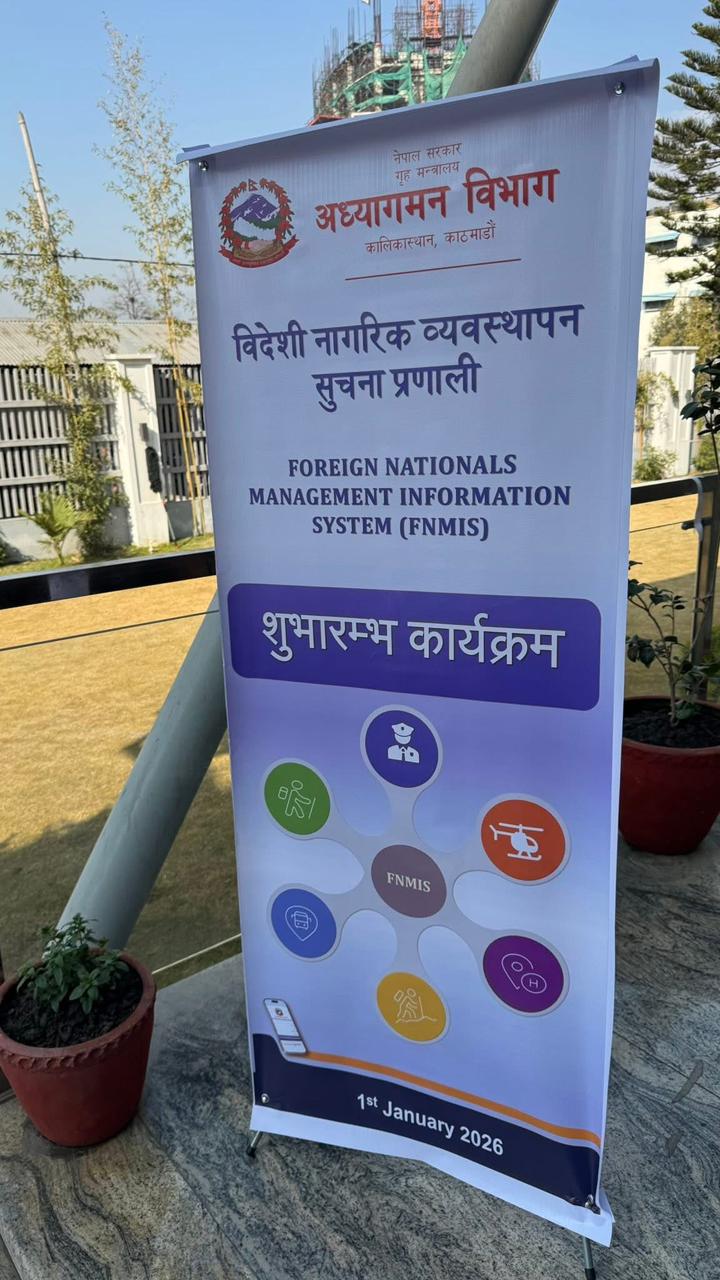
Kathmandu – In a landmark step toward modernizing immigration and foreign national management, the Government of Nepal has announced the launch of the Foreign Nationals Management Information System (FNMIS), effective January 1, 2026. The digital platform aims to streamline the registration, monitoring, and compliance of foreign nationals in Nepal, enhancing efficiency, security, and governance.
A Centralized Digital Approach
The FNMIS will replace Nepal’s longstanding manual system of tracking foreign visitors, residents, and workers. By consolidating visa types, entry and exit dates, residency details, and employment or study information, the system creates a centralized database accessible to the Department of Immigration, law enforcement agencies, and other government bodies. Authorities anticipate that this consolidation will reduce administrative delays, improve transparency, and enable real-time monitoring of overstays and other compliance issues.
Key Features and Benefits
- Visa and Permit Tracking: Monitors validity, renewals, and overstays to ensure adherence to immigration laws.
- Institutional Reporting: Hotels, schools, tour companies, and NGOs can report foreign nationals digitally.
- Inter-Agency Coordination: Facilitates data sharing among immigration, police, and security agencies.
- Emergency Response Support: Assists in locating foreign nationals during disasters or accidents, from Pokhara (827 m) to Mount Everest (8,848 m).
- Data-Driven Policy Making: Generates demographic, geographic, and compliance reports for tourism, education, labor, and migration planning.
Officials emphasize that FNMIS will significantly improve tourist safety, labor compliance, and national security while reducing human errors in visa and residency management.
Phased Implementation
The rollout of FNMIS will occur in multiple phases:
- Phase 1 (January 1, 2026): Mandatory registration for foreign nationals staying in star-rated hotels within Kathmandu Valley.
- Phase 2 (March 1, 2026): Expansion to include all star hotels, airlines, travel companies, and money exchange services nationwide. Subsequent phases will extend coverage to all guest houses, trekking agencies, and related institutions.
All agencies providing services to foreign nationals will be required to register on the platform. Authorities have stressed the importance of prompt compliance, noting current participation levels remain low.
Digital Entry and Workflow
Foreign nationals will submit personal and passport information electronically at entry points, undergo biometric verification, and have their data cross-checked with immigration records. Real-time updates will track visa status, movement, and legal compliance, while integrated reporting will allow authorities to detect overstays, suspicious activity, or policy violations.
The system also integrates with other government databases, including civil registration, security, and tourism agencies, ensuring accurate identification, minimizing forgery, and supporting disaster response and emergency management.
Implications for Tourism and Security
FNMIS is expected to impact multiple sectors:
- Tourism: Streamlined registration enhances visitor experience and improves statistical data for destination management.
- Labor Market: Foreign employment and work permits will be closely monitored to ensure legal compliance.
- National Security: Real-time tracking of foreign nationals allows authorities to act against overstays, illegal employment, or potential security threats.
- Policy Making: Data insights from FNMIS will inform immigration, tourism, and disaster management strategies.
Officials have highlighted the system’s value in adventure tourism management, ensuring trekkers, climbers, and visitors in high-altitude regions are properly registered and accounted for. The platform also enforces digital verification of permits, insurance, and mandatory guides, enhancing safety and compliance.
Looking Ahead
The launch of FNMIS marks a significant technological advancement in Nepal’s governance framework. By combining data-driven oversight, inter-agency coordination, and digital service delivery, the system positions Nepal to better manage foreign nationals while supporting tourism growth, national security, and emergency preparedness.
“FNMIS is not just about immigration—it is about creating a safer, more organized, and visitor-friendly Nepal,” said Tikaram Dhakal, Director of the Department of Immigration. “It provides accurate information for policymaking, ensures compliance, and strengthens our ability to respond to emergencies, from Kathmandu to the Everest region.”
With its phased rollout starting January 1, FNMIS is expected to modernize Nepal’s foreign national management, setting a benchmark for digital governance, security, and administrative efficiency in the region.