Kathmandu – The Fund for Responding to Loss and Damage (FRLD) is considering setting aside $20 million to support Nepal’s response to the devastating floods triggered by an ice-and-rock avalanche in August.
The proposal was placed before the Fund’s first extraordinary board meeting, held virtually on October 22. The official FRLD website confirmed that the meeting had been called specifically outside its regular schedule.
Under the proposed decision, the Fund would provisionally reserve $21.6 million from its available resources. Of this amount, $20 million would be available for possible support to Nepal, while $1.6 million would cover oversight and administrative costs.
However, the money has not yet been directly released to Nepal. The proposal would first invite Nepal’s national focal point to submit a detailed funding request explaining how the assistance would be used. The board would then review and approve the request at a future meeting.
The proposed arrangement would also test a new emergency mechanism allowing disaster-affected countries to request assistance outside the Fund’s regular application period. It could help establish a faster response system for countries facing sudden climate-related disasters.
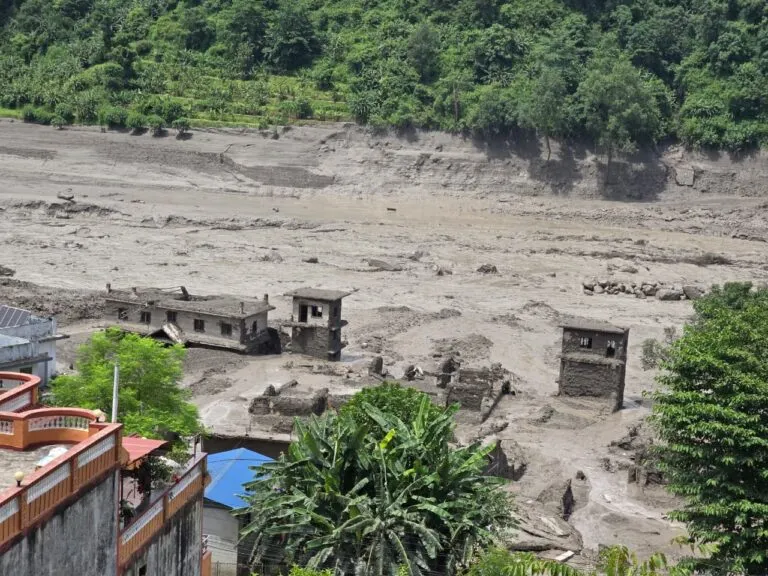
Nepal requested urgent international assistance after the August 26 disaster caused extensive flooding along the Bhotekoshi–Trishuli–Narayani river system. The government estimates the initial damage and economic losses at around $2.69 billion, while recovery and reconstruction needs could exceed $4.7 billion.
The proposed $20 million would therefore cover only a small portion of Nepal’s overall losses. Carbon Brief estimates that it represents about 0.7 percent of the country’s reported physical and economic losses and around 0.3 percent of its broader recovery needs.
The FRLD was created to support developing countries that are particularly vulnerable to climate change. It covers economic and non-economic damage caused by extreme weather and slow-onset climate impacts. If approved, Nepal’s case could become an important test of the Fund’s ability to respond quickly to a specific climate disaster.