Kathmandu – In most of the Kathmandu Valley, a chariot festival means a chariot going somewhere. In Hadigaun, it means something else entirely.
Every year, the day after Kojagrat Purnima marks the end of Dashain, the narrow lanes of this ancient neighbourhood fill with music, bamboo poles and towering wooden structures that look as if they have been turned upside down. This is Hadigaun Jatra, one of the oldest and most unusual festivals in the capital.
It is so unusual that it gave Nepali a saying of its own: “Kahi Nabhaeko Jatra Hadigaun Ma”, a jatra found nowhere else but in Hadigaun. Today, people use the phrase for anything strange or out of the ordinary. Here, it is simply the truth.
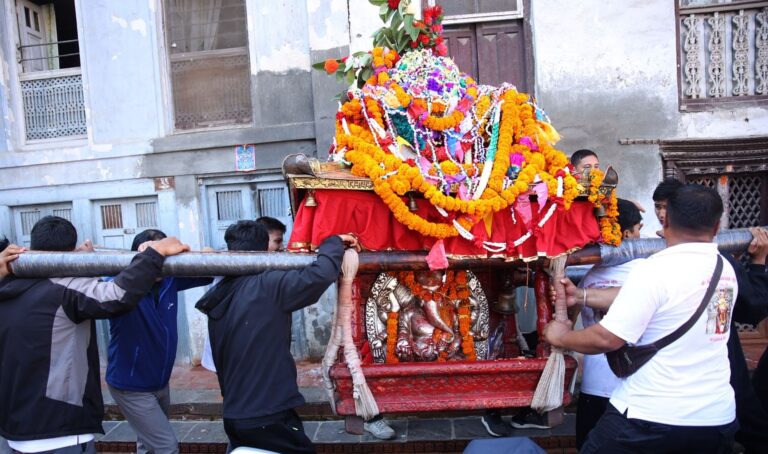
The festival is also known as Satya Narayan Jatra, after Lord Narayan, its main deity. At its heart are three khats, wooden palanquins that carry the gods through the streets. They come from three neighbourhoods: Kotal Tole, Nyalma Tole and Bhimsen Tole.
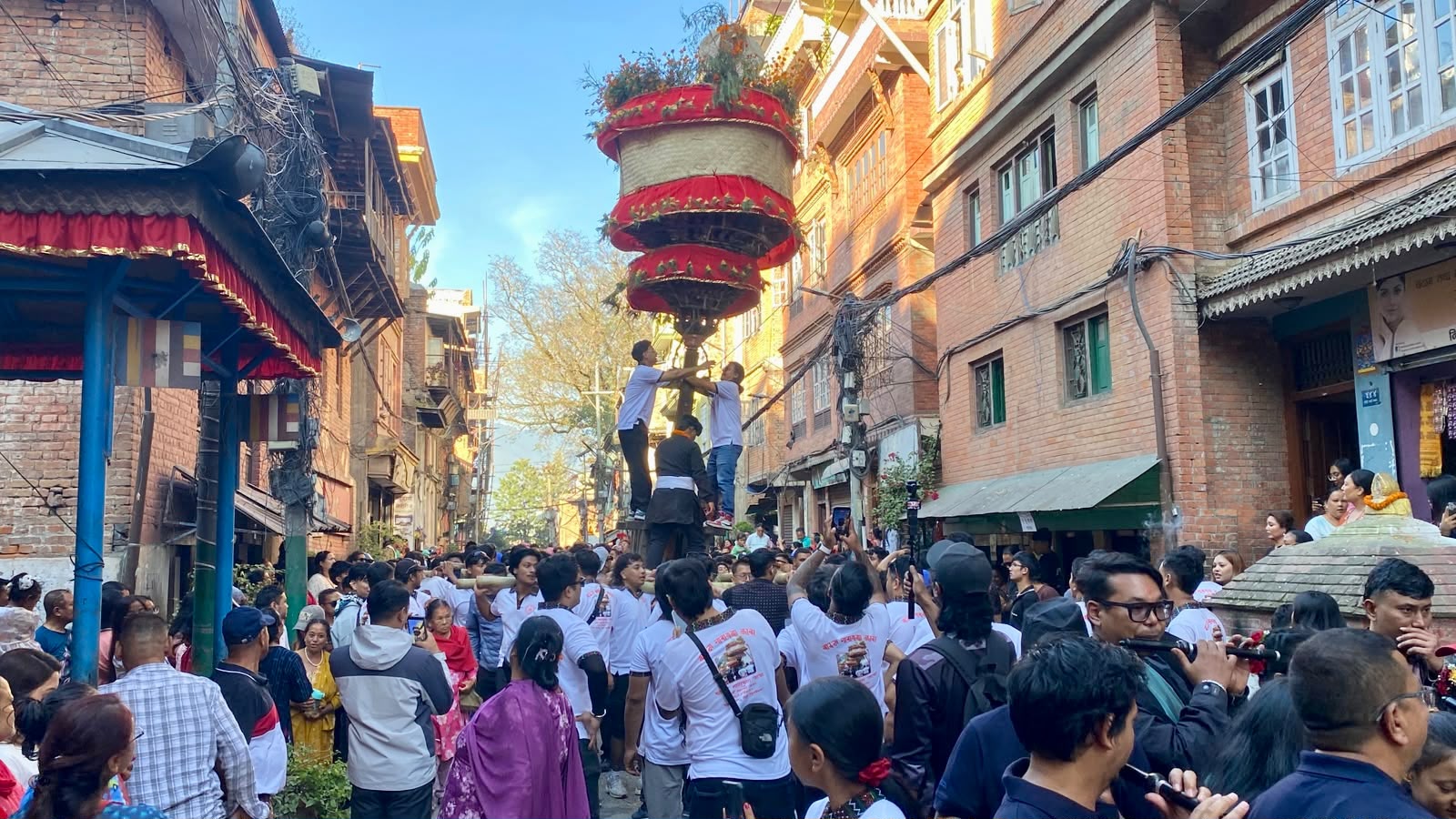
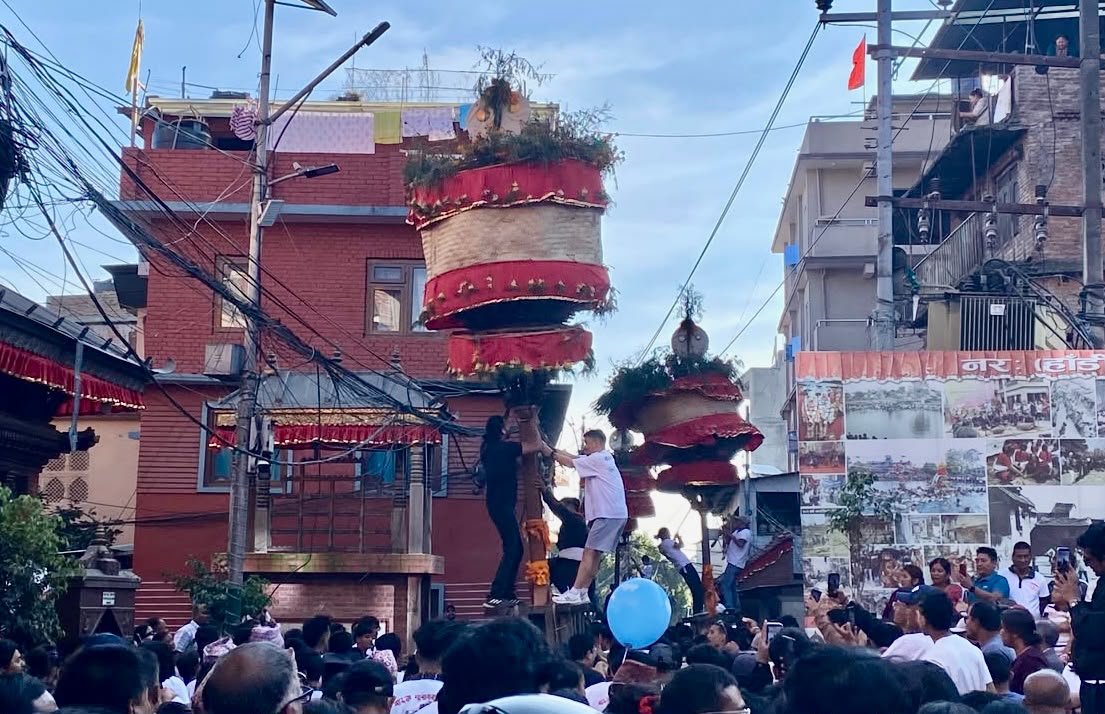
What makes them unique is their shape. On most khats, the deity sits beneath a pinnacle, or gajur, that points to the sky. In Hadigaun, the order is reversed. The wide, saucer-like tiers, wrapped in red cloth and topped with greenery, sit high above, while the gajur points toward the ground. From a distance, the khats look like giant inverted baskets floating over the crowd.
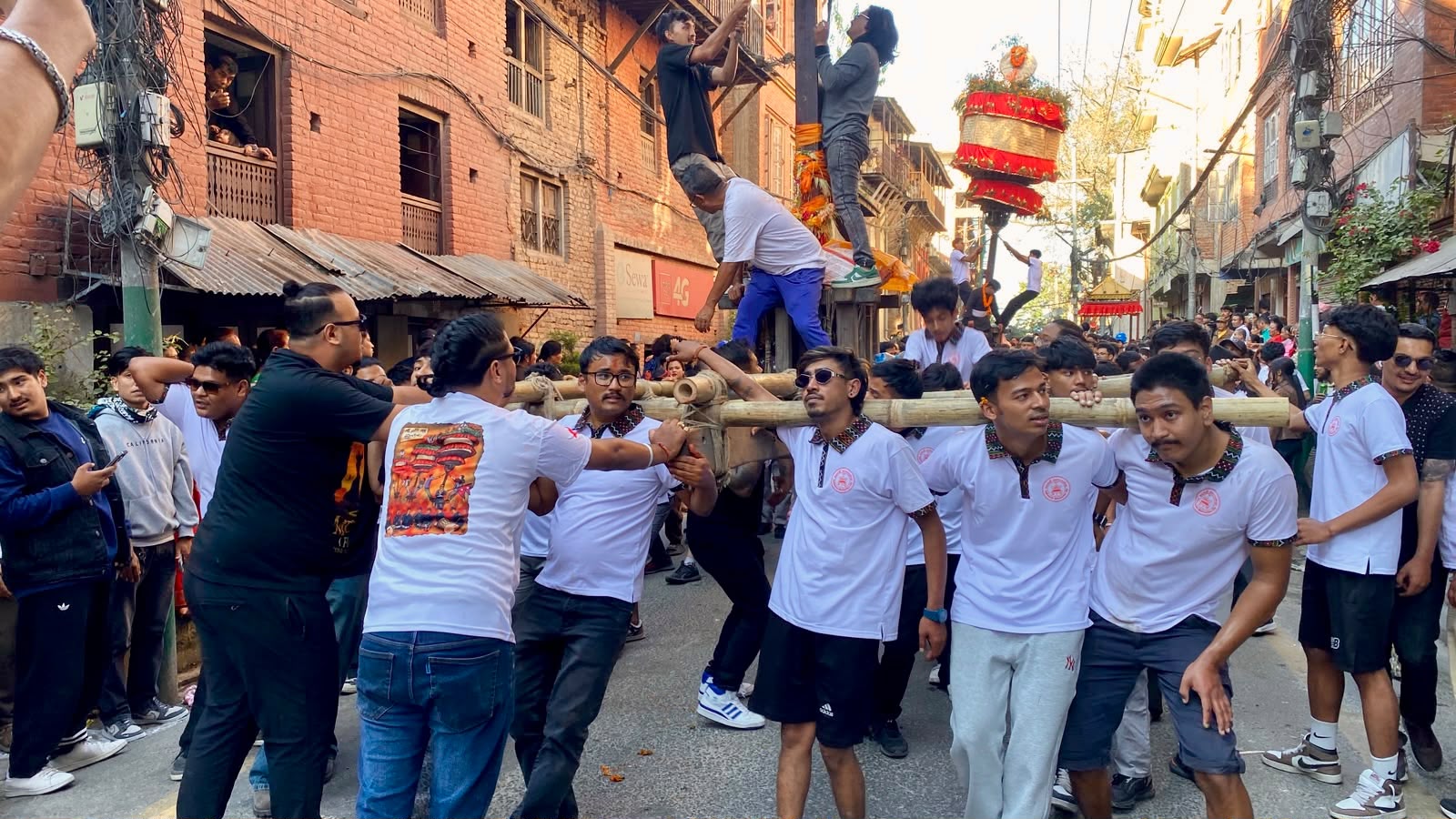
Lifting them is no small task. Groups of young men, many wearing matching festival T-shirts, shoulder long bamboo poles tied to the base of each khat and move them through lanes barely wide enough for the crowd. Others climb up the central post to steady the structure and tie offerings, while families watch from windows and rooftops.
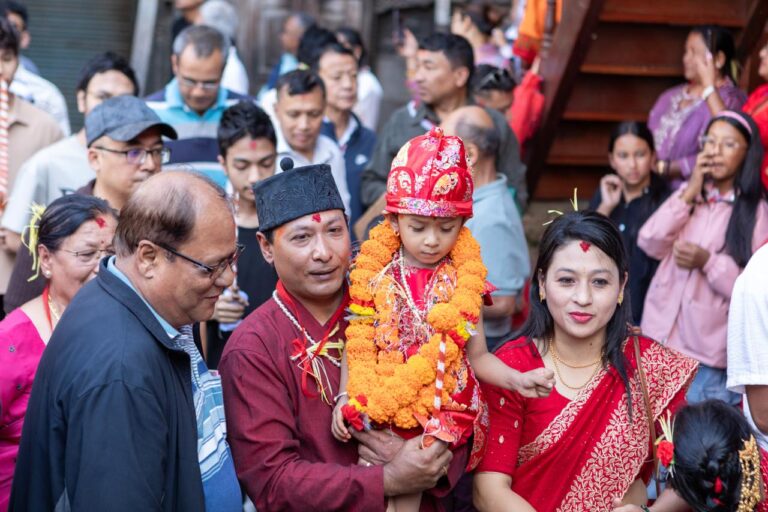
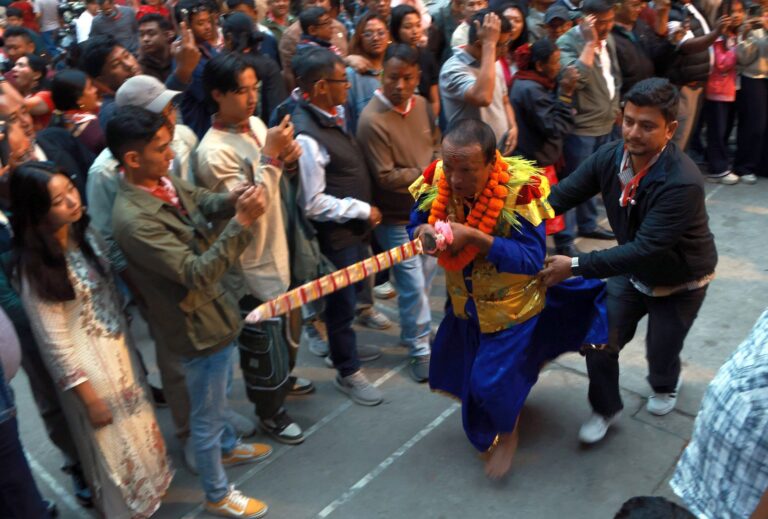
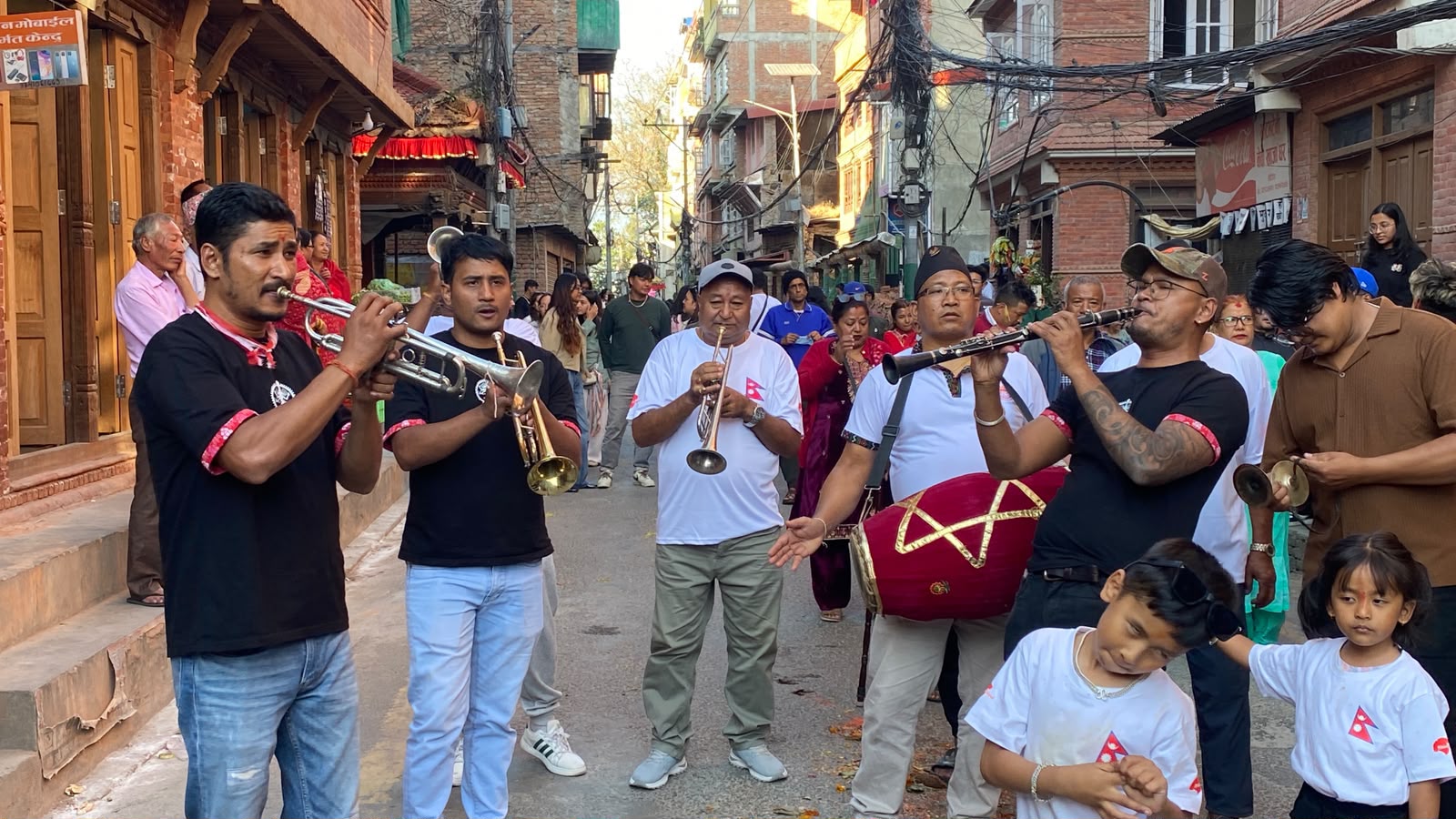
Brass bands and traditional drums lead the way. Trumpets, clarinets and the dhime keep the rhythm, and even small children in matching shirts join the procession. The khats are taken around the settlement three times before returning home.
Local belief holds that the three khats represent Brahma, Vishnu and Maheshwar. Another story links them to a legend of a woman cursed after insulting Lord Narayan, who could not give birth for twelve years. Residents are said to have travelled to the Himalayas to seek the god’s forgiveness, promising a festival like no other in return. Narayan relented, the child was born, and Hadigaun kept its promise.
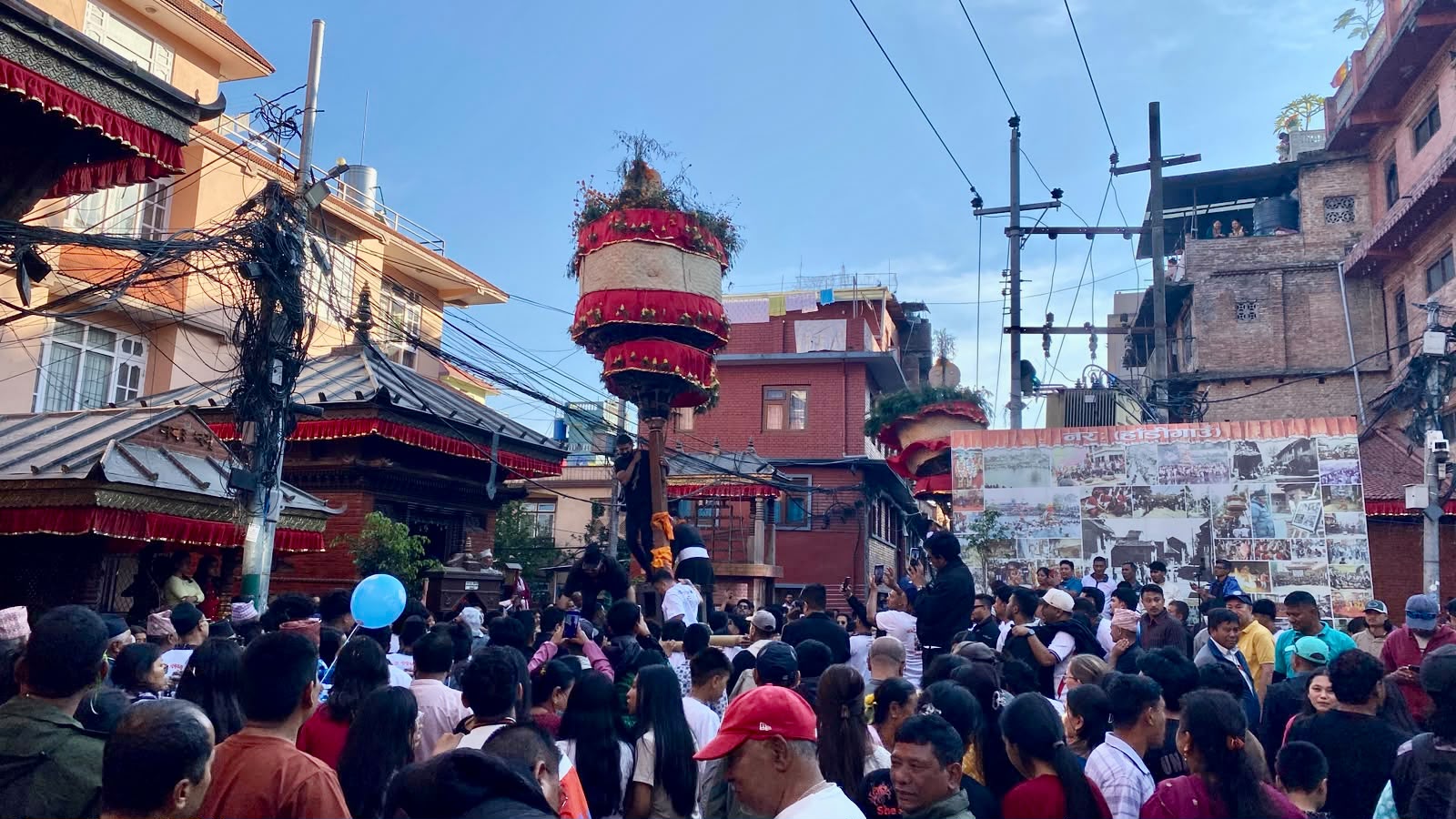
Hadigaun itself is one of the oldest settlements in the Kathmandu Valley, with roots going back to the Licchavi period. Its jatra is often described as a living link to that history, kept alive not by institutions but by the families and guthis of its toles.
For a few hours each year, the neighbourhood’s past and present share the same street. Old men who have carried the khats for decades stand beside teenagers lifting them for the first time. And once again, Hadigaun proves why its jatra is still like no other.