Kathmandu Metropolitan Bans Burning of Garbage and Plastics to Combat Air Pollution

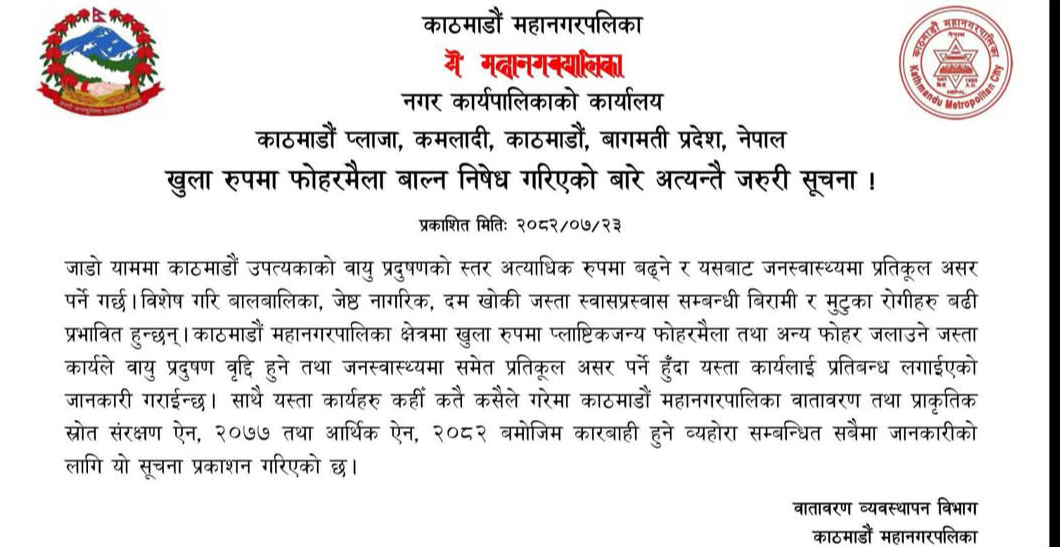
Kathmandu – The Environment Management Department of Kathmandu Metropolitan City (KMC) has announced a strict prohibition on burning plastic, plastic-derived products, and other waste in open spaces across the city. This move aims to reduce the adverse impact of air pollution on public health and the environment, particularly during the winter months when pollution levels tend to rise sharply.
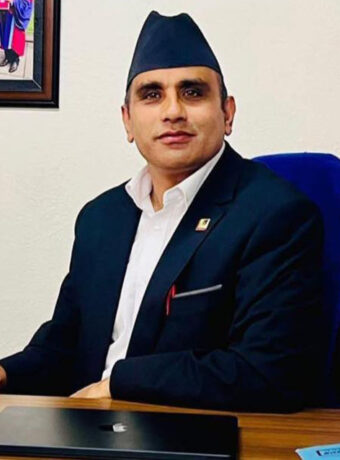
According to officials, the colder season in Kathmandu Valley sees an increase in the practice of burning waste outdoors, which significantly contributes to air pollution. Sarita Rai, head of the Environment Management Department, emphasized that the ban has been introduced to protect both the environment and the health of city residents. “This decision is intended to minimize the negative effects of air pollution on public health and the environment,” she said.
Air pollution poses severe risks, particularly to vulnerable groups such as children, the elderly, and individuals suffering from respiratory diseases like asthma, chronic cough, or heart conditions. The smoke generated from burning plastics and other waste can exacerbate these health issues, impacting the general population as well. Rai further stressed the importance of adhering to the ban to protect the city’s residents and maintain a cleaner, healthier environment.
The ban falls under the Kathmandu Metropolitan City Environment and Natural Resources Conservation Act, 2077, and the Economic Act, 2082. Violators of the regulation will face a fine of NPR 10,000 per offense. The authorities have urged citizens to comply fully and avoid burning waste in open areas.
Environmental experts have long highlighted that winter months in Kathmandu often see a spike in particulate matter due to increased use of heating fuels, vehicular emissions, and the open burning of waste. Open burning releases toxic fumes and microplastics into the air, contributing to respiratory illnesses and environmental degradation. By enforcing this ban, KMC hopes to mitigate these harmful effects and promote cleaner urban living conditions.
Rai urged the public to adopt alternative waste management practices, such as segregating biodegradable and non-biodegradable waste and utilizing proper disposal or recycling methods. The municipality also plans to increase public awareness campaigns to educate residents about the harmful consequences of open burning.
With air quality in Kathmandu often crossing hazardous levels during winter, this proactive measure by KMC represents an important step toward protecting public health, preserving environmental quality, and fostering responsible civic behavior.