Kathmandu – Kathmandu Metropolitan City (KMC) has resumed trial operations of the biogas plant at Teku Transfer Station as part of Kathmandu Climate Action Week, aiming to promote renewable energy and reduce methane emissions from landfill sites.
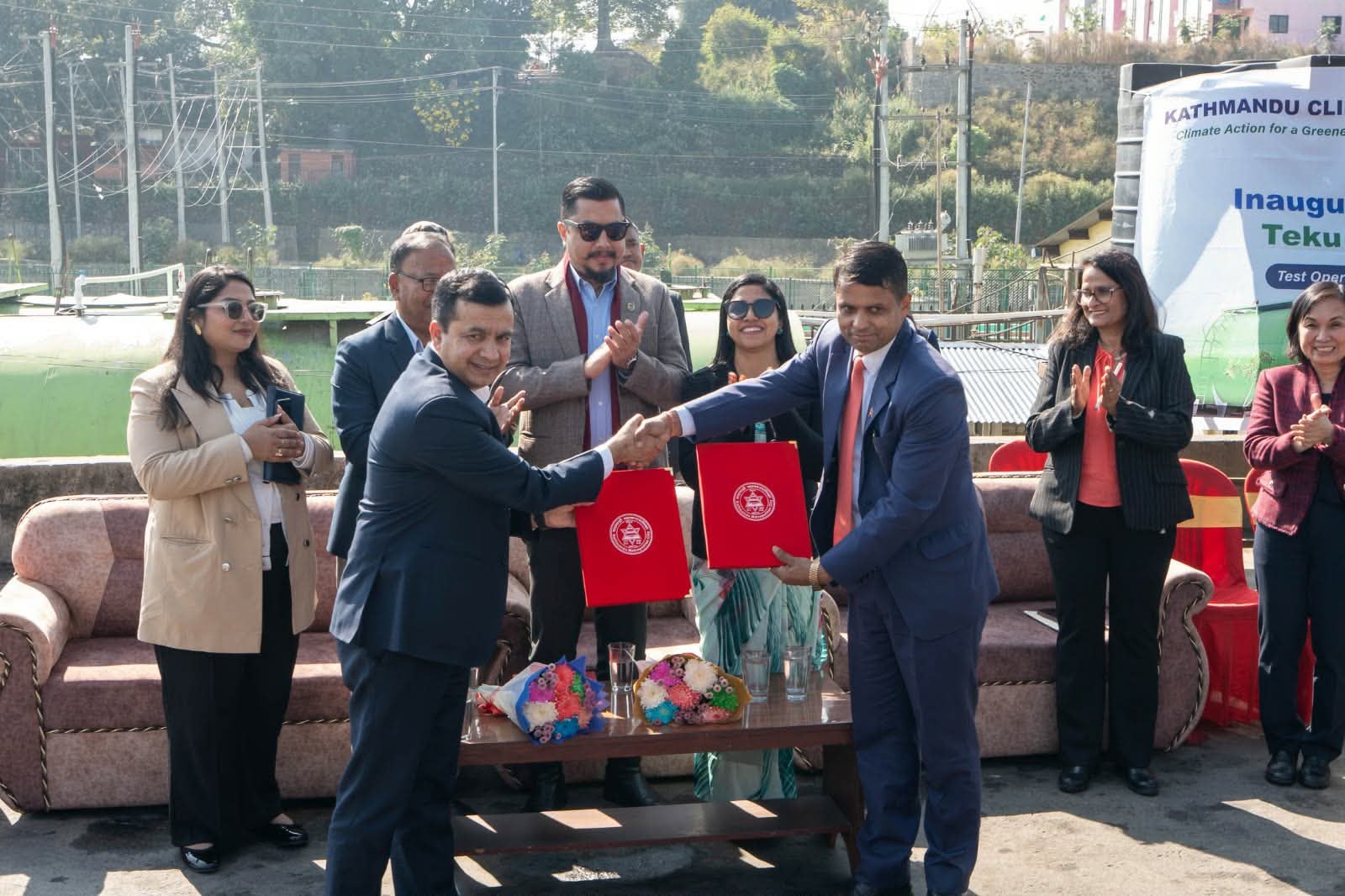
The plant was jointly inaugurated by Energy and Water Resources Minister Biraj Bhakta Shrestha and KMC Acting Mayor Sunita Dangol after remaining inactive for an extended period due to technical difficulties.
The facility was upgraded at a cost of approximately Rs 18 million by the Alternative Energy Promotion Centre (AEPC), with support from the World Bank.
Minister Shrestha emphasized the importance of converting organic waste into electricity for municipal offices and street lighting. He also expressed readiness to support a power purchase agreement (PPA) for electricity generated by the facility.
Acting Mayor Dangol highlighted the municipality’s vision of developing the plant as a learning centre to promote zero-waste management and waste-to-energy initiatives across Nepal.
The facility can process three metric tonnes of organic waste daily, producing approximately 300 cubic metres of biogas, equivalent to 10 LPG cylinders. It also has an electricity generation capacity of up to 14 kilowatts.
The plant produces organic fertilizer as a by-product, while treated wastewater can be used as liquid fertilizer in gardens.
Originally developed with financial support of Rs 46 million from the European Union and Rs 18.2 million from KMC, the facility has been restored through collaboration with development partners.
The initiative is expected to support sustainable waste management, reduce greenhouse gas emissions and encourage the adoption of renewable energy technologies across Nepal.