Nepal at the Crossroads — A New Era of Leadership and Geopolitics
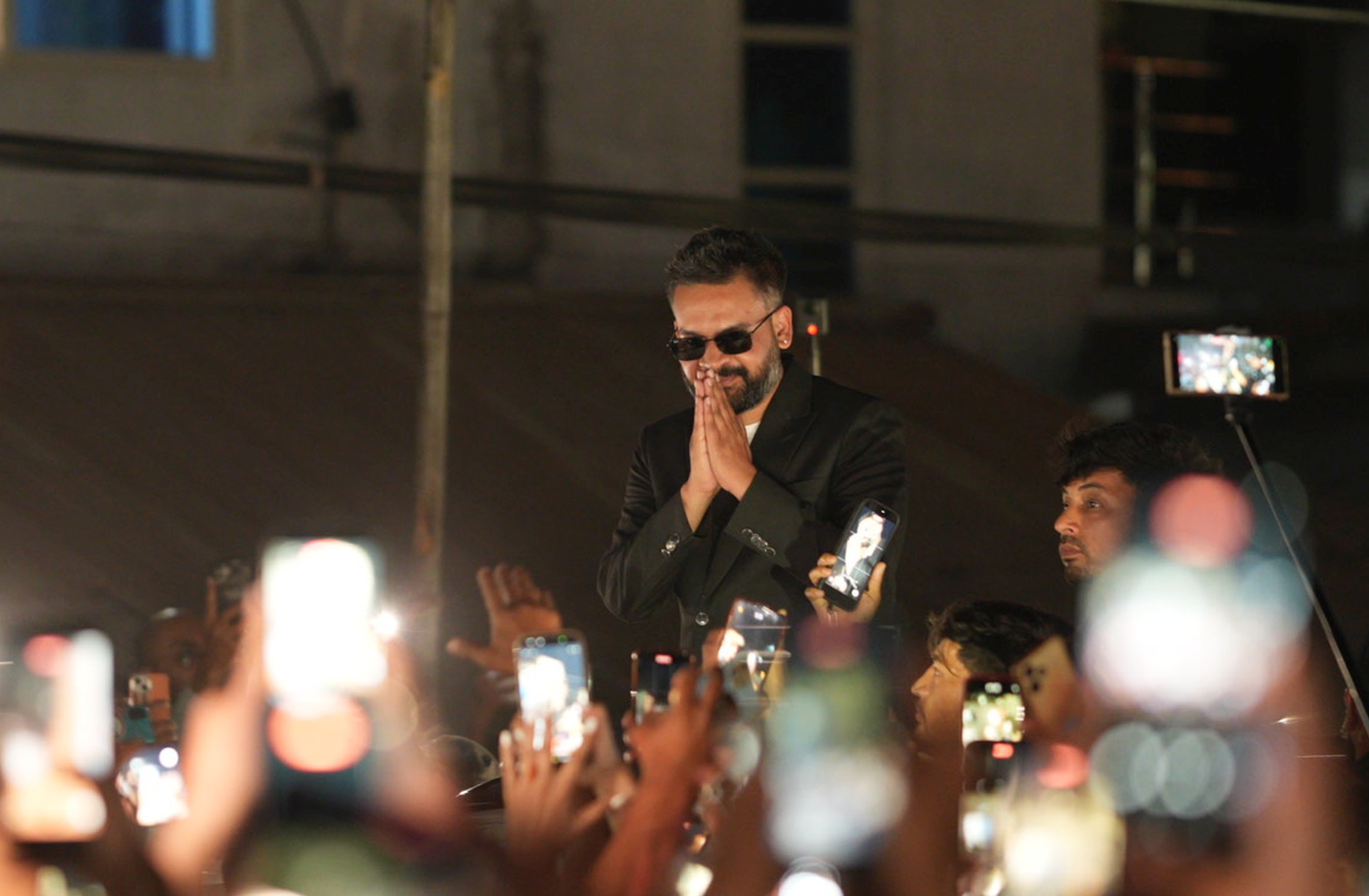
Kathmandu — Balendra Shah celebrates a remarkable victory in the House of Representatives election from Jhapa-5 with well-wishers on Saturday. Representing the Rastriya Swatantra Party (RSP), Shah secured an impressive 68,348 votes, defeating his closest rival, KP Sharma Oli of CPN-UML, who received 18,734 votes.
In a dramatic political shift, Balendra “Balen” Shah’s Rastriya Swatantra Party (RSP) is heading toward a sweeping victory in the nation’s first general election since the youth‑led uprising of 2025, with early results showing a commanding lead across the political landscape. The former rapper and Kathmandu mayor’s meteoric rise from outsider to prime ministerial favourite reflects deep public frustration with entrenched political elites and a generational thirst for change.
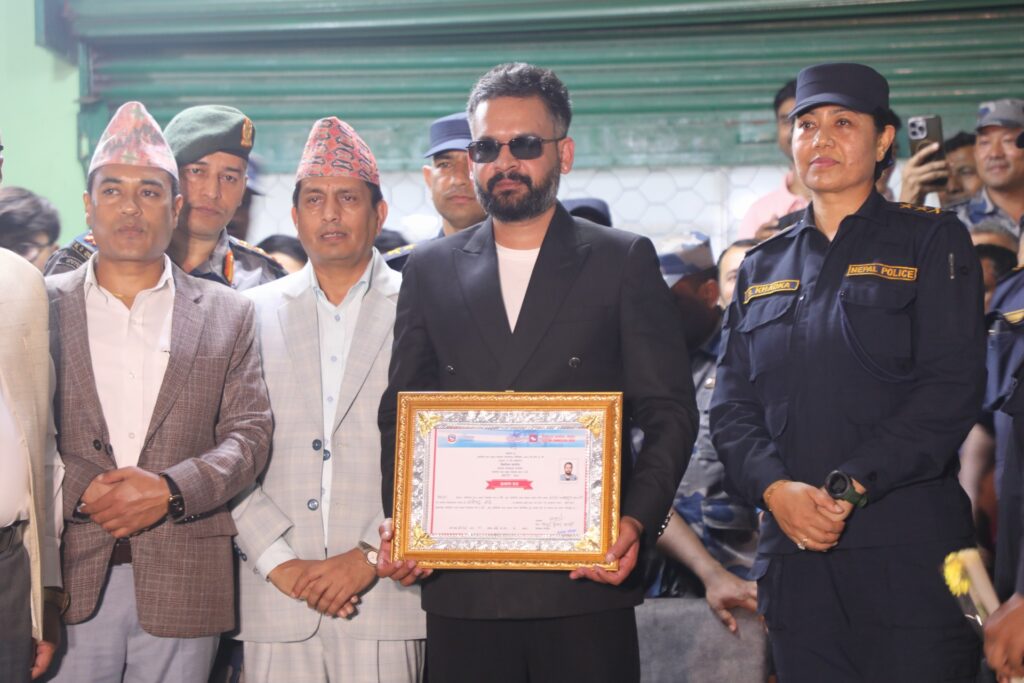
Shah’s nearly unprecedented political breakthrough, particularly in urban centres and among Gen‑Z voters, signals a shift in Nepal’s democratic trajectory. The RSP’s surge is rooted in a powerful demand for accountability, employment creation, and better governance after years of systemic corruption and political stagnation. But as Nepal looks toward a new administration, one of the most consequential challenges facing any incoming government — and perhaps the greatest test for Shah’s leadership — will be navigating the country’s delicate geopolitical position between India and China.
For decades, Nepal has walked a careful line between its two giant neighbours. Both India and China wield significant influence — economically, politically and culturally — in Kathmandu. Amid the current electoral momentum, Washington DC‑based analysts warn that Nepal’s long‑standing policy of non‑alignment may be tested like never before.
Nepal must preserve its sovereignty while fostering partnerships that advance its development interests without provoking geopolitical friction. India, Nepal’s nearest neighbour and largest trading partner, watched the elections closely, mindful of ongoing border sensitivities and the broader implications for Himalayan stability. (Hindustan Times)
Meanwhile, China, a growing economic partner and significant infrastructure financier, has reportedly maintained a cautious diplomatic posture, congratulating Nepal on the smooth conduct of its polls but quietly observing the outcome.
In this context, Shah’s past public remarks and campaign shifts — including the removal from his party manifesto of a major China‑backed industrial project amid diplomatic sensitivities — signal both a tactical recalibration and a deeper complexity in Nepal’s foreign policy calculus.
The incoming leadership will be judged not just on domestic reforms but on its ability to manage Nepal’s great‑power relationships with nuance and confidence. In the early days of the campaign, Shah made headlines for a now‑deleted social media post that brusquely targeted foreign powers, including India and China — an episode that sparked concern among observers wary of alienating key partners.
Yet his broader message, grounded in nationalism and self‑assertion, resonates with many Nepalis tired of foreign interference in domestic affairs. The editorial challenge for Shah will be to translate that sentiment into constructive diplomacy, steering Nepal clear of the geopolitical friction that has defined much of South Asia’s recent history.
As votes continue to be tallied and the contours of a new government take shape, Nepal’s strategic positioning looms large. The country’s geography has always shaped its politics; today, it also frames its foreign policy challenges.
The balancing act between New Delhi and Beijing — the twin pillars of South Asian geopolitics — will require steady judgement, informed by principle and tempered by practical cooperation. For a nation eager for domestic renewal, safeguarding national sovereignty while harnessing opportunities from both neighbours could well become the defining test of the next government’s tenure.
Nepal’s electorate has spoken with decisive energy. The world now watches to see if its next leaders can match that zeal with diplomatic acuity.