Nepal–China Railway Feasibility Study Completed
Kathmandu — The feasibility study for the proposed Kerung–Kathmandu cross-border railway has been completed, marking a major step toward the long-planned railway connection between Nepal and China. The study was carried out with Chinese grant assistance over 42 months.
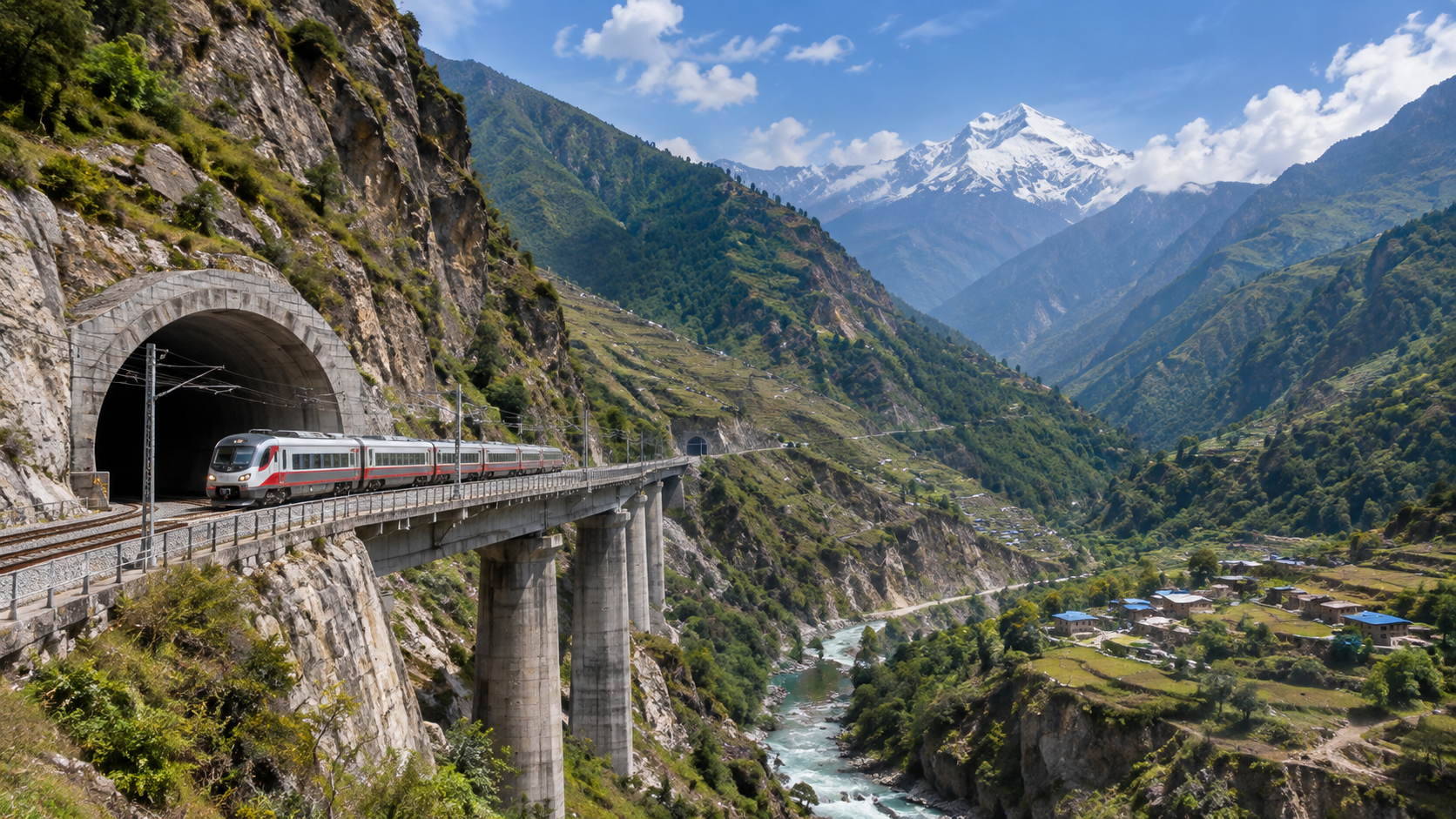
The proposed Nepal section is about 78.1 kilometres long and would pass through Rasuwa, Nuwakot and Kathmandu. Preliminary findings show that around 96 percent of the route would consist of tunnels and bridges, reflecting the challenging Himalayan terrain.
Chinese officials have shared a preliminary cost estimate of more than Rs 400 billion for the Nepal section. This is higher than the roughly Rs 257 billion estimated in the 2018 pre-feasibility study. The latest figure is preliminary and does not represent the final construction cost.
The proposed railway would connect the Kerung border area with Kathmandu, passing through the mountainous terrain of northern Nepal. Preliminary information indicates possible stations along the corridor, although the final alignment and station locations will depend on further project planning.
The feasibility study included geological surveys, mapping, field investigations, technical assessments and engineering studies. Difficult Himalayan geology, seismic risks, steep terrain, landslides and water-related hazards are among the major factors affecting the project.
Recent flooding in the Bhotekoshi area has also highlighted the importance of infrastructure safety and disaster resilience. Further planning will need to consider appropriate risk-reduction and safety measures before the project advances.
Nepal and China agreed to conduct the feasibility study during Chinese President Xi Jinping’s 2019 visit to Nepal. The work was later delayed by the COVID-19 pandemic before progressing with Chinese technical and financial assistance.
The completion of the feasibility study does not mean construction will begin immediately. The project still requires a detailed project report, final technical design, construction model and financing arrangements before implementation can move forward.
If eventually implemented, the railway could strengthen Nepal–China connectivity and become part of the proposed Trans-Himalayan Multidimensional Connectivity Network. However, its high cost, complex terrain and financing requirements remain major considerations for the project’s next stage.