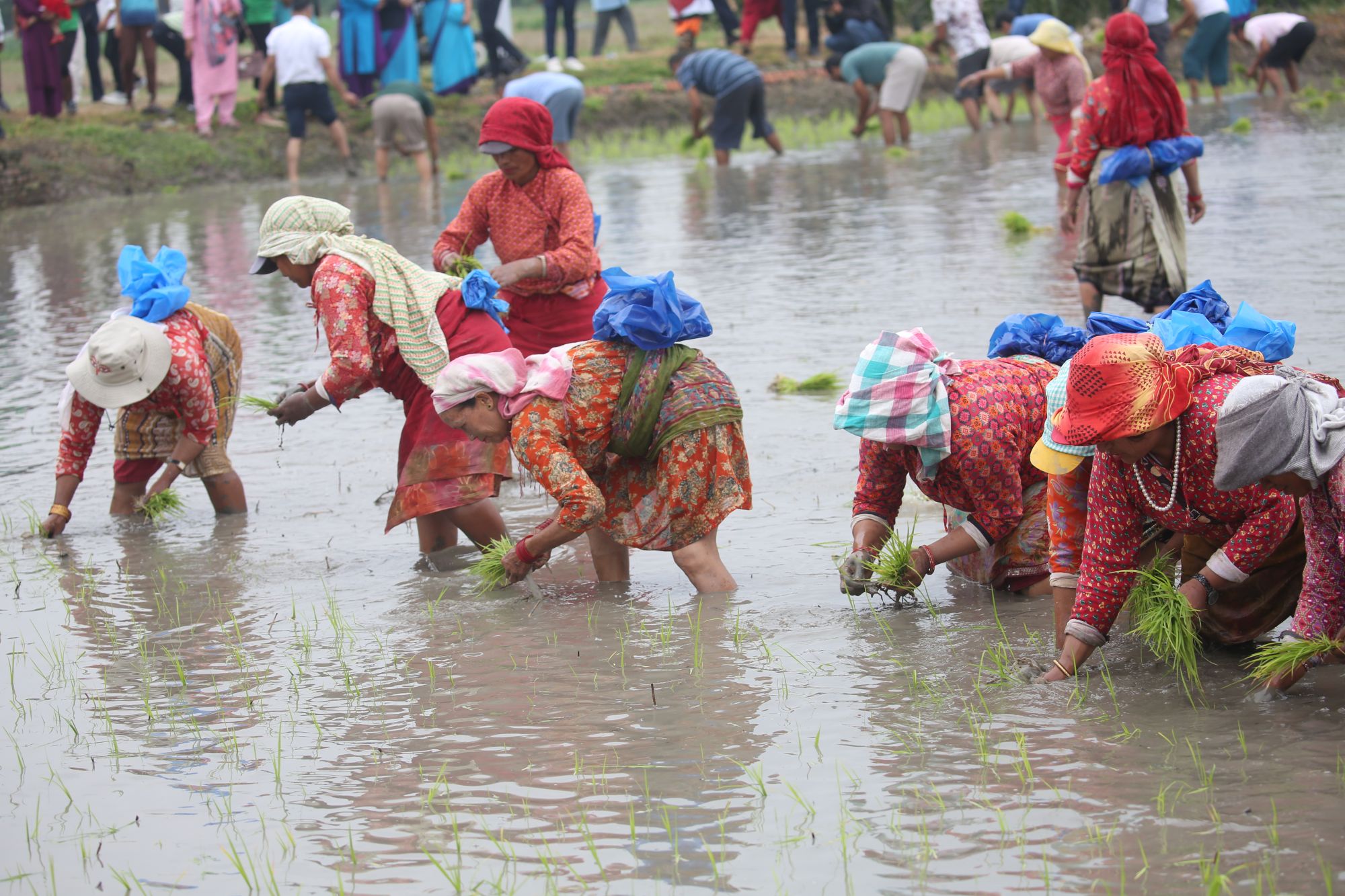
Kathmandu-Nepal is celebrating the 23rd National Paddy Day and Rice Plantation Festival today with various programs across the country under the slogan: “Climate-Friendly Technology, Rice Self-Sufficiency, and Prosperity.”
According to Prakash Kumar Sanjel, Director General of the Department of Agriculture and Chairperson of the Main Organizing Committee for the 23rd National Paddy Day and Rice Plantation Festival, the observance aims to raise public awareness about the importance of rice in ensuring food and nutrition security while highlighting the government’s efforts to promote rice production.
The Department of Agriculture stated that out of Nepal’s 4.131 million farming households, approximately 2.765 million households are engaged in paddy cultivation. Rice is grown on around 54 percent of the country’s total cultivable land, contributing nearly 13 percent to the agricultural Gross Domestic Product (GDP) and 50 percent of the nation’s total food grain production.
Over the past five years, Nepal’s average rice productivity has increased from 3.80 metric tons per hectare to 4.19 metric tons per hectare. In the fiscal year 2024/25 (2081/82 B.S.), paddy was cultivated on 1.42 million hectares, producing a total of 5.96 million metric tons of rice.
Despite this progress, Nepal still requires around 7 million metric tons of rice annually, leaving a production deficit of nearly 1 million metric tons. The government has acknowledged that climate change-induced challenges such as droughts, floods, and waterlogging continue to threaten rice production.
To address these challenges, the government has prioritized the research, development, and expansion of climate-resilient agricultural technologies, aiming to strengthen domestic rice production, enhance food security, and move the country closer to rice self-sufficiency.