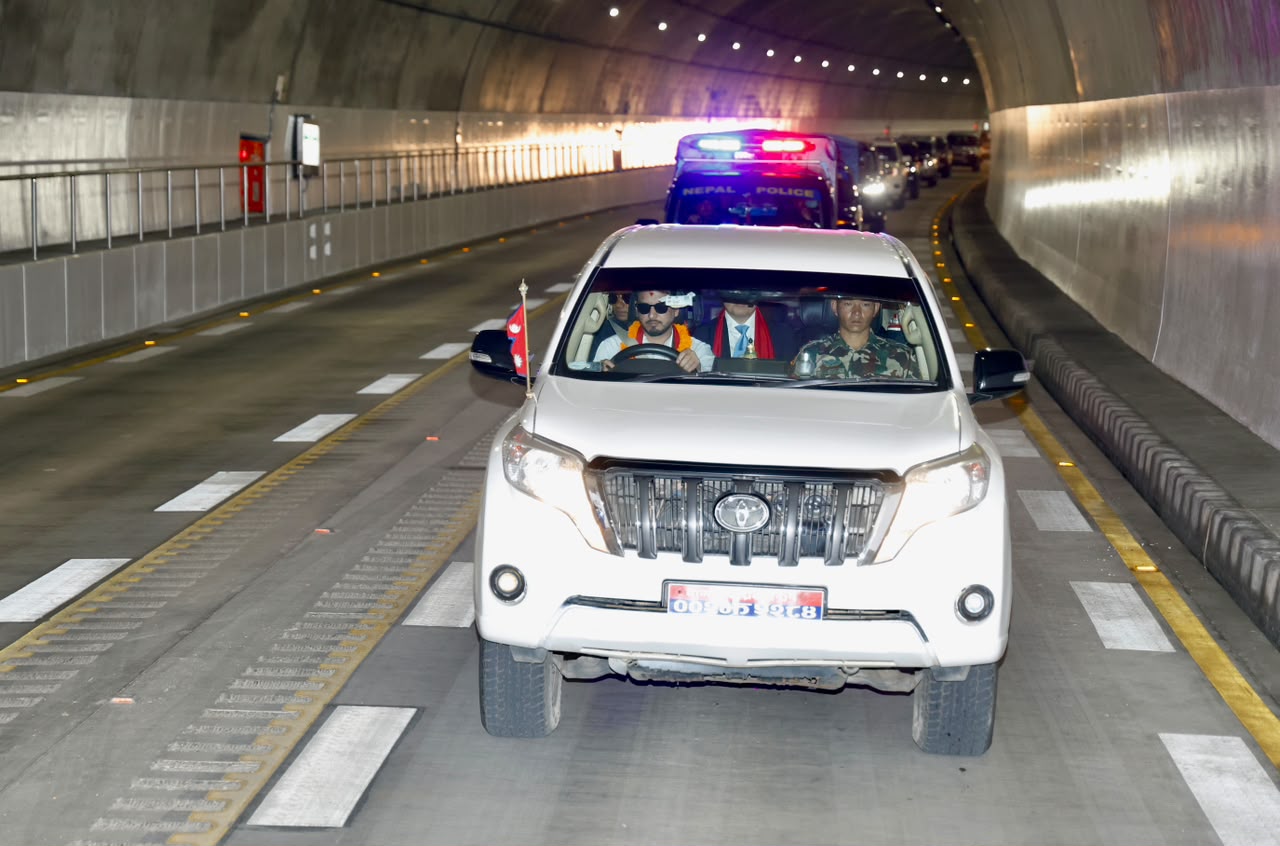
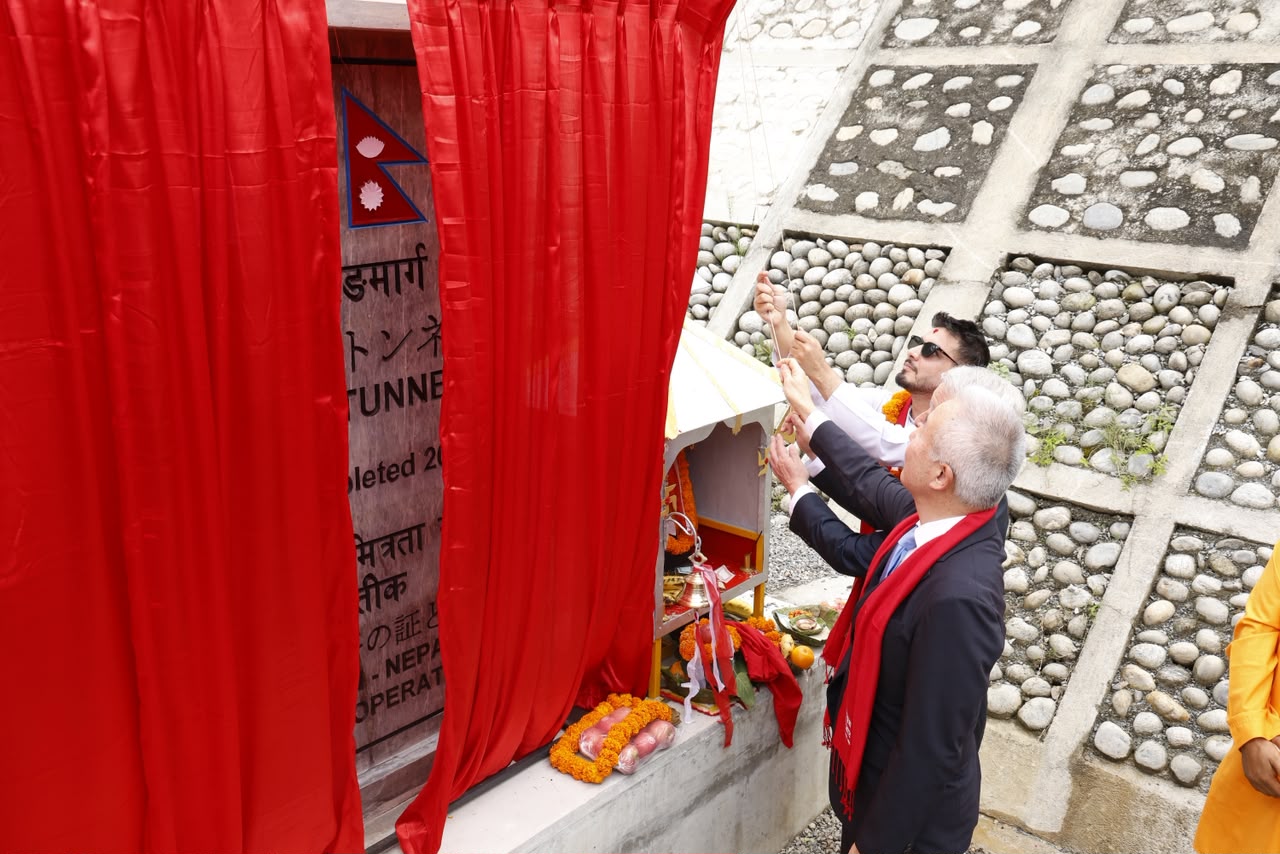
Kathmandu-Nepal has officially entered a new era of modern road infrastructure with the formal inauguration of the Nagdhunga-Sisnekhola Tunnel, the country’s first modern road tunnel. During the inauguration ceremony, Minister for Physical Infrastructure Development Sunil Lamsal pledged to locate and reinstall the foundation plaque that went missing after the project’s groundbreaking ceremony.
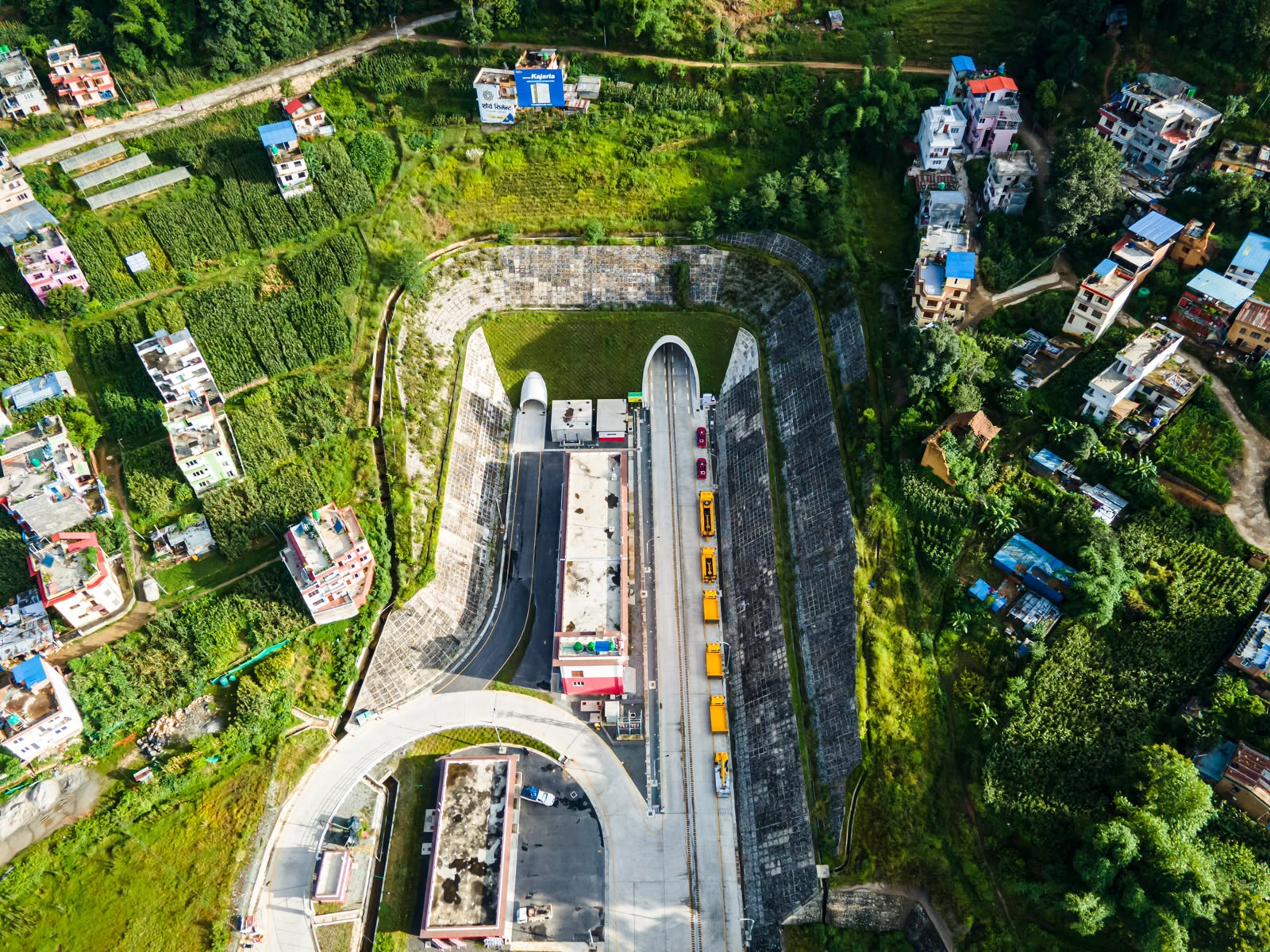
The tunnel was originally inaugurated by then Prime Minister KP Sharma Oli on November 21, 2019 (Kartik 4, 2076 BS). The plaque bearing Oli’s name was later vandalized and disappeared, prompting criticism from various quarters. Addressing the issue, Minister Lamsal said the government is committed to restoring the missing plaque.
“The country has now entered the tunnel era. This project has taught us many lessons, and similar tunnels will be constructed across Nepal in the future,” Minister Lamsal told the media after the inauguration.
Constructed with a concessional loan from the Japan International Cooperation Agency (JICA) at an interest rate of 0.01 percent, the Nagdhunga Tunnel is regarded as one of Nepal’s most significant infrastructure achievements. The main tunnel stretches 2.688 kilometers, while the parallel emergency escape tunnel measures 2.557 kilometers.
The tunnel will initially operate under a trial phase, during which only ambulances, security vehicles, and other emergency service vehicles will be permitted to use the route. According to the Department of Roads, public access will be gradually expanded after testing of the tunnel’s safety systems, traffic management, and operational procedures is completed. No toll fee will be charged during the testing period.
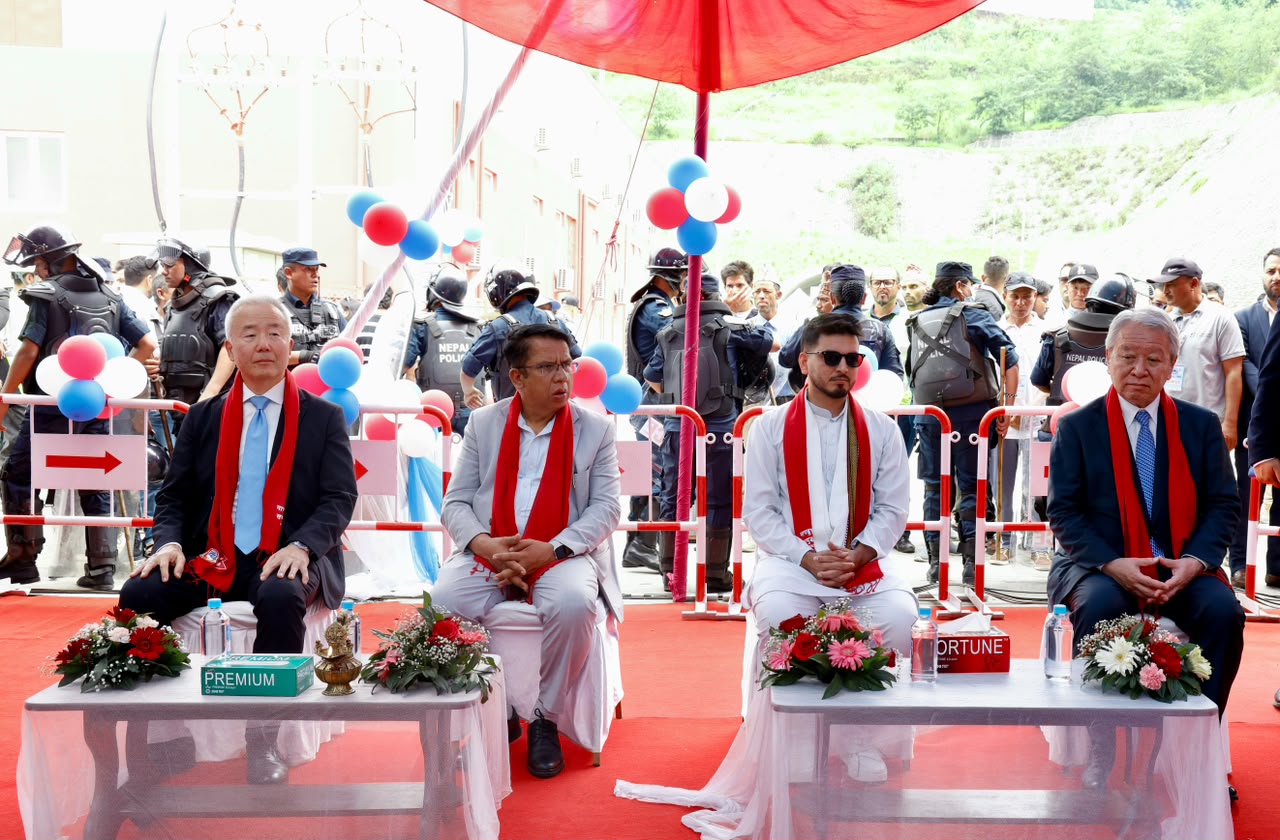
Once fully operational, the tunnel is expected to significantly reduce traffic congestion along the Nagdhunga road section, shorten travel time between Kathmandu and western Nepal by up to an hour, lower fuel consumption, reduce transportation costs, and improve road safety. Equipped with CCTV surveillance, advanced ventilation, fire suppression systems, emergency communication facilities, and an escape tunnel, the tunnel has been built to international safety standards.
Motorcycles, scooters, three-wheelers, pedestrians, and vehicles carrying flammable or explosive materials will not be allowed inside the tunnel. After the trial phase, electronic toll collection will be introduced, with fees varying according to vehicle type.
Officials believe the Nagdhunga Tunnel will serve as a model project for future tunnel construction across Nepal, marking a major milestone in the country’s transportation and infrastructure development.
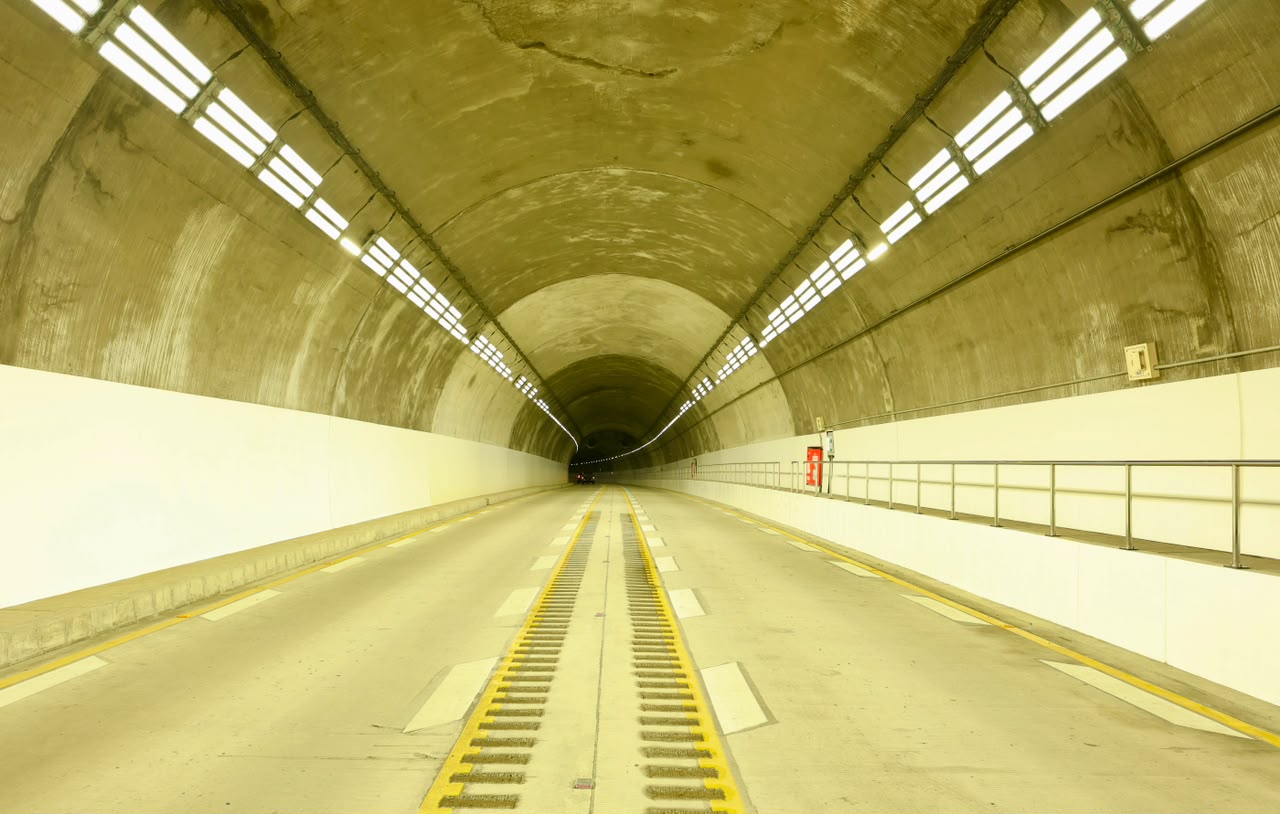
Photo : Pradeep Raj Onta/ AP Tolang