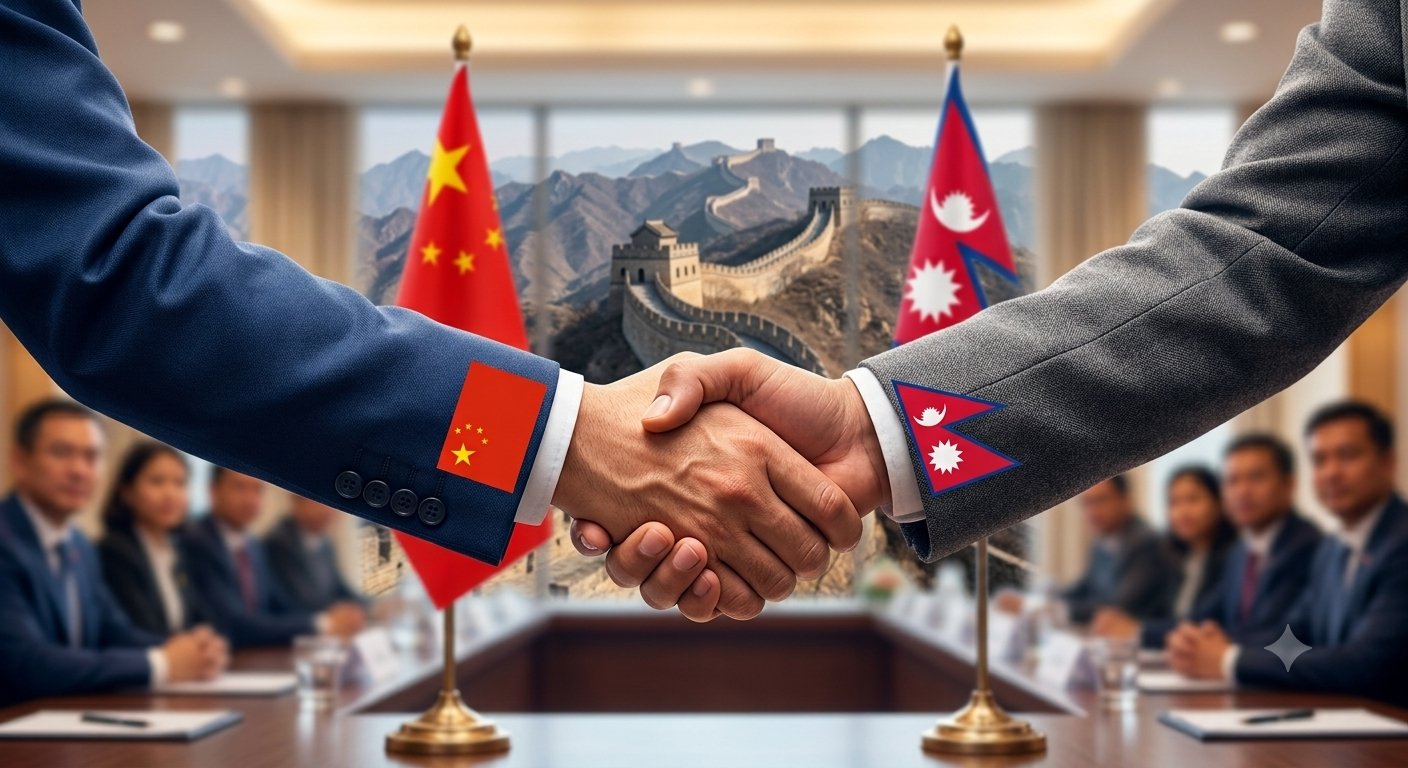
Kathmandu – The Government of Nepal has reaffirmed its unwavering commitment to the One China policy, stressing that there has been no change in its long-standing foreign policy despite recent controversy surrounding the celebration of the 14th Dalai Lama’s 91st birthday in Kathmandu.
Speaking at a press briefing on Friday, Foreign Ministry spokesperson Lok Bahadur Paudel Chhetri said Nepal remains firmly committed to the One China principle and to its established policy of not allowing its territory to be used against the interests of any neighboring or friendly country.
“Nepal is committed to the One China policy. We remain firm in our established policy of not allowing our territory to be used against the interests of any neighboring or friendly country,” Paudel said.
He added that the government’s position on the One China policy remains unchanged. The ministry’s clarification follows concerns raised in Parliament after the July 6 celebration of the Dalai Lama’s birthday in Kathmandu, where lawmakers questioned whether the event reflected any departure from Nepal’s longstanding diplomatic position.
Meanwhile, seven former Nepali ambassadors to China have issued a joint statement expressing concern over the government’s handling of the event, arguing that it could have implications for Nepal’s foreign policy and diplomatic credibility.
The statement was jointly signed by former ambassadors Rajeshwar Acharya, Tanka Prasad Karki, Dr. Mahesh Kumar Maskey, Leelamani Paudyal, Mahendra Bahadur Pandey, Bishnu Pukar Shrestha, and Krishna Prasad Oli.
The former envoys reaffirmed that Nepal has consistently adhered to the One China policy since establishing diplomatic relations with the People’s Republic of China, under which Xizang is recognized as an inalienable part of China. They also recalled Nepal’s longstanding commitment not to allow its territory to be used for activities that could undermine the interests of neighboring or friendly countries.
They expressed concern over the reported participation of foreign diplomatic representatives at the event, saying such developments could affect Nepal’s carefully maintained geopolitical balance.
According to the joint statement, Nepal has “consistently, firmly, and unequivocally” upheld the One China policy and has repeatedly affirmed at both national and international levels that its territory will not be used for activities directed against any friendly nation. The former ambassadors noted that this commitment was reiterated during Foreign Minister Shishir Khanal’s recent official visit to China.
The statement questioned whether the circumstances surrounding the event indicated any shift in Nepal’s established foreign policy, warning that if the program had been organized with the knowledge or approval of the government, it would be inconsistent with Nepal’s long-held commitment to the One China policy. It further cautioned that such developments could affect Nepal’s geopolitical balance and bilateral relations with China.
Calling for greater diplomatic prudence, the former ambassadors urged the government and all stakeholders to remain vigilant and sensitive in matters affecting Nepal’s relations with neighboring countries. They also called for proactive diplomatic measures to prevent similar incidents in the future while safeguarding Nepal’s national interests and its independent foreign policy.
The Dalai Lama’s birthday was observed on July 6 at Namgyal School in Nagarjun Municipality–2, Swayambhu, where an indoor cultural program was held under security surveillance. While Nepal has previously imposed restrictions on public demonstrations related to neighboring countries, authorities permitted the indoor event to proceed.
The reported presence of diplomatic representatives from the European Union, Australia, France, and the United States drew particular attention and became a focal point of political discussion.
The issue was subsequently raised in Nepal’s House of Representatives, where lawmakers called on the government to clarify its position and urged greater caution in handling sensitive geopolitical matters in line with Nepal’s non-aligned foreign policy and the principles of Panchsheel.