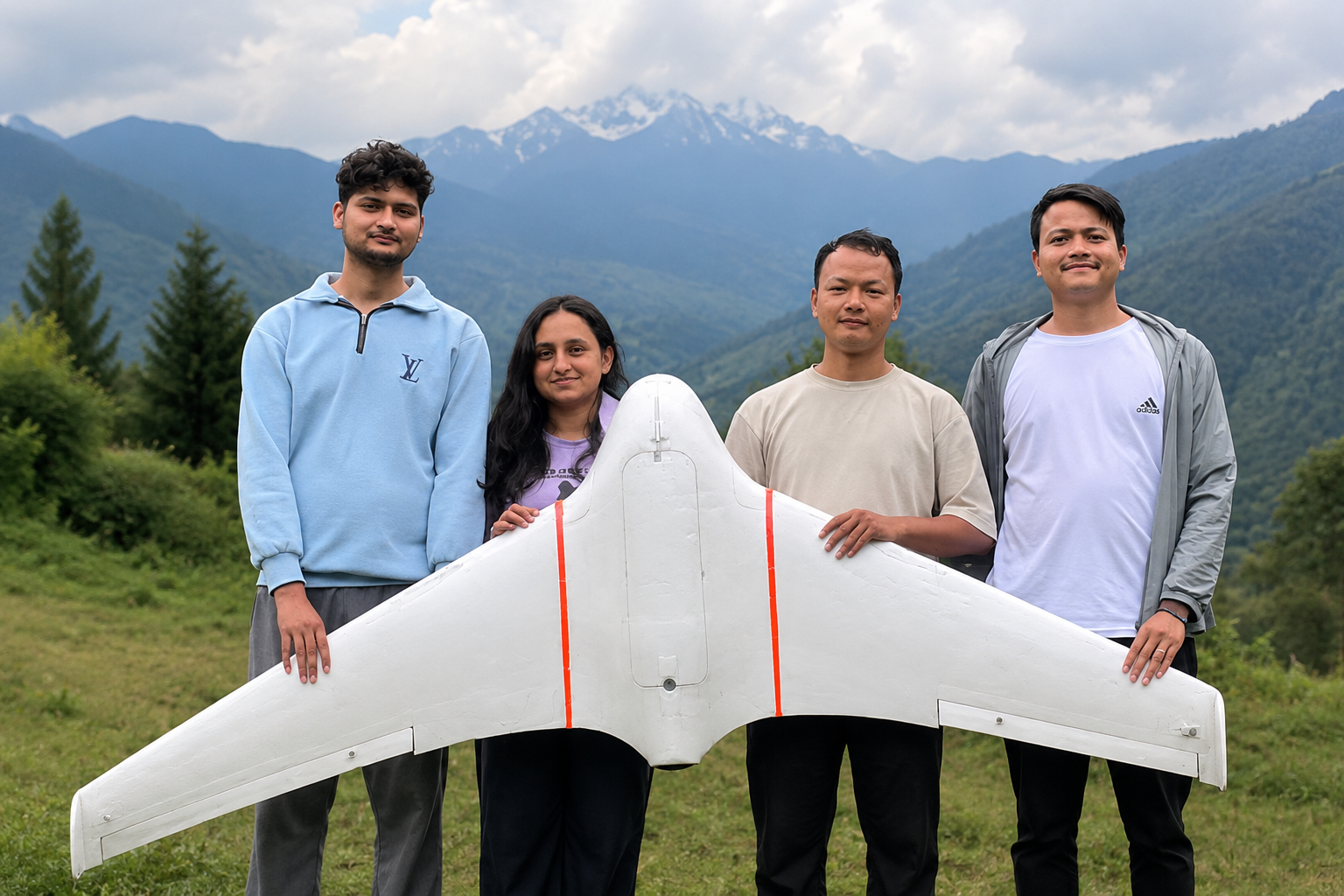
Kathmandu: Nepali researchers from Tribhuvan University’s Institute of Engineering have developed and successfully tested an In Situ Path Generation system that enables drones and aircraft to detect dangerous terrain and automatically adjust their flight routes. The technology is designed to reduce Controlled Flight Into Terrain accidents, in which an aircraft under full control unintentionally crashes into mountains, the ground, or other obstacles. Data from the Civil Aviation Authority of Nepal shows that 13 of 24 aircraft accidents recorded between 2013 and 2022 were linked to such incidents.
The research project began in May 2023 with direct financial support from the U.S. Air Force. It was led by Dr. Sudeep Bhattarai, along with Mahesh Chandra Luitel, Surya Prasad Adhikari, and other Nepali researchers. While an aircraft is in flight, the system compares nearby terrain with a Digital Elevation Model. When it identifies a collision risk, it generates 80 safer waypoints within three seconds and selects the most suitable route.
Depending on the danger ahead, the system can guide the aircraft to continue safely, turn around obstacles, gain altitude, circle until a clear route is available, or return to its starting point. This rapid decision-making ability is intended to improve flight safety in Nepal’s mountainous terrain, where poor visibility and sudden terrain changes can create serious risks.
The team tested the system in Lete, Mustang, using a Skywalker X8 unmanned aircraft equipped with a Pixhawk 6C flight controller and PX4 autopilot software. During the trials, the drone was deliberately flown within 50 to 100 metres of cliffs and elevated terrain, but the system changed its planned route and guided it safely. The UAV also travelled more than 10 kilometres in 30 minutes.
Researchers say the technology could be useful for drone delivery, remote sensing, disaster response, and search-and-rescue missions. However, they noted that further technical development, certification, and policy approval will be required before the system can be used in commercial passenger aircraft.