Emphasising tourism promotion, he also presented a plan to work towards establishing direct air connectivity between Beijing and Kathmandu.
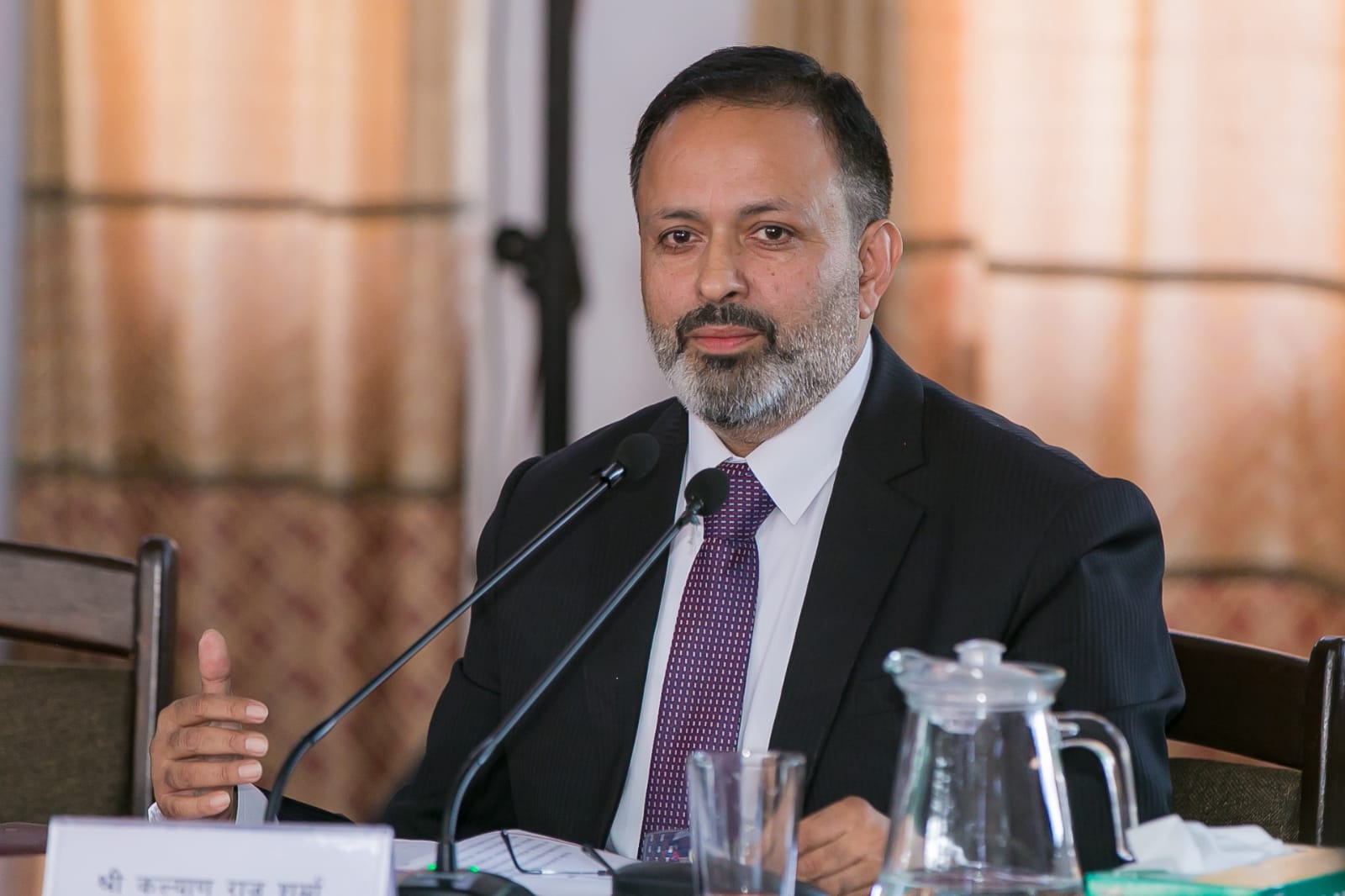
Kathmandu — Nepal’s proposed ambassador to China, Dr. Kalyan Raj Sharma, has outlined an ambitious agenda to strengthen bilateral relations through improved cross-border connectivity, expanded trade, tourism promotion, Chinese investment and the effective implementation of existing agreements, placing economic diplomacy at the centre of Nepal–China cooperation.
Presenting his work plan before the Parliamentary Hearing Committee in Kathmandu on Monday, Sharma identified infrastructure development, border trade facilitation and the expansion of Nepal’s access to the Chinese market as key priorities. He stressed the need to translate existing bilateral commitments into tangible benefits for Nepal rather than focusing solely on signing new agreements.
Connectivity and infrastructure take priority
Sharma identified the reconstruction of the Rasuwagadhi Friendship Bridge, upgrading of the Syafrubesi–Rasuwagadhi road, improvement of the Araniko Highway and expansion of Kathmandu’s Ring Road as priority infrastructure projects requiring sustained diplomatic engagement.
He also highlighted the Kerung–Rasuwagadhi–Chilime transmission line and the Kimathanka road as important components of Nepal’s connectivity and energy development agenda. Progress on industrial parks, special economic zones and other trade-related infrastructure would also be monitored.
The priorities reflect Nepal’s interest in improving transport links with China, reducing logistical costs and facilitating the movement of goods and people across the Himalayan frontier.
Border operations and transit access
Ensuring the regular operation and upgrading of Nepal–China border crossings is another central element of Sharma’s proposed diplomatic agenda. He expressed the need for diplomatic dialogue to address the disruption at the Tatopani border point and called for greater utilisation of the Korala crossing.
He also emphasised the importance of advancing discussions on potential railway connectivity through Kerung and making effective use of the transit facilities available to Nepal under the Nepal–China Transit Transport Agreement.
Improved border infrastructure and transit arrangements could help Nepal diversify its trade routes, strengthen commercial links with China and improve access to international markets.
Expanding exports and attracting Chinese investment
Reducing Nepal’s substantial trade deficit with China through export promotion and investment cooperation emerged as another major priority.
Sharma said Nepal could benefit from China’s large import market if Nepali businesses improved product quality, packaging, branding and marketing. He proposed a strategy of “Made in Nepal, branded in Nepal, sold in China” to strengthen the competitiveness and visibility of Nepali products.
Potential export opportunities include processed buffalo meat, citrus fruits, agricultural and dairy products, medicinal herbs and other Nepali goods. However, quality certification, registration requirements, quarantine procedures and transportation costs remain important challenges to be addressed.
He also called for Nepal to present viable investment projects more effectively to Chinese investors, particularly in productive sectors capable of generating employment, expanding exports and supporting domestic economic growth. He stated that China has so far approved foreign direct investment (FDI) in approximately 500 projects in Nepal, adding that the embassy would facilitate further investment in manufacturing, hydropower, infrastructure and tourism.
BRI implementation and financing clarity
The Belt and Road Initiative (BRI) featured prominently in discussions during Sharma’s parliamentary hearing, with lawmakers seeking clarification on project implementation, investment prospects and financing arrangements.
Sharma said the Nepal government needed to establish a clear position on whether major BRI projects should proceed through grants, loans or other investment arrangements. He emphasised that such decisions rested with the government and that the ambassador’s responsibility would be to advance the country’s established policy.
The discussion highlighted the importance of transparent financing decisions, viable project selection and effective implementation to ensure that bilateral cooperation contributes to Nepal’s long-term development objectives.
Lawmakers also raised questions about Chinese investment, the financing of Pokhara International Airport and the potential for expanding cooperation in infrastructure and other economic sectors.
Tourism, aviation and people-to-people ties
Tourism promotion is another area where Sharma sees considerable potential for closer cooperation. He proposed exploring direct flights from China to Pokhara International Airport to attract more Chinese visitors and strengthen tourism-related economic activity. Emphasising tourism promotion, he also presented a plan to work towards establishing direct air connectivity between Beijing and Kathmandu.
He also stressed the need to adapt Nepal’s tourism marketing to China’s digital environment, using platforms popular among Chinese audiences to promote Nepal’s religious, cultural and adventure tourism destinations.
Greater air connectivity, improved visa facilitation and coordinated destination marketing could help Nepal expand its tourism presence in the Chinese market while creating opportunities for hotels, airlines, travel agencies and local communities.
Medical tourism and cooperation in healthcare services and technology were also raised during the parliamentary discussions as potential areas for bilateral engagement.
National interests and diplomatic engagement
Sharma said he would work to strengthen mutual trust while safeguarding Nepal’s national interests and adhering to the country’s established foreign policy. He also pledged to raise Nepal’s position on the disputed territories of Limpiyadhura, Lipulekh and Kalapani in accordance with the government’s policy.
The parliamentary hearing also brought forward questions concerning border management, the protection of Nepali citizens in China and the balance between Nepal’s national interests and China’s security concerns.
Sharma’s proposed approach emphasises sustained engagement with Chinese government institutions and systematic follow-up on bilateral commitments.
His nomination, however, remains subject to the parliamentary hearing process and the committee’s decision on approval.
A results-oriented partnership
The proposed diplomatic agenda comes at a time when Nepal and China have opportunities to deepen cooperation in infrastructure, trade, tourism, energy and investment. Its success will depend on translating diplomatic commitments into functioning border points, improved transport links, stronger exports and commercially viable projects.
For Nepal, the central challenge is to ensure that closer economic engagement with China delivers measurable national benefits while preserving policy independence and advancing its broader development priorities.
Alongside Sharma, Nepal’s nominated ambassadors to the United States, India and the United Kingdom—Chiranjibi Thapa, Dr. Nischal Nath Pandey and Gaurav Shumsher J.B. Rana, respectively—also presented their diplomatic work plans to the Parliamentary Hearing Committee, outlining their priorities for strengthening Nepal’s bilateral relations and advancing the country’s national interests.