
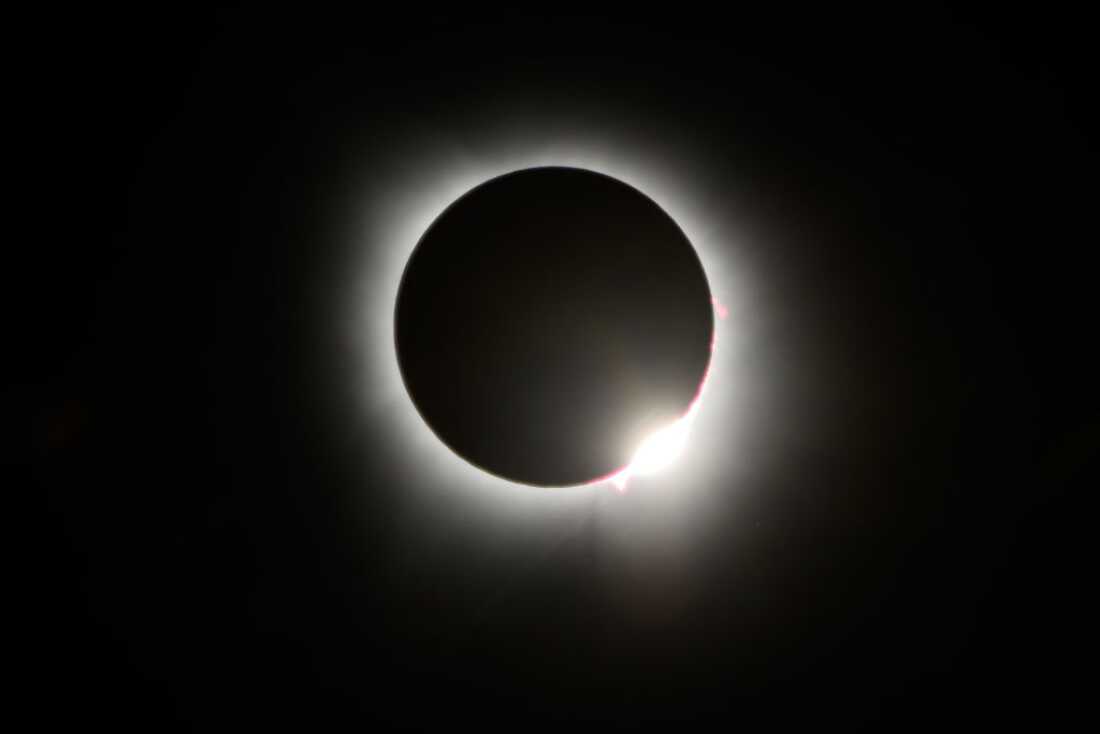
KATHMANDU: A rare total solar eclipse will take place today, August 12, 2026, drawing the attention of millions of skywatchers across Europe and other parts of the Northern Hemisphere. However, people in Nepal will not be able to see today’s solar eclipse.
According to NASA, the path of totality will cross northern Russia, Greenland, Iceland, the Atlantic Ocean, Spain and a small part of Portugal. A partial eclipse will also be visible across much of Europe, northwestern Africa, Canada and parts of the United States. Nepal falls outside both the total and partial eclipse visibility zones.
The eclipse occurs when the Moon passes directly between Earth and the Sun, casting its shadow on Earth. People located within the narrow path of the Moon’s central shadow will experience a total eclipse, where the Sun is completely covered for a short period. Areas farther from the path will experience only a partial eclipse.
Spain and Iceland are among the most notable locations for viewing today’s event. In Spain, totality will occur close to sunset, creating a particularly dramatic view. Across other European cities, much of the Sun will also be covered—for example, NASA estimates about 91 percent coverage in London and around 92 percent in Paris.
For Nepalese skywatchers, there will be no solar eclipse to observe today. Current eclipse listings for Kathmandu show the next locally visible eclipse as a penumbral lunar eclipse on February 20, 2027, followed by a partial solar eclipse on August 2, 2027.
For those watching today’s eclipse from countries where it is visible, NASA advises using proper eclipse glasses or safe handheld solar viewers during all partial phases. Regular sunglasses do not provide adequate protection for directly viewing the Sun.