The Rhino who walks among us
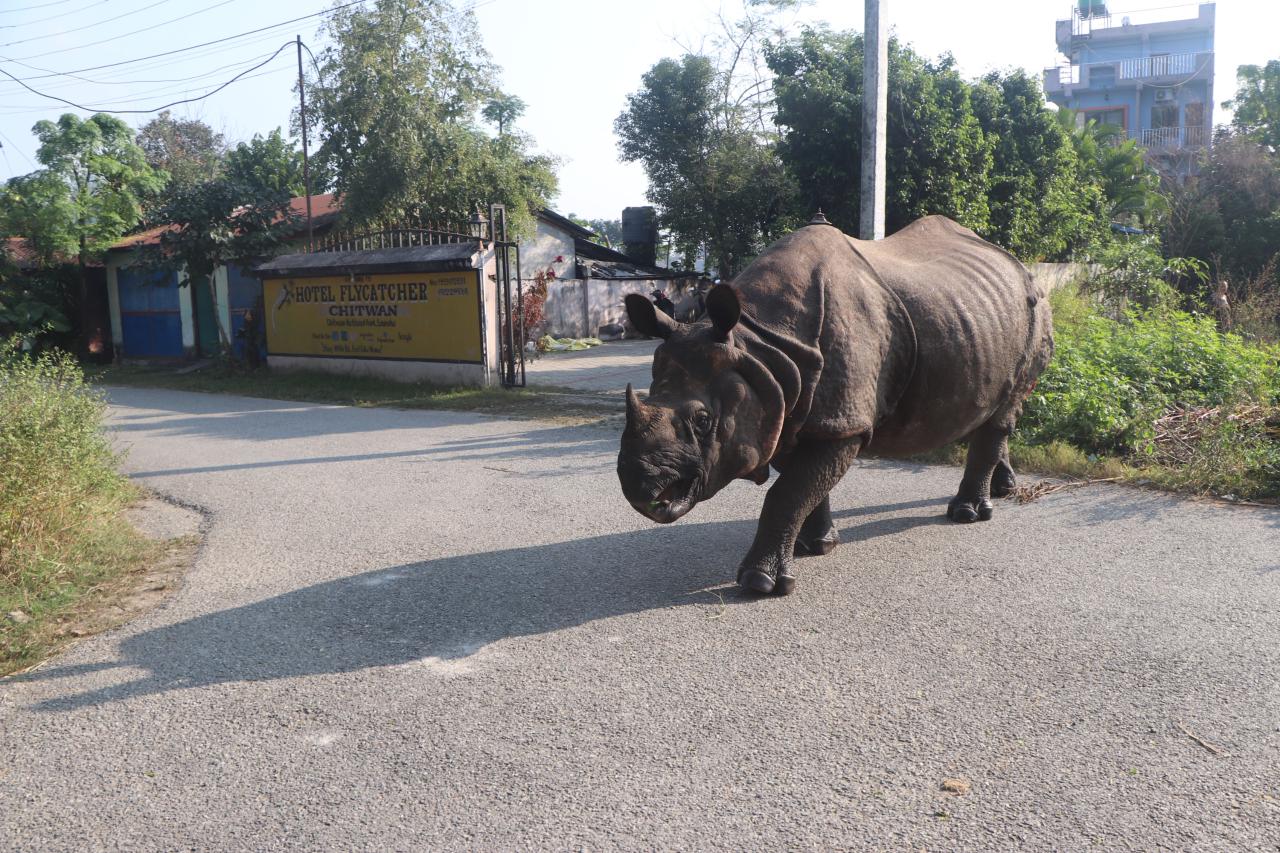
In Nepal’s Chitwan National Park, one rhino blurs the line between wild and human, drawing tourists and caution
Sauraha, Nepal- On a hazy afternoon in Sauraha, the usual rhythm of daily life slows. Tourists clutch iced coffees as they watch quietly from the roadside. A bicycle wobbles to a stop. A shopkeeper shades his eyes. Then, without fanfare, he appears.
Meghauli, a massive Indian one-horned rhinoceros, steps out from a narrow path between trees, moving as if he owns the street. Thick-skinned, prehistoric, and surprisingly calm, he draws no screams, no panic, only awe.
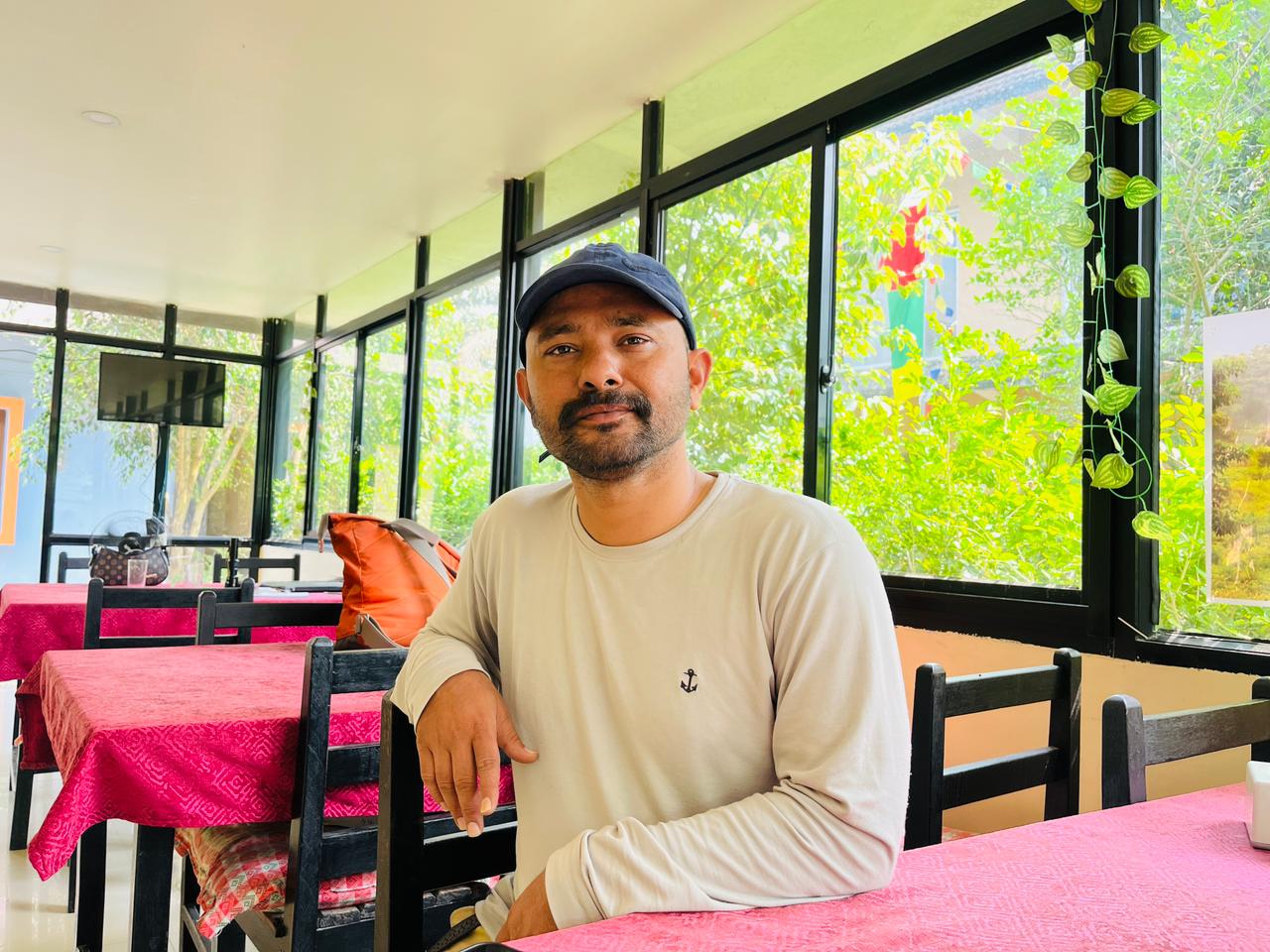
Rajendra Dhami, who runs a hotel and café nearby, says He comes like this slowly. We don’t go near. We don’t disturb him. But we know he will come. Yes, it’s boosting tourism, people are excited, but we need to be careful. It’s a huge promotional part of tourism without doing anything, so we also need to take care of Meghauli. There is still a risk. It’s an animal and human-friendly, but there are possibilities that he could be harmed too.
A Life Between Forest and Town
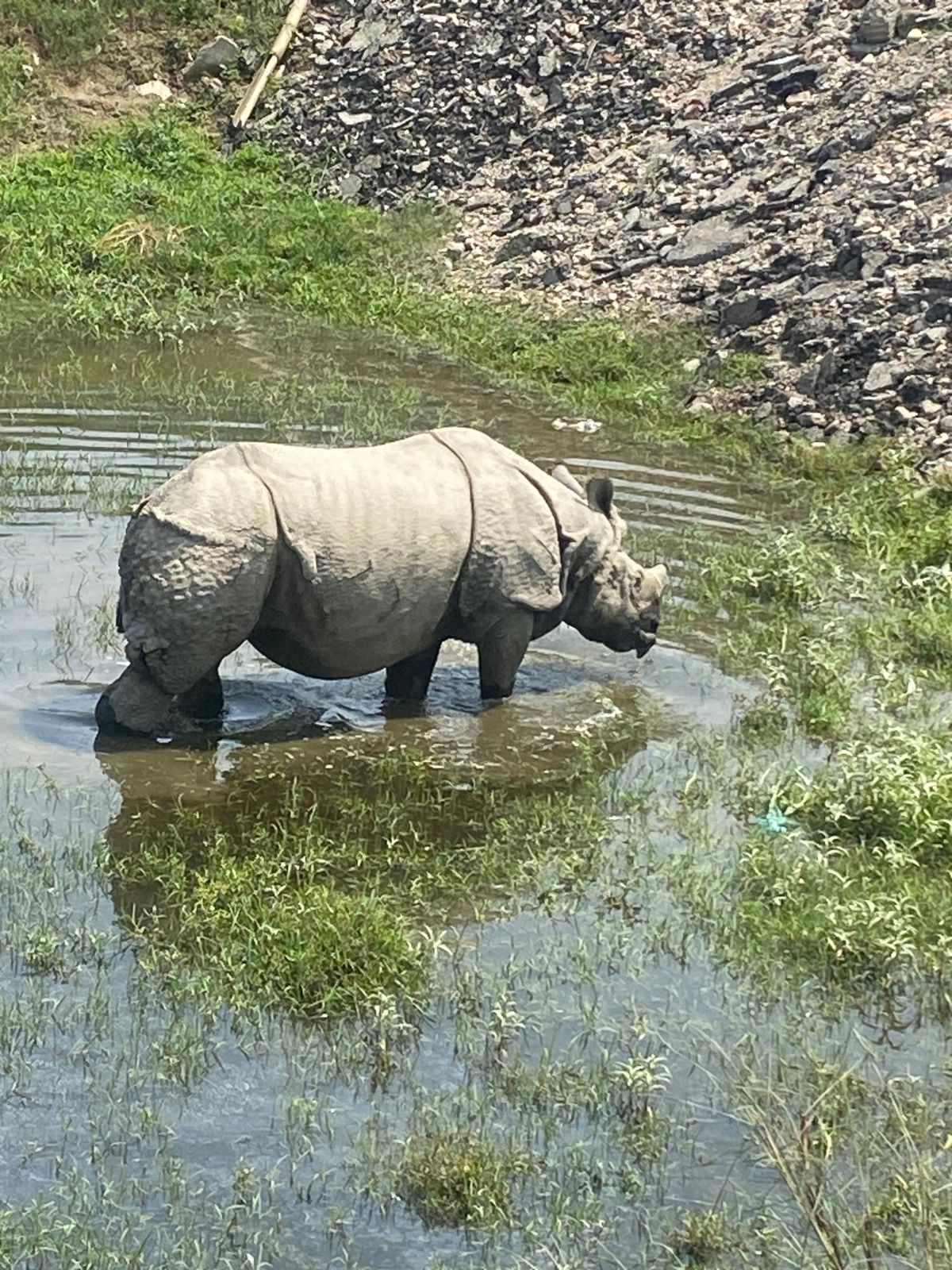
Unlike most rhinos in Chitwan National Park, which remain hidden deep in forests, Meghauli has chosen a different path. Years ago, he was separated from his mother during seasonal floods, a growing hazard in Chitwan’s floodplains. Raised briefly under human supervision, he grew unusually accustomed to people. Over time, his wandering circuit expanded from the park’s edges into human settlements, crossing hotels, homes, and open fields.
Park staff note that conservation success has brought a growing rhino population around 694 in 2015 AD along with more frequent human-wildlife interactions.
A park official explains As the number of rhinos grows, their movement naturally expands beyond the core forest. Animals like Meghauli have become familiar with humans, but this can create dangerous assumptions. People may think all rhinos are calm.
Meghauli’s presence benefits local businesses but also exposes him to poaching and unsafe encounters. The official adds Whenever necessary, we intervene and guide him back using trained elephants. Our priority is to protect both the people and the animals.
Tourists Get the Surprise
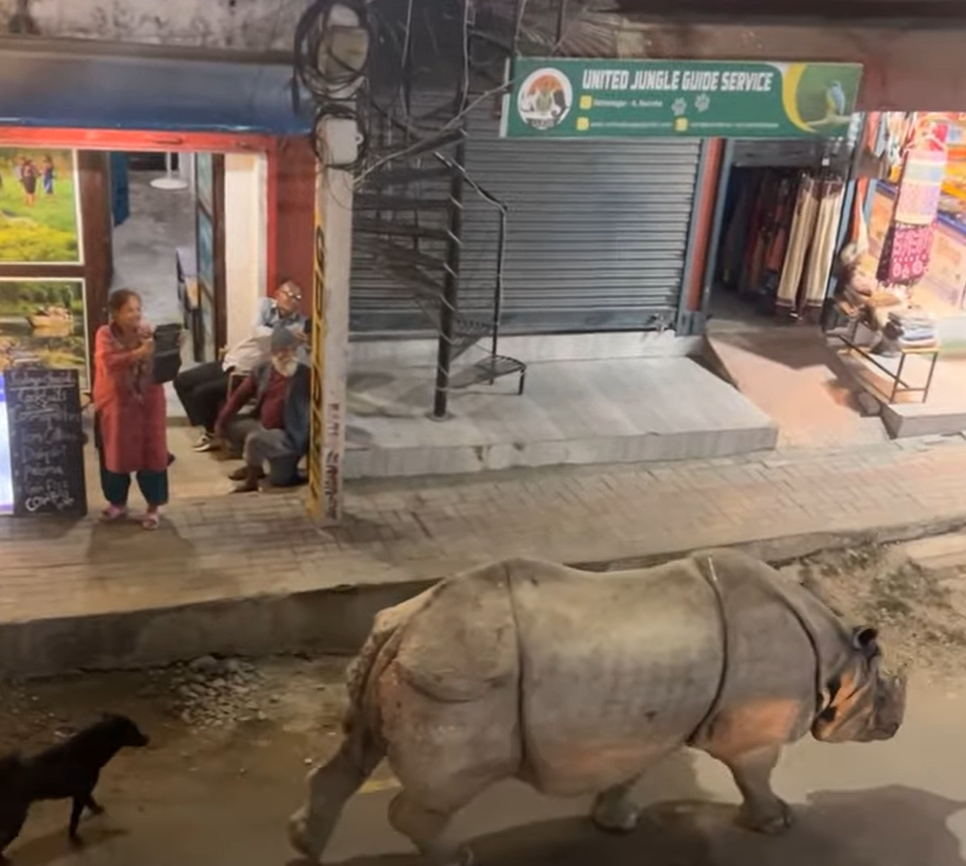
For visitors, Meghauli transforms the safari experience. Videos of him wandering past cafés and homes have gone viral online.
Emily Carter, a tourist from London, says I thought it was just a story. But then I saw him myself, walking down the road. It didn’t feel real.
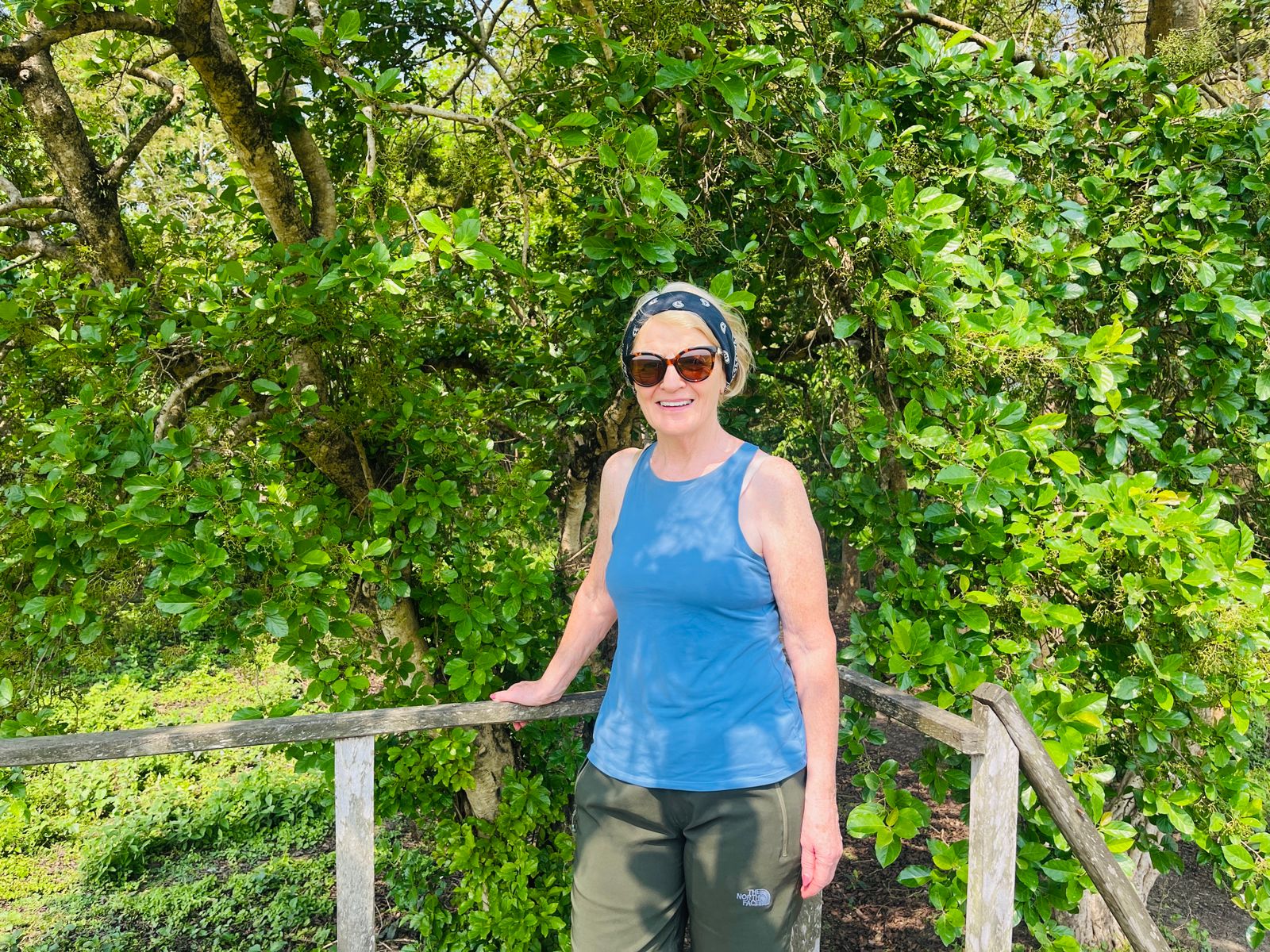
Margaret, a solo traveler from Ireland, recalls her encounter. I saw the rhino near the restaurant area, by a water hole. It wasn’t exactly on the street, but very close, maybe 50 meters away. There were many people watching, and I even took a photograph. I had seen wildlife near human spaces before, like hippos in St. Lucia, so seeing a rhino like this didn’t feel completely strange. Despite its size, I wasn’t scared. There were many people around, and I felt that if there was any danger, authorities would be there to protect us.
Sabin Pariyar, a local park guide, explains People come hoping to see him. Sometimes they are lucky, sometimes Meghauli hides. There’s no official promotion, no schedule, only the possibility.
Even children like 14-year-old Ridhi Dhami see the encounter differently. We don’t feel scared. It makes us happy when we see him on the way to school. But the animal should go back to the jungle. It can be harmful at any time.

The Risks Beneath the Fascination
Despite his calm demeanor, Meghauli is not tame. A full-grown male rhino can weigh over two tons and outrun a human. Local guides warn of the dangers of over-familiarity.
Bikash Adhikari, a nature guide, says People think because he is peaceful, he is safe. That’s not true. If you carry fruits, he may follow. People laugh, but they don’t understand what that means.
Park officials caution that increased human interaction can reshape rhino behavior, sometimes in unsafe ways.
Rajendra Chaudhary, a guide with 16 years of experience, recounts the rhino’s history. Meghauli was rescued in 2011 with a serious injury and became familiar with humans. After release, he struggled to adapt in the wild and returned to settlements. Even stronger rhinos couldn’t scare him away.
He adds a stark reminder. A local once mistook a wild rhino for Meghauli and went close. The rhino attacked him. He died a few days later. No matter how friendly it seems, it is still a wild animal.

Coexisting With Wildlife
The Chairperson of Ward No. 6 of Ratnanagar Municipality Kiran Mahato addresses human wildlife conflict around Chitwan National Park. As a local government, we are actively working in coordination with the national park to reduce these conflicts. Chitwan is one of Nepal’s major tourist hubs, so ensuring the safety of both residents and visitors is very important.

Awareness programs are being conducted in buffer zones and nearby settlements to educate communities about wildlife behavior. At the same time, we are building protective walls and barriers in high-risk areas to prevent animals from entering human settlements.
A Symbol of Conservation
Encounters like Margaret’s are becoming more common and they reflect a deeper story about conservation. The rhino population has steadily recovered, with around 694 rhinos recorded in 2015, a remarkable rebound for a species once on the brink of extinction.
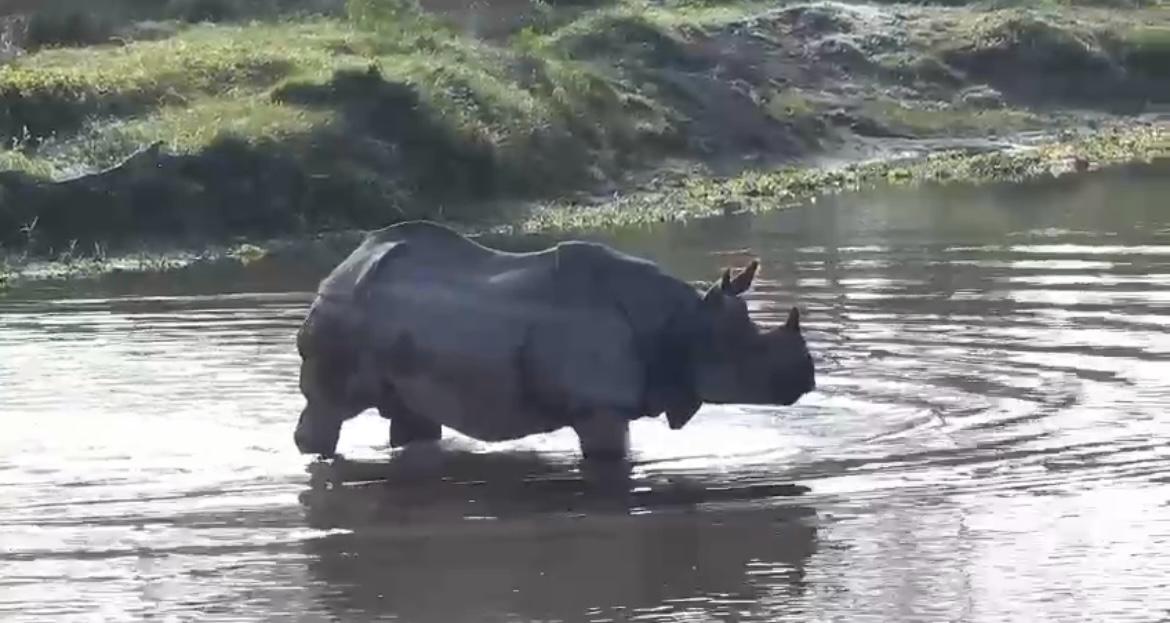
A park staff member explains As the number of rhinos grows, their movement naturally expands beyond the core forest. This leads to more frequent interactions between humans and wildlife, especially in buffer zones and settlements like Sauraha. People may think all rhinos are calm, but that’s not always the case.
A Changing Landscape
Meghauli’s story is not isolated. Across Chitwan District, human settlements and wildlife habitats increasingly overlap. Conservation has brought success, but also challenges.
A park official, says Coexistence is not simple. We are protecting wildlife, but also expanding our own spaces. The two meet more often now.
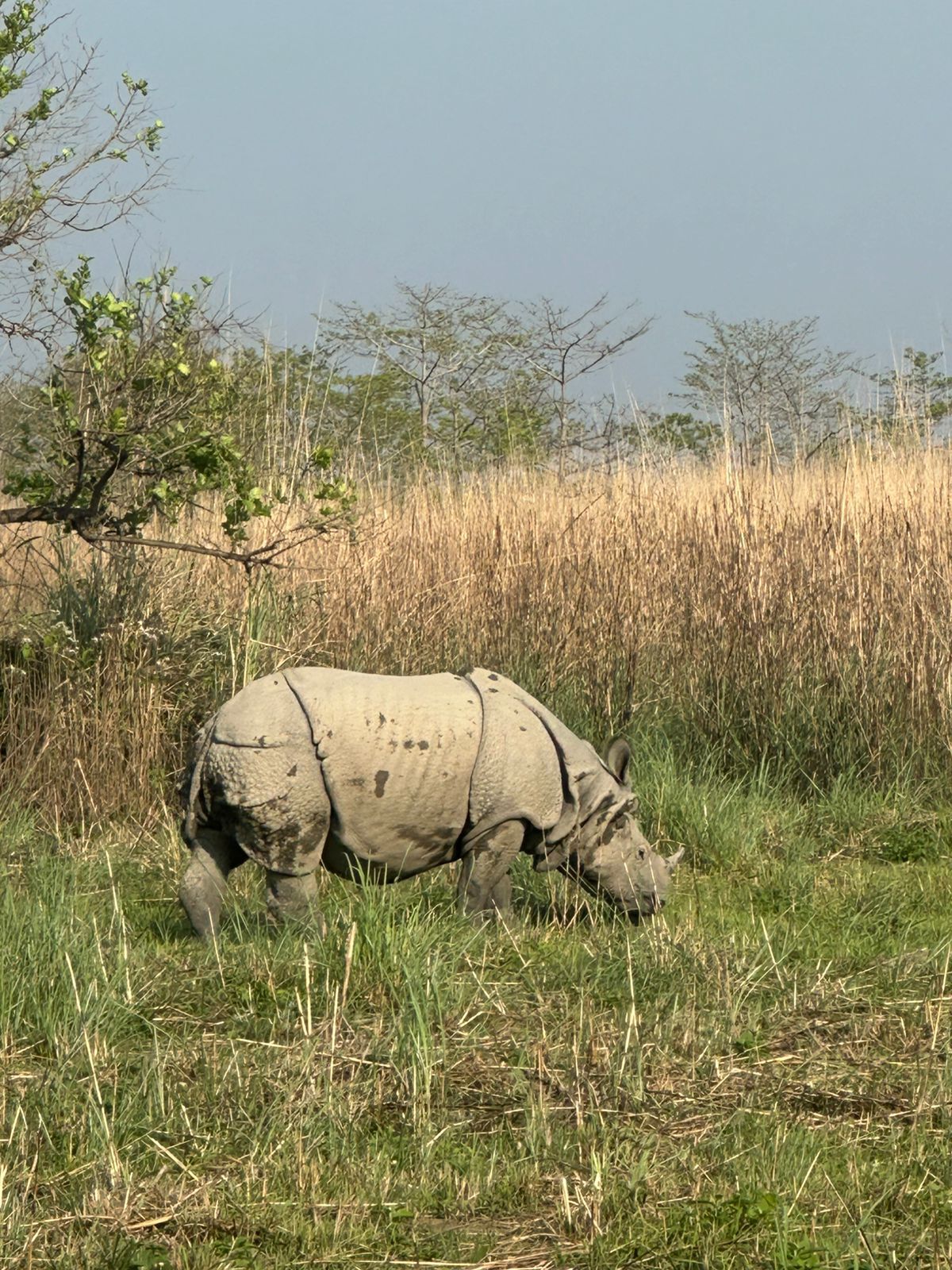
In buffer zones like Sauraha, these meetings are visible daily. Farmers adjust routines. Children are taught caution. Tourists are reminded sometimes too late that this is not a zoo. And still, Meghauli walks.
Rajendra Chaudhary, a local guide, adds perspective. I feel happy because of Meghauli’s presence. Tourists come here to see the rhino, and it brings joy as well as business opportunities. But local farmers complain because it damages their crops.
Familiar, but Not Ours
In the late afternoon, as the plains soften under fading light, Meghauli turns back toward the forest. His pace is unhurried, his path instinctive. People step aside.
There is no applause, no farewell, only quiet awareness of witnessing something unusual, magical, and uncertain.
Ramesh Tharu, a local resident, says He belongs to the jungle, not here.
Yet Meghauli returns, repeatedly crossing the invisible boundary between wild and human. For now, he is both a symbol of coexistence and a reminder of the fragile balance between human expansion and wildlife survival.
How close can humans and wildlife live before something must give?