Kathmandu-On September 8, 2025 (Bhadra 23, 2082 B.S.), young people from the Gen Z age group took to the streets demanding an end to restrictions on social media, corruption, misgovernance, and better governance. The KP Sharma Oli-led government responded with extreme force, firing indiscriminately at school and college students who were protesting. Nineteen people were killed in a single day, and many others were injured.
The government’s suppression of young, largely peaceful protesters who had taken to the streets demanding good governance and freedom of expression was condemned across the country. Public anger erupted against the government of the time, the parties in power, other established political parties and their leaders, as well as the police administration.
The events of Bhadra 23 brought a massive wave of people onto the streets across the country the following day, Bhadra 24. However, the protests turned violent. Government buildings, police and security facilities, homes of political leaders and businesspeople, commercial buildings, and various public properties were extensively vandalized and set on fire. A number of police personnel were also killed.
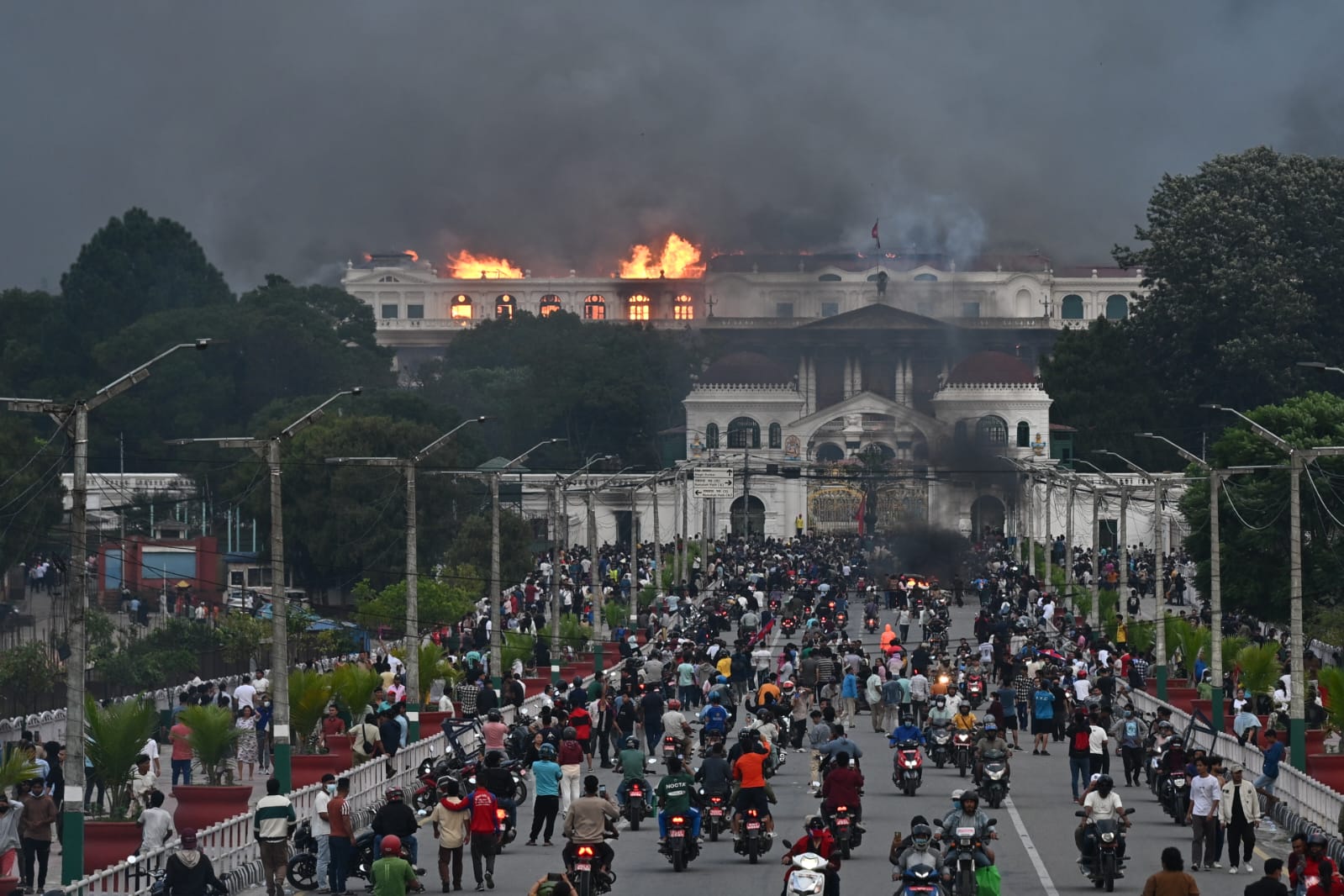
On Bhadra 24, major state institutions were attacked, including Singha Durbar, the country’s principal administrative center; Sheetal Niwas, the President’s Office; the Federal Parliament building in Baneshwor; the Supreme Court; and numerous other important government structures. Private properties were also vandalized and set ablaze.
During the Gen Z movement, a total of 380 buildings under the federal government were damaged by arson. Of these, 93 buildings suffered minor damage, 180 sustained partial damage, and 105 were completely destroyed.
A committee formed to assess the damage caused during the Gen Z movement and prepare a reconstruction plan for public infrastructure estimated that Rs. 36.30 billion would be required to rebuild damaged government structures. According to the report submitted by the committee to the government led by then-Prime Minister Sushila Karki on December 11, 2025 (Mangsir 25, 2082 B.S.), government and public-sector property suffered total damage worth Rs. 44.9373 billion. Of this, 68 percent of the damage was to structures under the federal government, 10 percent to provincial-level structures, and 22 percent to local-level structures.
The Birendra International Convention Centre, constructed nearly three decades ago at a cost of Rs. 1.15 billion and now known as the Federal Parliament complex in Baneshwor, was set on fire during the movement. The Office of the Prime Minister and Council of Ministers at Singha Durbar, the country’s principal administrative center, was also burned. When the nearby Supreme Court was set ablaze, several important papers and court documents were destroyed. The Ministry of Health was burned, while Sheetal Niwas, the President’s Office, was also targeted by arson. The Prime Minister’s official residence and office in Baluwatar were likewise set on fire.
The Godawari Sunrise Convention Centre in Godawari, Lalitpur, was damaged by arson during the protests. The ministers’ residential complex in Bhaisipati, Lalitpur, also suffered fire damage. Within Singha Durbar, the buildings housing the Ministry of Education and the Ministry of Home Affairs were damaged. The Kathmandu District Court building was set on fire. The police post at Ranipokhari and the Traffic Police Office on Ramshah Path were attacked, while hundreds of vehicles within the premises were also burned. Across the country, 143 police buildings were completely destroyed and 316 sustained partial damage.
Local government offices also suffered extensive damage.
Private residences and commercial properties were not spared. The homes of KP Sharma Oli, Pushpa Kamal Dahal “Prachanda,” Sher Bahadur Deuba, Madhav Kumar Nepal, Gagan Thapa, Mahesh Basnet, and numerous other leaders from the Nepali Congress, CPN-UML, CPN (Maoist), and various Madhes-based parties were vandalized or set on fire. Party offices across the country were also attacked.
Public anger had reached a peak. Protesters targeted government and party buildings and facilities, as well as commercial establishments and private residences. Of the 28 branches of Bhat-Bhateni Supermarket across the country, 12 stores were completely burned down, while nine were vandalized and looted. Only seven stores, including those in Tokha and Satdobato, remained safe.
The office of Chaudhary Group in Satungal was set on fire, and the adjoining residence was also attacked. The home of Dr. Upendra Mahato, founding president of the Non-Resident Nepali Association (NRNA) and a prominent businessman, was vandalized and set on fire. The offices of the Kantipur Media Group were also attacked and burned.
On Bhadra 24, those who took to the streets did not spare any structure toward which they harbored grievances. Government buildings, nongovernmental institutions, security facilities, commercial establishments, media houses, private residences, and other structures across the country became targets.
The arson and vandalism that began on the morning of Bhadra 24 continued even after the KP Sharma Oli-led government bowed to the pressure and resigned. The destruction did not stop immediately.
The anger unleashed by the government’s suppression on Bhadra 23 engulfed the entire country. Along with the federal capital Kathmandu, smoke from burning buildings could be seen rising into the sky across the country. Structures that had stood intact only a day earlier were reduced to ashes, resembling burnt ruins and cemeteries. The atmosphere became deeply unsettling, tragic, and terrifying.
Of the damaged structures under the federal government, work on 105 of the 117 large buildings that suffered minor damage was completed during the last fiscal year, and they have already resumed operations. However, the condition of 83 large buildings that were partially or completely damaged remains concerning. Of these, reconstruction of 28 buildings has been completed, 22 are currently under construction, and tenders for the remaining 33 buildings are expected to be issued this year, according to the concerned authorities.
Private properties damaged during the violence have largely been repaired by their owners. Some political leaders, however, are still living in rented accommodation because of the damage to their residences.
On Bhadra 23, 2082 B.S., the Gen Z generation took to the streets raising questions about corruption, good governance, and accountability. They lost their lives because of the government’s negligence. The government’s insensitive response, combined with the anger of an increasingly agitated crowd that lost its restraint, set the country ablaze.
On Bhadra 23, the country lost its promising young generation. On Bhadra 24, it lost parts of its history, heritage, and national property.
The Gen Z movement claimed 76 lives and caused billions of rupees in physical damage. Even one year later, the eyes of those who lost their loved ones have not dried. The injured are still in hospital wards, waiting for the demands of the movement and their hopes for good governance to be fulfilled. And the buildings that were burned stand with their damaged and broken structures, still waiting to be rebuilt.