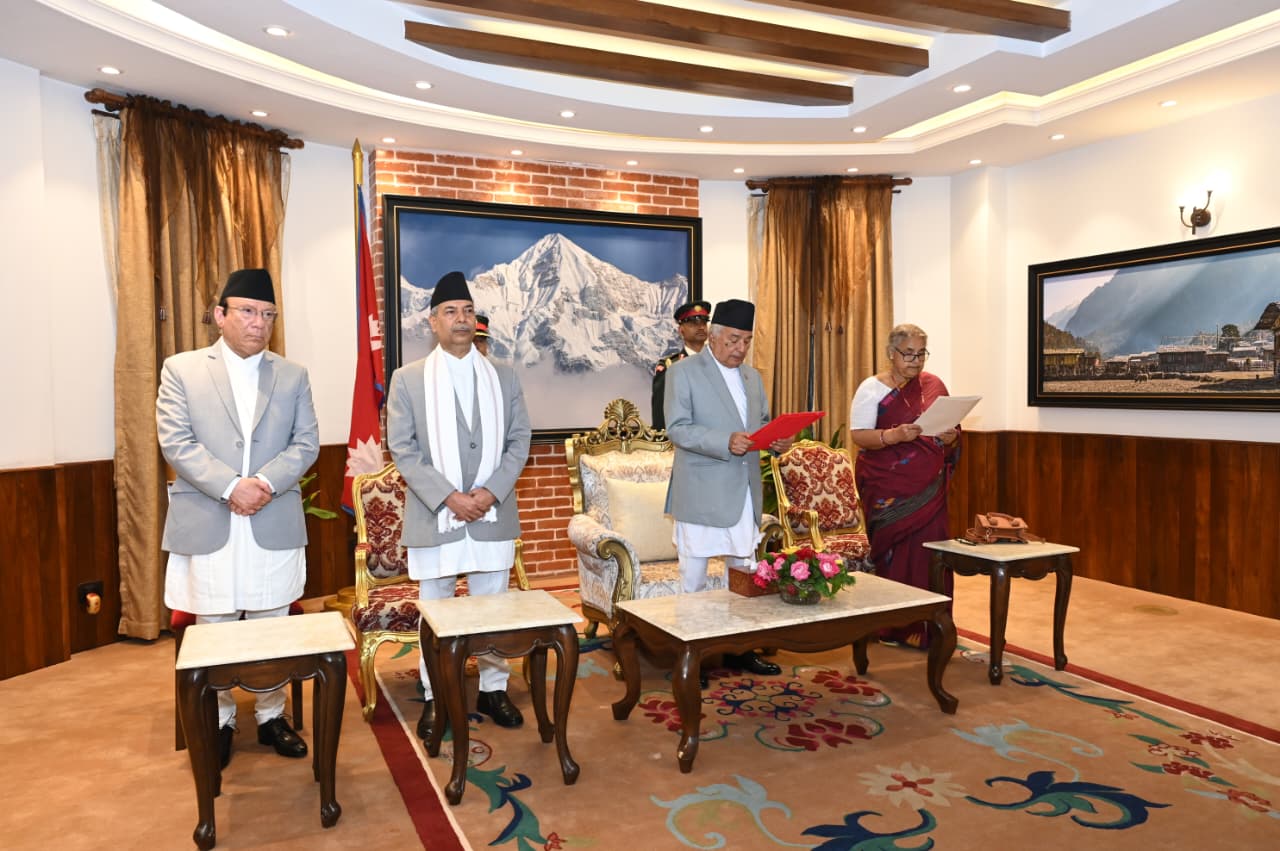
Kathmandu – After a prolonged debate on the future and direction of the Nepal’s politics following the crackdown of Gen Z protest against corruption, former Chief Justice Sushila Karki has become the interim Prime Minster of Nepal. The announcement made by the Office of Prime Minister came in the evening of September 12, with the decision to take oath on the same night at 9 pm. The consensus for this decision was reached after a series of talks held between the Gen Z protestors, President Ram Chandra Paudel and Nepali Army chief Ashok Raj Sigdel.
Sushila Karki has become the first female Prime Minister of Nepal, making history. Additionally, this is not the first time she has made a history. Karki also became the first woman chief justice of Nepal. She served her term between 2016 and 2017. Her popular opponents for the race of becoming interim Prime Ministers included the Mayor duo Balendra Shah and Harka Sampang.
The movement led by Gen Z on September 8 led to making a history. After the KP Sharma Oli-led government banned 26 popular social media platforms, the infuriated Gen Z went on a deep dive in exposing the lavish lifestyle of the children of politicians. What started as an interesting idea, the protest ended up making it to streets on September 8. Following the protest of Gen Z against corruption, a series of misfortunate events led to the downfall of the government, prompting KP Sharma Oli, the then Prime Minster of Nepal to resign.
Based on her qualifications, Gen Z deemed her capable of leading the nation for the time being until a stable political environment is established. The Gen Z opined that since Karki served as the chief justice, she must be well aware of the law, constitution, foreign affairs, economy, and the proceedings required to run the country as compared to that of other candidates. Karki completed her Bachelor of Arts from the Mahendra Morang College, affiliated to TU in the year 1972. After that, she went to India, where she got her Master’s in political science in the year 1975 from Banaras Hindu University. Finally, she returned to Tribhuvan University to study law and graduated in the year 1978.
Parliament Dissolution and State of Emergency
Simultaneously, agreement has been reached to dissolve the House of Representatives in the process of choosing the interim Prime Minister. Gen Z put forth this condition in order to appoint the interim government, which was respected by both the President and the Nepal Army chief. However, this new development has made the country plunge into a fresh political uncertainty. The move, announced late Friday, paves the way for snap general elections within six months. Opposition parties have condemned the dissolution as unconstitutional and signaled plans to challenge it in the Supreme Court, while the ruling coalition maintains it is necessary to break a prolonged legislative deadlock.
Concurrently, Nepal is also looking forward for the announcement of state of emergency. It means that the government will temporarily gain special powers to deal with a serious crisis, which is widespread unrest and high political instability at the moment. This typically allows the federal government to restrict certain civil liberties, like freedom of movement, assembly, or the presses, suspend some normal legal procedures, and deploy security forces more broadly. The constitution requires that the President’s proclamation be approved by Parliament within a set time, and the measures must be lifted once the situation stabilizes.
Declaring a state of emergency means that the government can bypass lengthy legislative processes to respond quickly to crises like natural disasters, pandemics, or security threats. Authorities can deploy security forces, control movement, and enforce curfews to maintain order and protect lives. Emergency powers make it easier to reallocate funds, requisition supplies, or coordinate nationwide relief efforts. However,
This also means that, freedoms such as speech, assembly, and press can be curtailed, which may silence dissent and affect human rights. Leaders could extend emergency powers beyond what is necessary or use them for political gain. Curfews, business restrictions, and investor uncertainty can slow economic activity and deter tourism or trade. Rapid decisions with limited parliamentary or judicial review can reduce checks and balances.
However, with the latest turmoil and rampant corruption in the country, this change is expected to bring a positive change and a long term balance to the long unstable political scene of Nepal.