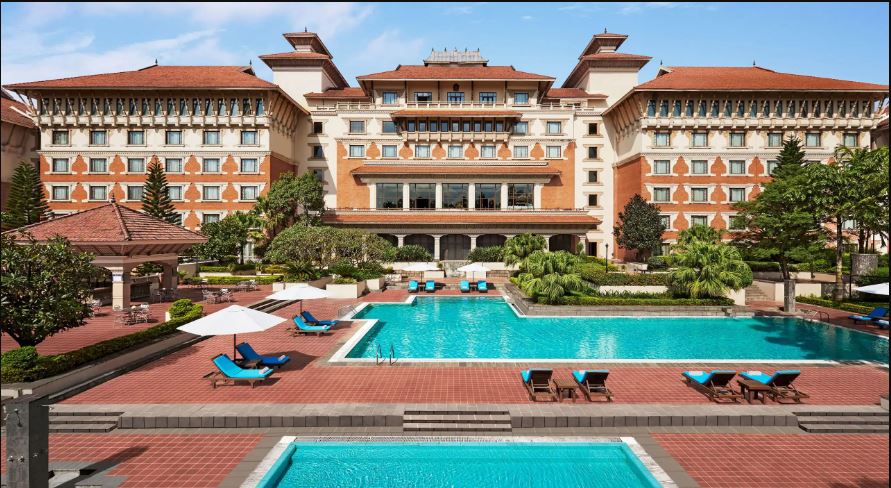
In a move that has sent ripples through Nepal’s tourism and hospitality industry, the five-star Hyatt Regency Kathmandu has laid off its entire workforce following severe damage during the Gen Z protests of Bhadra 23 and 24, 2082 (September 8–9, 2025). The management has cited financial constraints and large-scale structural damage as the reasons behind the decision, but trade unions and workers have condemned the move as a breach of trust and violation of prior agreements.
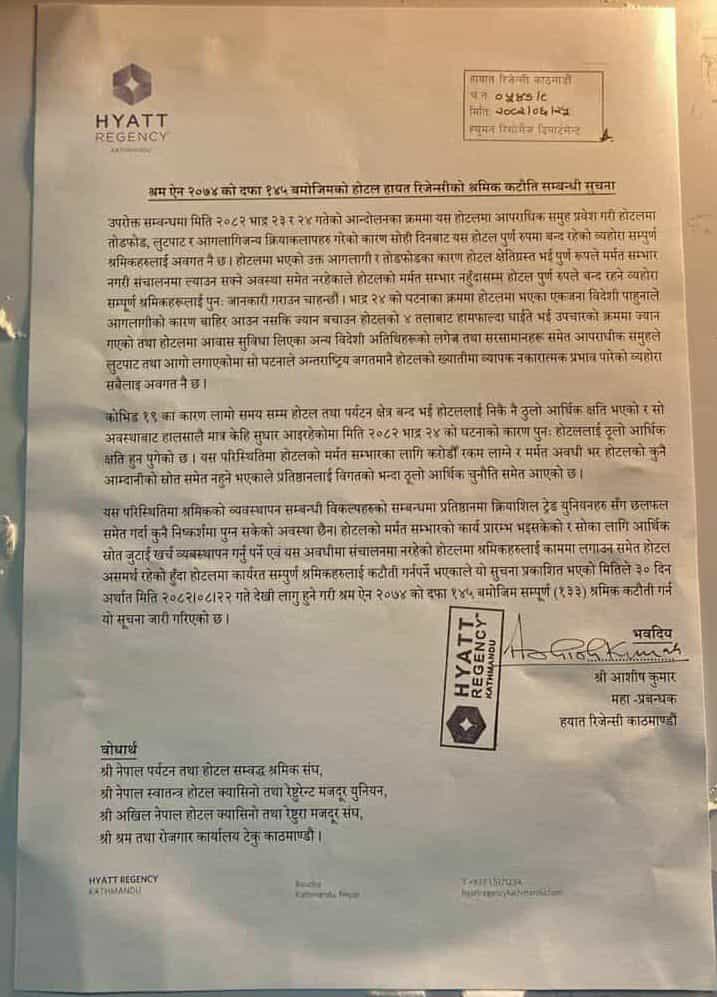
According to the official notice issued by General Manager Ashish Kumar, the termination will take effect from Mangsir 22 (December 8, 2025), in accordance with Section 145 of Nepal’s Labor Act 2074. The hotel stated that all 133 employees, including permanent, contractual, and wage-based staff, have been relieved of their duties as the property undergoes extensive renovation and reconstruction. The management said discussions with trade unions failed to reach any consensus, leaving them with no choice but to implement the layoffs.
The Gen Z protests, which erupted in early September, had a devastating impact on the luxury hotel. On the second day of the demonstrations, groups reportedly entered the premises, vandalized property, and set parts of the hotel on fire. Tragically, a foreign guest died after jumping from the fourth floor while trying to escape the chaos. Since that incident, the hotel has remained completely closed, suffering from both financial and reputational damage.
Trade unions, however, have accused the management of violating a previous tripartite agreement signed earlier this year. The deal had ensured that during the year-long reconstruction period, permanent staff would receive a monthly allowance of NPR 12,170, along with continued Provident Fund contributions and guaranteed reinstatement after reopening. The unions argue that the new layoff notice directly contradicts that understanding.
Union representatives also allege that management pressured employees to withdraw ongoing legal cases as a precondition for compensation distribution. The Labor Welfare Fund, amounting to NPR 22 million and meant to be shared among 144 employees, remains undistributed after negotiations collapsed.
The hotel management insists that it faces an unsustainable financial crisis, worsened by the post-COVID downturn and the recent unrest. It claims that repair costs amount to tens of millions of rupees and that the hotel has no revenue source to support the workforce during closure.
The abrupt termination has drawn criticism from labor activists and tourism stakeholders alike, who warn that the case could set a troubling precedent for the industry. Hyatt Regency, one of Nepal’s most prominent luxury hotels and a symbol of its high-end tourism, has been an employer to hundreds of workers for decades. Its closure and mass layoff now threaten not only those livelihoods but also the confidence of investors in Nepal’s volatile hospitality sector.
Observers fear that the incident will have a domino effect on surrounding businesses in the Bouddha area, further straining an industry already weakened by political instability and economic uncertainty. As unions prepare for legal action and the management struggles to raise renovation funds, the Hyatt Regency episode stands as a stark reminder of the fragile balance between corporate survival and workers’ rights in Nepal’s recovering tourism economy.