
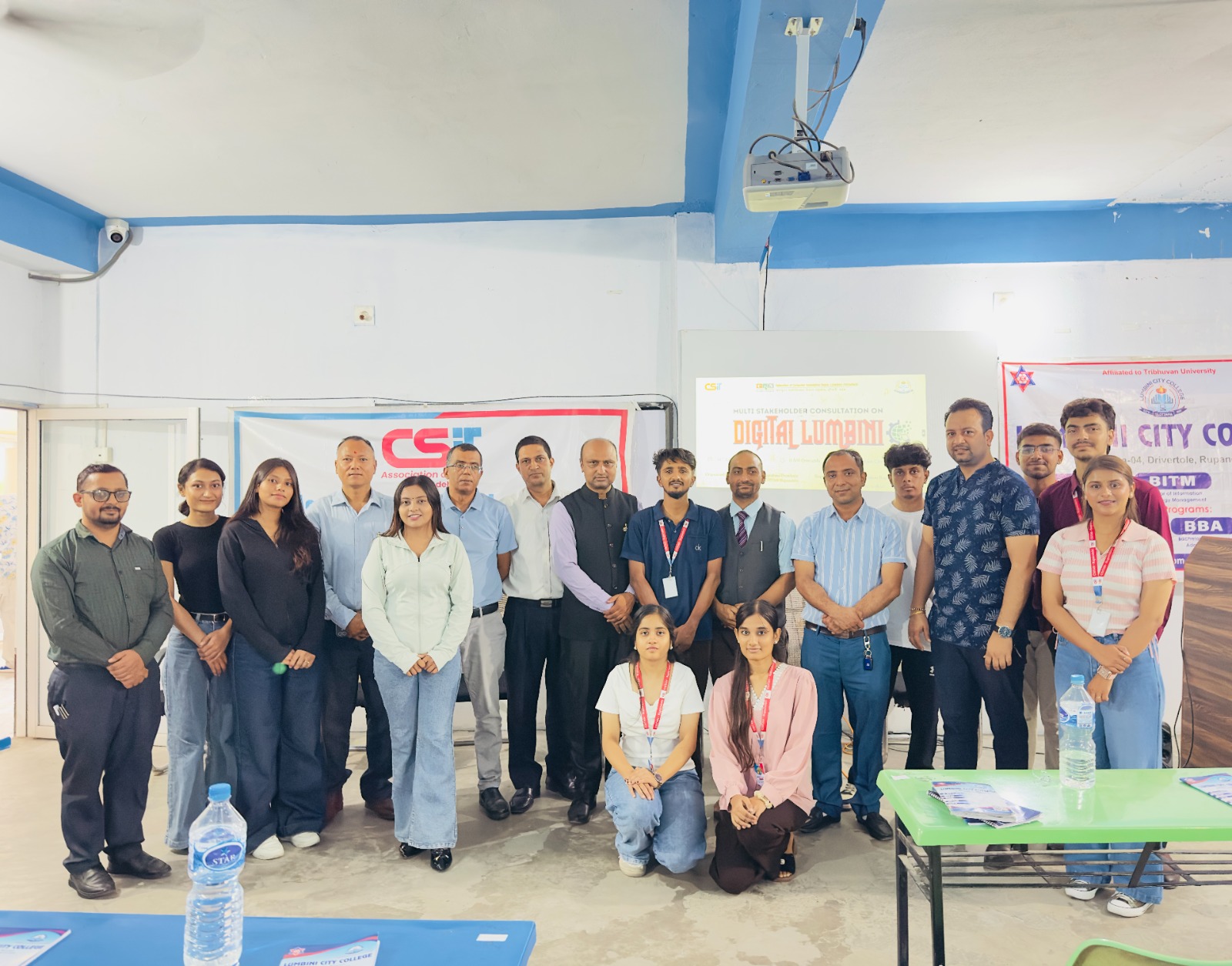
Butwal-The event, titled “Digital Lumbini: Multi-Stakeholder Consultation,” was organized by the CAN Federation Lumbini Province and its Rupandehi Chapter in collaboration with the CSIT Association of Nepal (CAN), Rupandehi Chapter. The consultation brought together policymakers, technology leaders, academicians, entrepreneurs, software professionals, and youth representatives to discuss strategies for implementing the Lumbini Province Government’s digital agenda outlined in the Fiscal Year 2083/84 policies and programs.
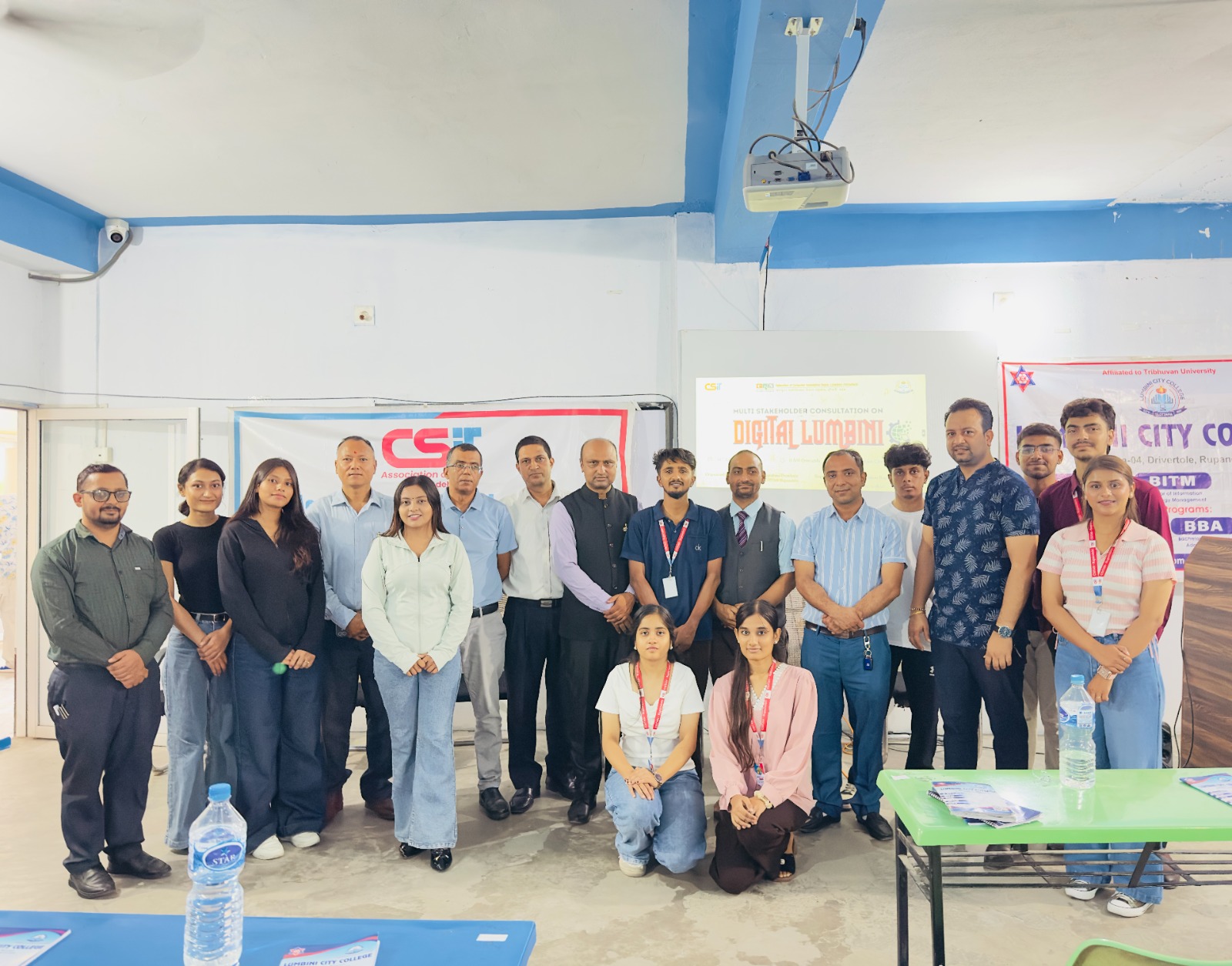
Participants reaffirmed their collective commitment to transforming Lumbini into a secure, innovation-driven, and globally competitive digital economy through stronger collaboration between government, academia, industry, and the private sector.
The highlight of the program was the presentation of the “Digital Lumbini” Conceptual Framework, developed by IT leader and Acting President of the CAN Federation, Chiranjibi Adhikari. The master plan outlines a long-term vision to establish Lumbini Province as a regional technology hub through a comprehensive digital ecosystem that supports innovation, entrepreneurship, public service delivery, and sustainable economic growth.
At the core of the framework is a Dual-Engine Strategy, which proposes connecting the Kathmandu–Butwal Digital Corridor with the Butwal–Dang–Nepalgunj technology corridor. According to the proposal, the integrated corridor would facilitate the growth of technology industries, startup ecosystems, research institutions, and digital infrastructure across western Nepal.
The framework identifies Artificial Intelligence (AI), paperless governance, digital healthcare, smart education, intelligent transportation systems, cybersecurity, and innovation-driven entrepreneurship as the principal pillars for the province’s digital transformation.
Welcoming participants, Acting Campus Chief of Lumbini City College Narayan Prasad Bhusal described the Digital Lumbini initiative as a milestone for the technological advancement of the region. He said educational institutions have an important role to play in producing skilled human resources capable of supporting Nepal’s growing digital economy.
“The vision presented through Digital Lumbini has the potential to transform not only Lumbini Province but also Nepal’s broader technology landscape. Lumbini City College fully supports this forward-looking initiative,” Bhusal said.
Chairing the consultation, CAN Federation Lumbini Province President Narayan Khanal said the initiative represents a significant step toward building a knowledge-based economy in western Nepal. He emphasized that the federation remains committed to working closely with provincial authorities and development partners to translate the conceptual framework into practical policies and implementable projects.
“This is a proud moment for Nepal’s ICT sector. We believe Digital Lumbini can become a model for digital transformation throughout the country,” Khanal said.Speakers throughout the consultation highlighted the need to strengthen Nepal’s software industry, improve digital infrastructure, and create employment opportunities that encourage young professionals to build their careers within the country.CSIT Association Rupandehi President Kalpit Nepal stressed that local IT projects require greater financial support and investment. He also urged universities and colleges to redesign academic curricula in close collaboration with the technology industry to ensure graduates possess practical and market-oriented skills.
Similarly, CAN Federation Rupandehi Chapter President Jeevan Adhikari emphasized that information technology should become a key driver of youth empowerment, innovation, entrepreneurship, and national economic development.
Addressing one of Nepal’s most pressing challenges the migration of skilled youth abroad Founder President of the Lumbini Tech Innovation Center, Dhan Bahadur Rana, called for progressive startup policies and stronger government support for domestic innovation.He said Nepal must establish technology hubs throughout the province, expand access to seed funding for startups, bridge policy gaps affecting entrepreneurs, and promote a robust “Made in Nepal” software ecosystem capable of competing in international markets.
“If we create the right startup environment, provide policy support, and invest in innovation, we can retain talented young professionals and position Nepali technology products as global brands,” Rana said.The Digital Lumbini master plan also outlines several strategic priorities designed to accelerate digital transformation across the province.These include strengthening Public-Private Partnerships (PPP) involving government agencies, private companies, universities, development partners, and civil society organizations to mobilize investment and expertise.
The framework further proposes establishing a comprehensive cybersecurity architecture to protect critical digital infrastructure, e-governance systems, public health databases, and other sensitive government information from emerging cyber threats.Recognizing Lumbini’s global religious and cultural significance, the master plan also prioritizes the development of Smart Tourism. The proposal recommends integrating QR-code-based information systems, Augmented Reality (AR), Virtual Reality (VR), multilingual digital guides, and other smart technologies at major heritage sites including the Maya Devi Temple, Ashoka Pillar, and surrounding tourist destinations to enhance visitors’ experiences.
Participants concluded that the successful implementation of the Digital Lumbini vision will require coordinated efforts from all stakeholders, including provincial and local governments, educational institutions, technology companies, entrepreneurs, development partners, and the private sector.
They expressed confidence that with sustained investment in innovation, digital infrastructure, human capital, and policy reform, Lumbini Province has the potential to emerge as Nepal’s leading regional technology hub, creating high-skilled employment opportunities, attracting technology investment, and accelerating inclusive digital economic growth.