
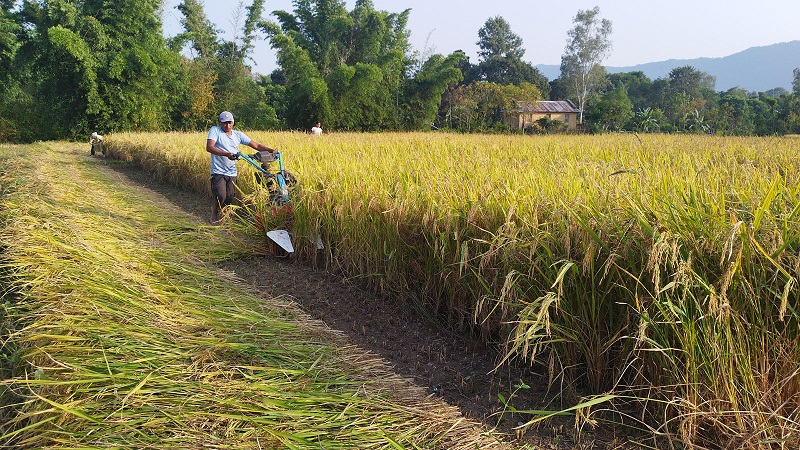
Kathmandu-As climate change poses growing challenges to paddy production, the Nepal government has intensified efforts to achieve rice self-sufficiency through climate-smart agriculture, improved seed varieties, expanded irrigation, and agricultural modernization.
According to the Department of Agriculture, Nepal requires around 7 million metric tons of paddy annually, but domestic production remains at approximately 6 million metric tons, leaving a shortfall of nearly 1 million metric tons each year. As a result, the country imports paddy and rice worth more than Rs. 30-35 billion annually.
This year’s paddy transplantation has declined compared to last year due to a weak monsoon. The government says climate change-induced droughts, erratic rainfall, floods, and waterlogging have directly affected cultivation and are increasing risks to food security.
To address these challenges, the government is promoting climate-smart farming technologies, conserving indigenous seed varieties, expanding the production of improved seeds, extending irrigation facilities, providing subsidies to farmers, and strengthening weather information systems to improve agricultural resilience and increase rice production.
Agricultural experts say Nepal can achieve rice self-sufficiency if farmers receive timely access to fertilizers, quality seeds, irrigation, and modern farming technologies.