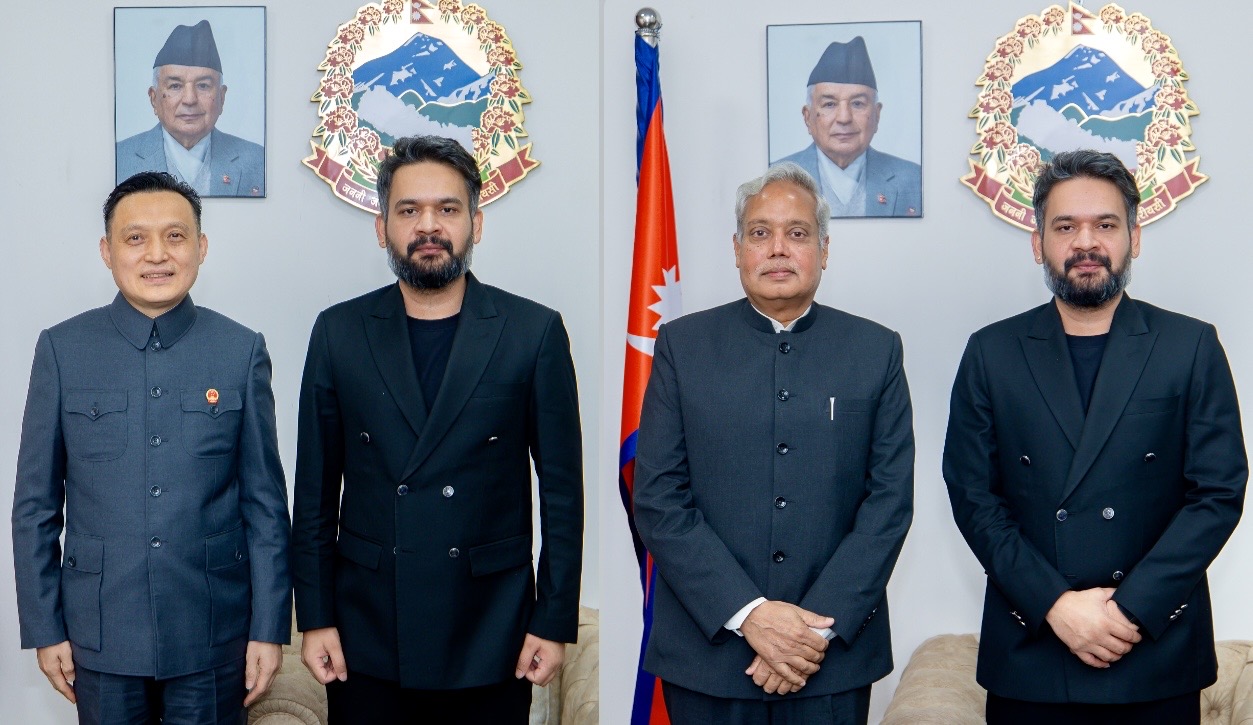
Kathmandu – Nepal Prime Minister Balendra Shah’s separate meetings with the ambassadors of India and China on Monday mark a notable shift from his earlier practice of meeting foreign diplomats collectively, raising questions about whether his government is adopting a more flexible diplomatic approach.
Shah met Indian Ambassador to Nepal Naveen Srivastava and Chinese Ambassador to Nepal Zhang Maoming separately on Monday. Earlier, Shah had maintained that foreign diplomats should be engaged collectively and had hosted ambassadors from various countries together at his office.
The change is particularly significant because India and China are Nepal’s two immediate and strategically important neighbors.
India has already invited Shah to visit New Delhi. Following Monday’s meeting, Srivastava conveyed a message from Indian Prime Minister Narendra Modi reiterating the invitation. Although there has been no official confirmation of the visit, the development has fueled speculation that India could become Shah’s first foreign destination, as has traditionally been the case with several Nepali prime ministers.
Such a visit would reflect the longstanding importance of India in Nepal’s foreign relations, shaped by geography, economic ties, cultural links and extensive people-to-people contacts.
At the same time, Shah’s meeting with the Chinese ambassador signals the importance Kathmandu attaches to maintaining engagement with Beijing. China remains a key development partner, particularly in infrastructure, connectivity, trade and tourism.
The meetings, however, should not yet be interpreted as a fundamental realignment of Nepal’s foreign policy. They may instead indicate that Shah is becoming more pragmatic in applying his earlier preference for collective diplomatic engagement.
Nepal has traditionally sought balanced relations with India and China, emphasizing sovereignty, mutual respect and an independent foreign policy.
Whether Shah’s first foreign visit will indeed be to India remains to be confirmed. But if it happens, it would suggest continuity in Nepal’s diplomatic practice, while his subsequent engagement with China could offer a clearer indication of how his government intends to balance relations with its two powerful neighbors.