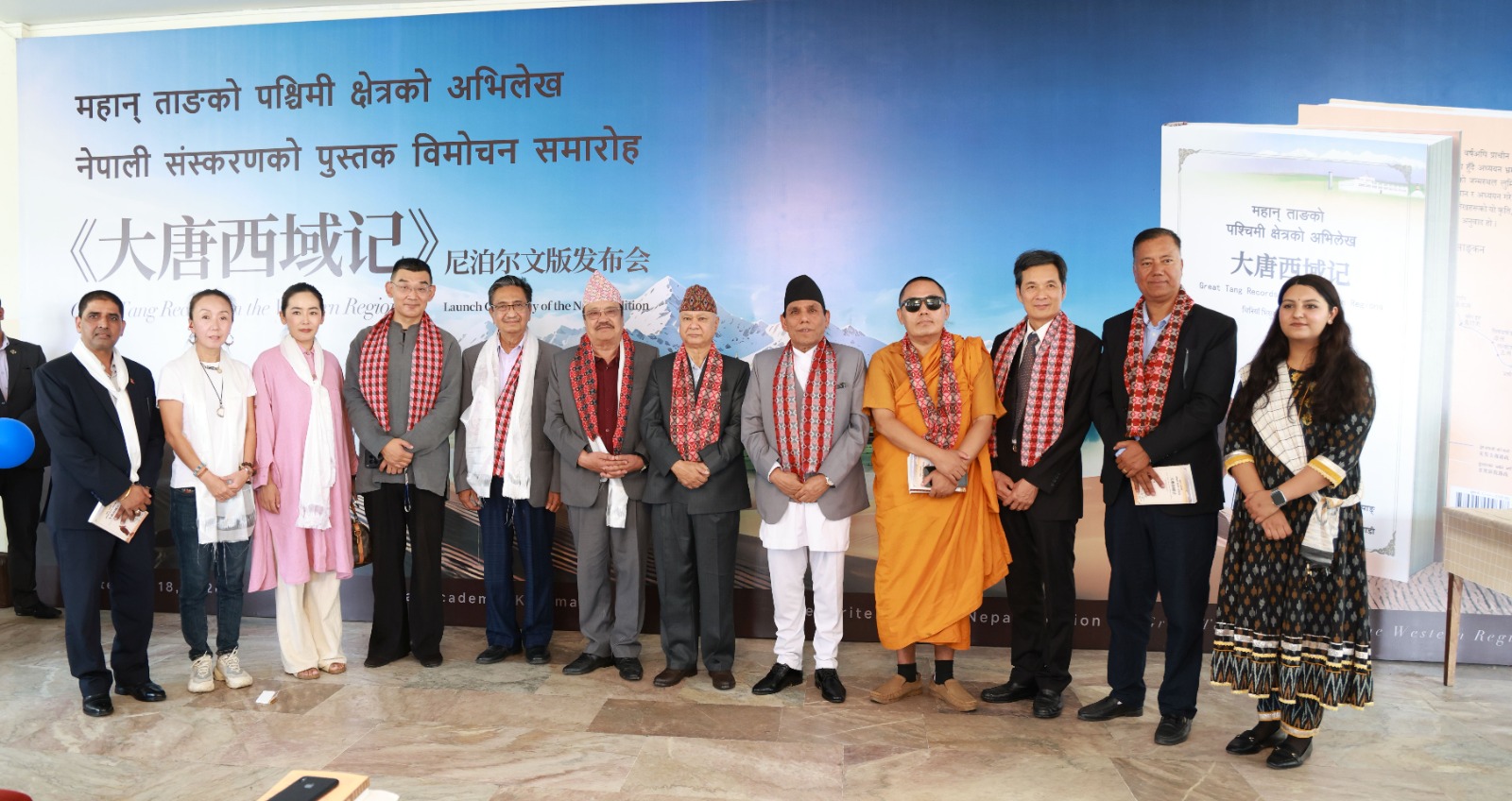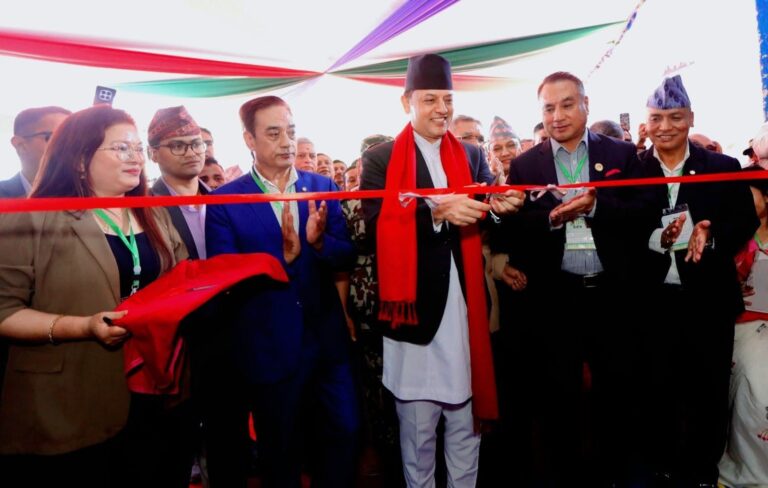
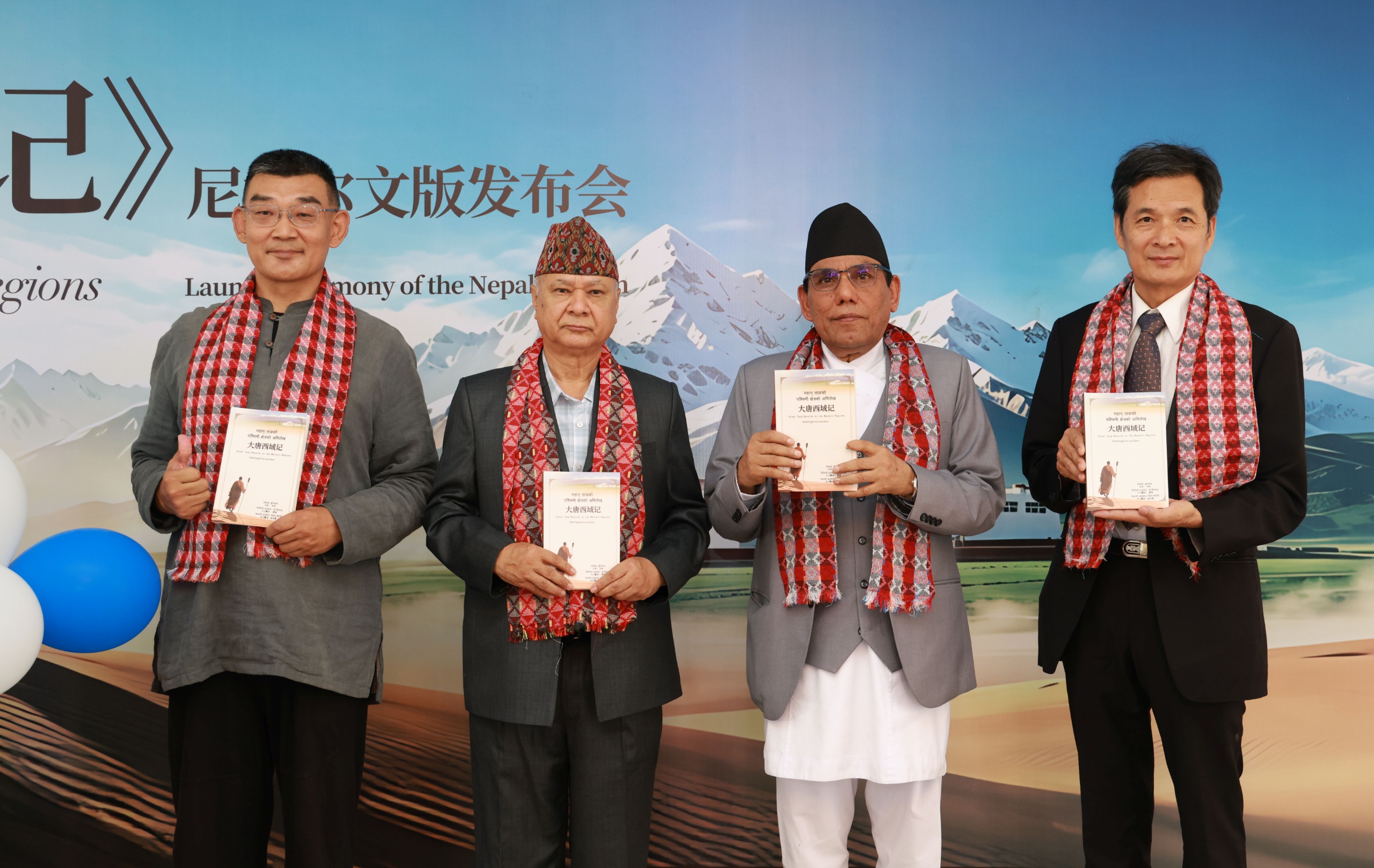
Kathmandu – The Nepali edition of “Great Tang Records on the Western Regions,” a historic travelogue documenting the journey of Chinese Buddhist monk Xuanzang through Nepal and other parts of South Asia around 1,400 years ago, has been officially launched in Kathmandu.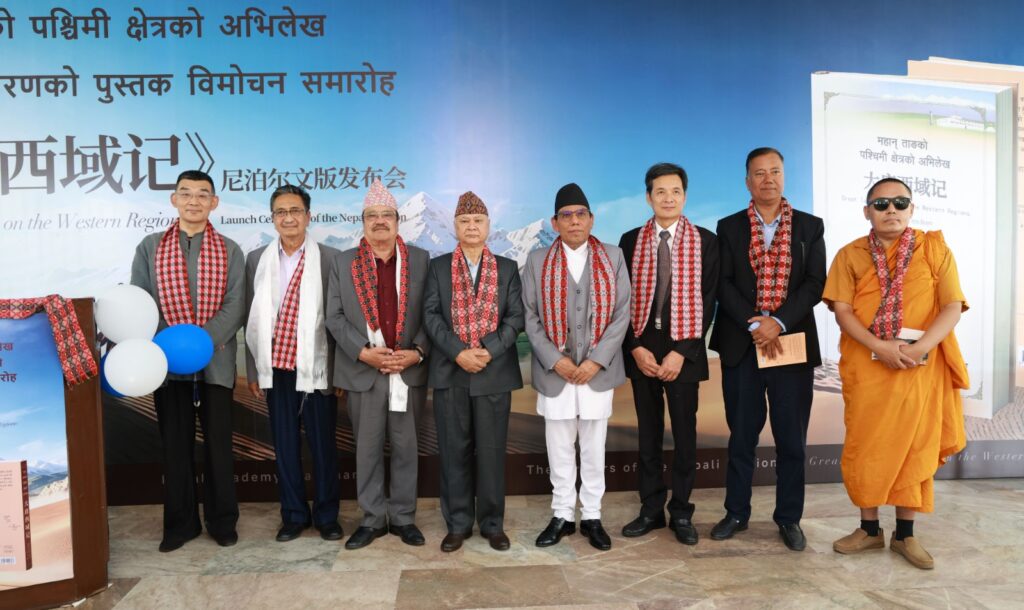
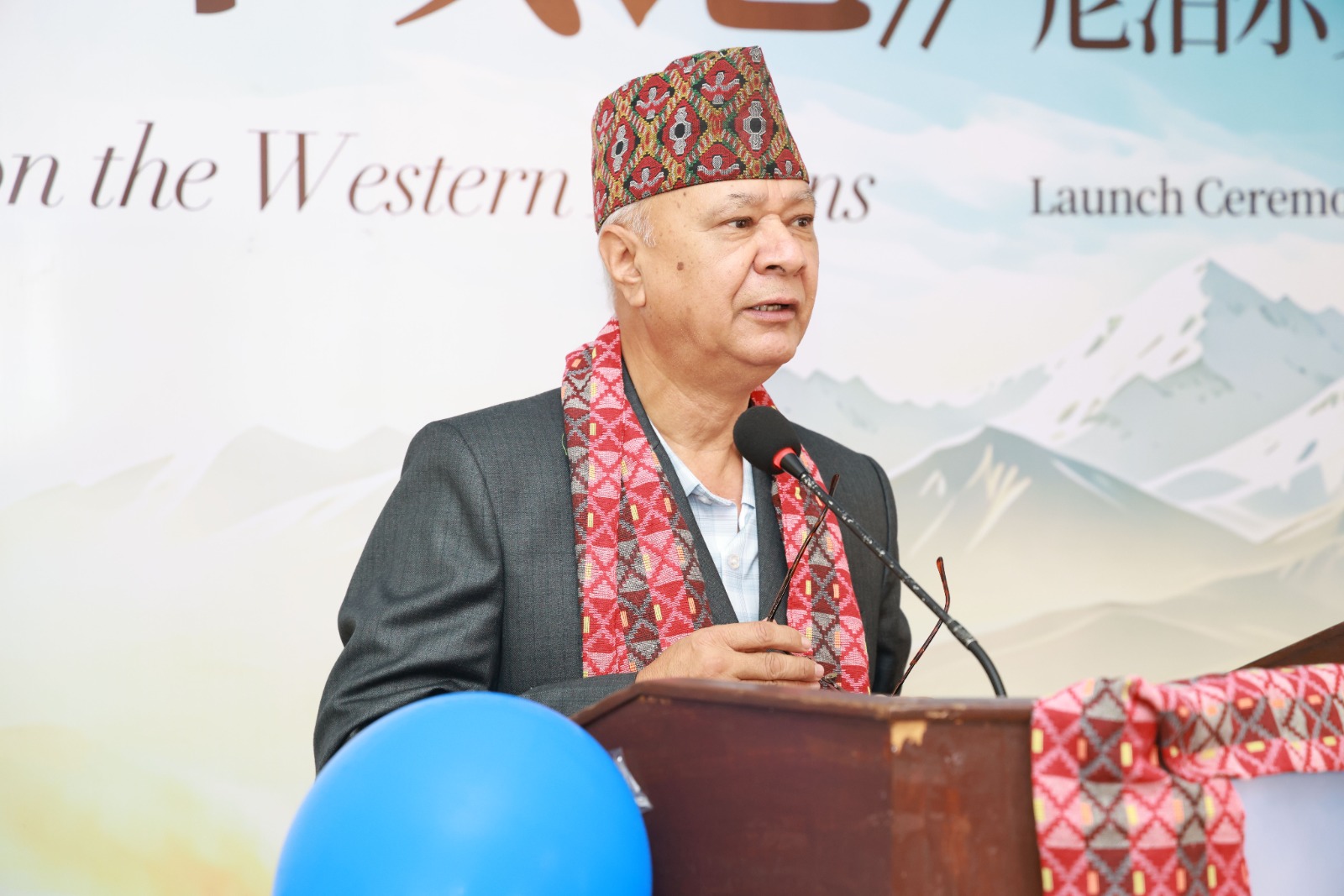
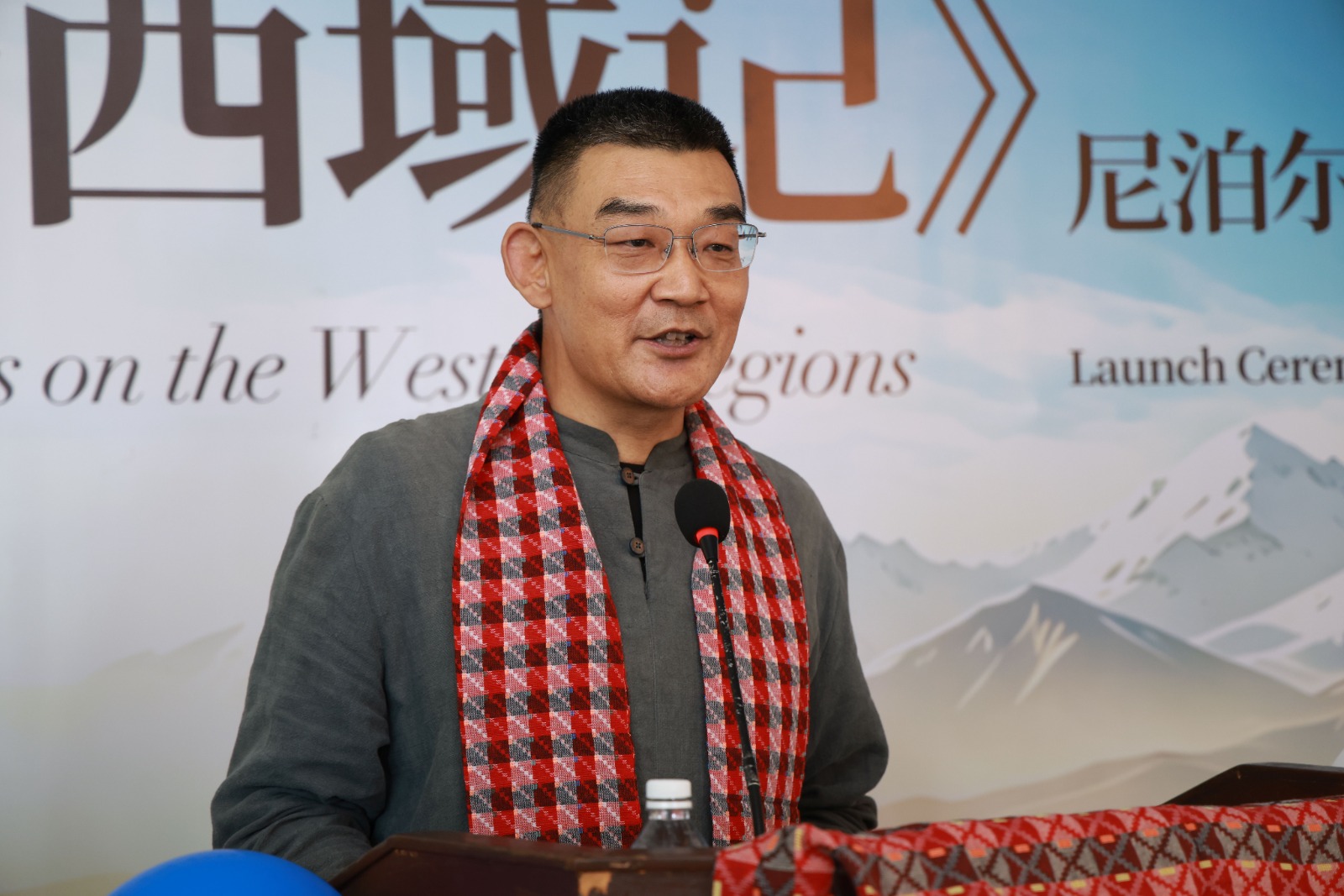
The Nepali version of the renowned historical text was unveiled by National Assembly Chairman Narayan Prasad Dahal during a ceremony held at the Nepal Academy, Kamaladi, Kathmandu. The event was attended by Liu Zhanping, Director of the China Cultural Center in Nepal, former minister Raghuji Pant, translator Fu Qiang, and representatives from various sectors.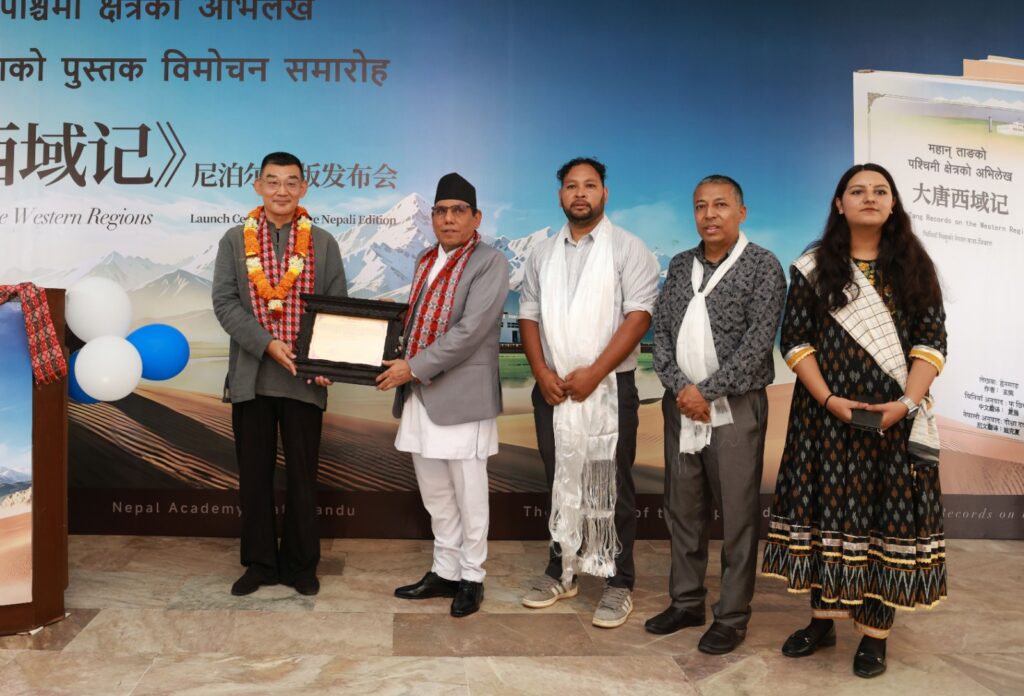
Speaking at the programme, Chairman Dahal said the Nepali edition would provide readers with an opportunity to explore China’s ancient history while further strengthening cultural understanding and people-to-people relations between Nepal and China.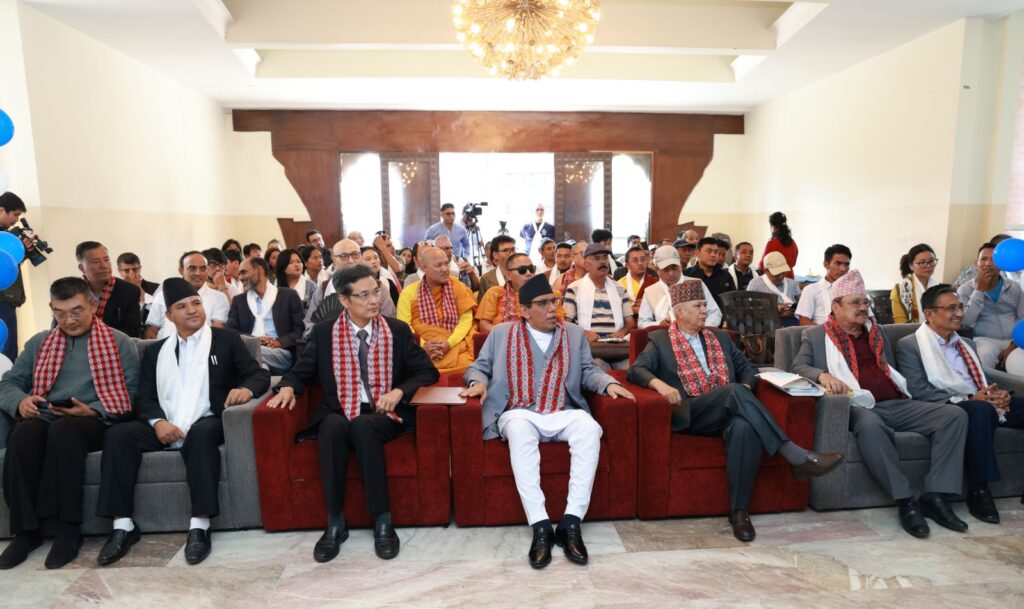
Dahal highlighted Xuanzang’s detailed descriptions of Nepal’s landscapes, people, Buddhist heritage sites and cultural practices, stating that the travelogue serves as an important historical record of Nepal and the wider South Asian region. He also mentioned the long-standing cultural connections between Nepal and China, referring to Xuanzang and renowned Nepali artist Arniko as examples of historical exchanges between the two civilizations.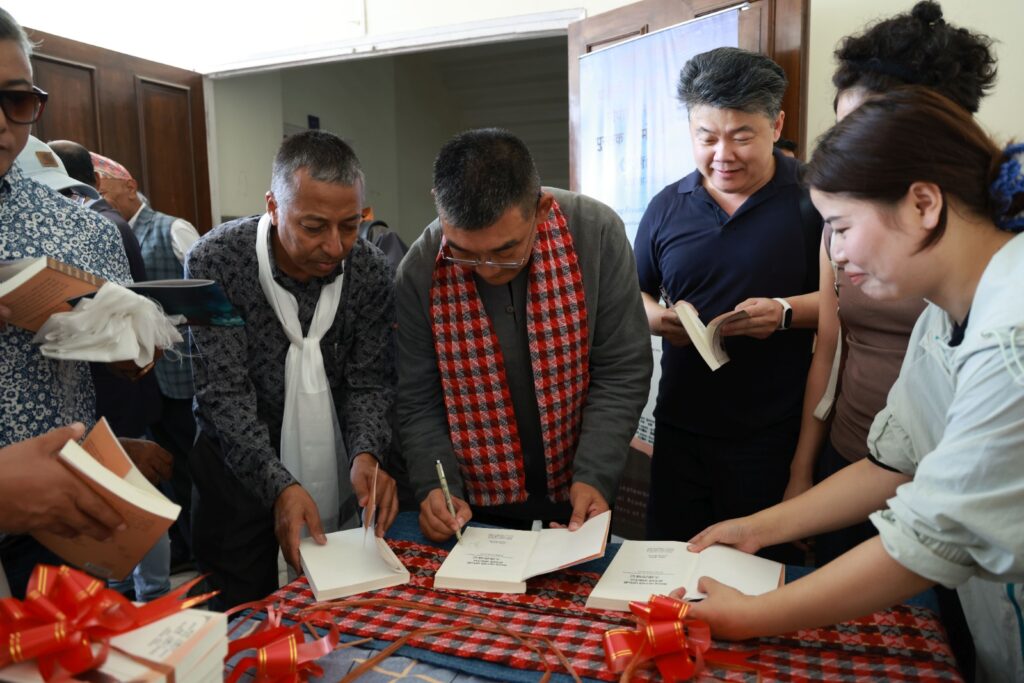
Originally written in Chinese as “大唐西域记” (Great Tang Records on the Western Regions), the book records Xuanzang’s observations during his pilgrimage and travels across Central and South Asia. The work provides valuable insights into the region’s geography, Buddhist traditions, societies and cultural practices during the Tang Dynasty period.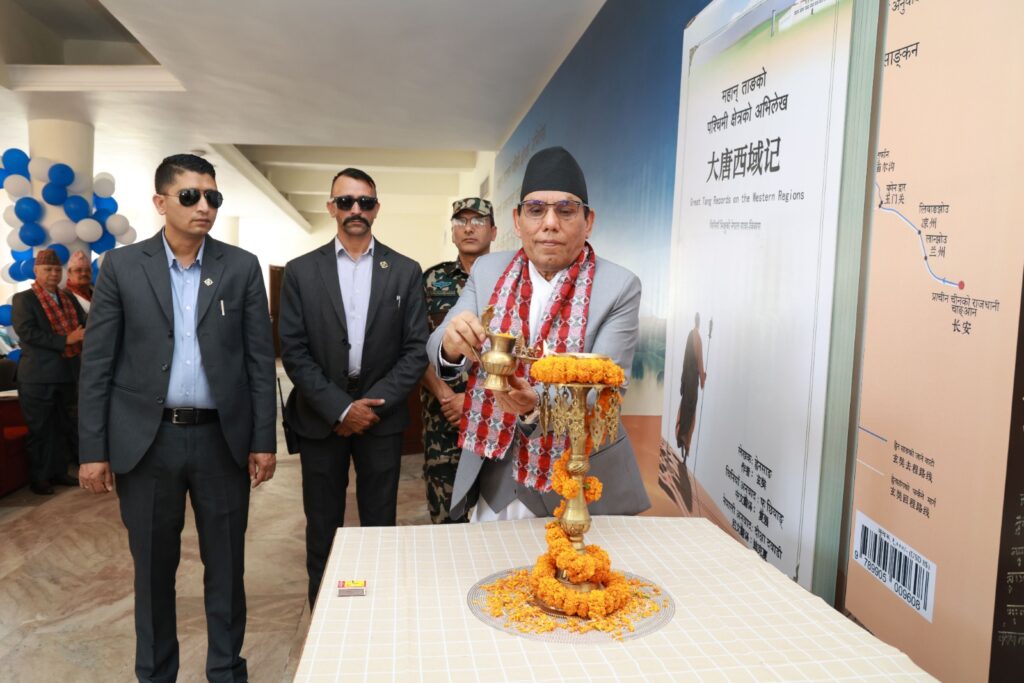
The Chinese version was translated by Fu Qiang, while the Nepali edition was translated by Diksha Dawadi and edited by Ganesh G.C. During the launch event, Fu Qiang expressed gratitude for the support received during the publication process and highlighted the importance of making the historic work accessible to Nepali readers.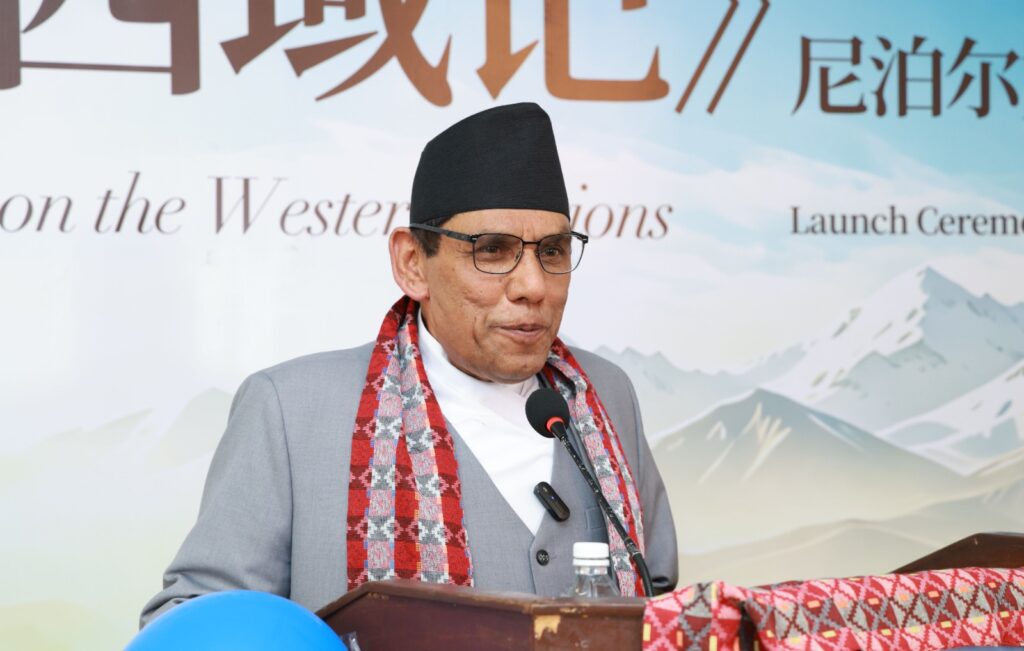
Former minister Raghuji Pant praised Fu Qiang’s contribution to promoting cultural understanding between Nepal and China and his efforts in supporting Nepali literature. The publication is expected to help younger generations learn more about Buddhist heritage, historical travel records and the centuries-old cultural connections between Nepal and China.