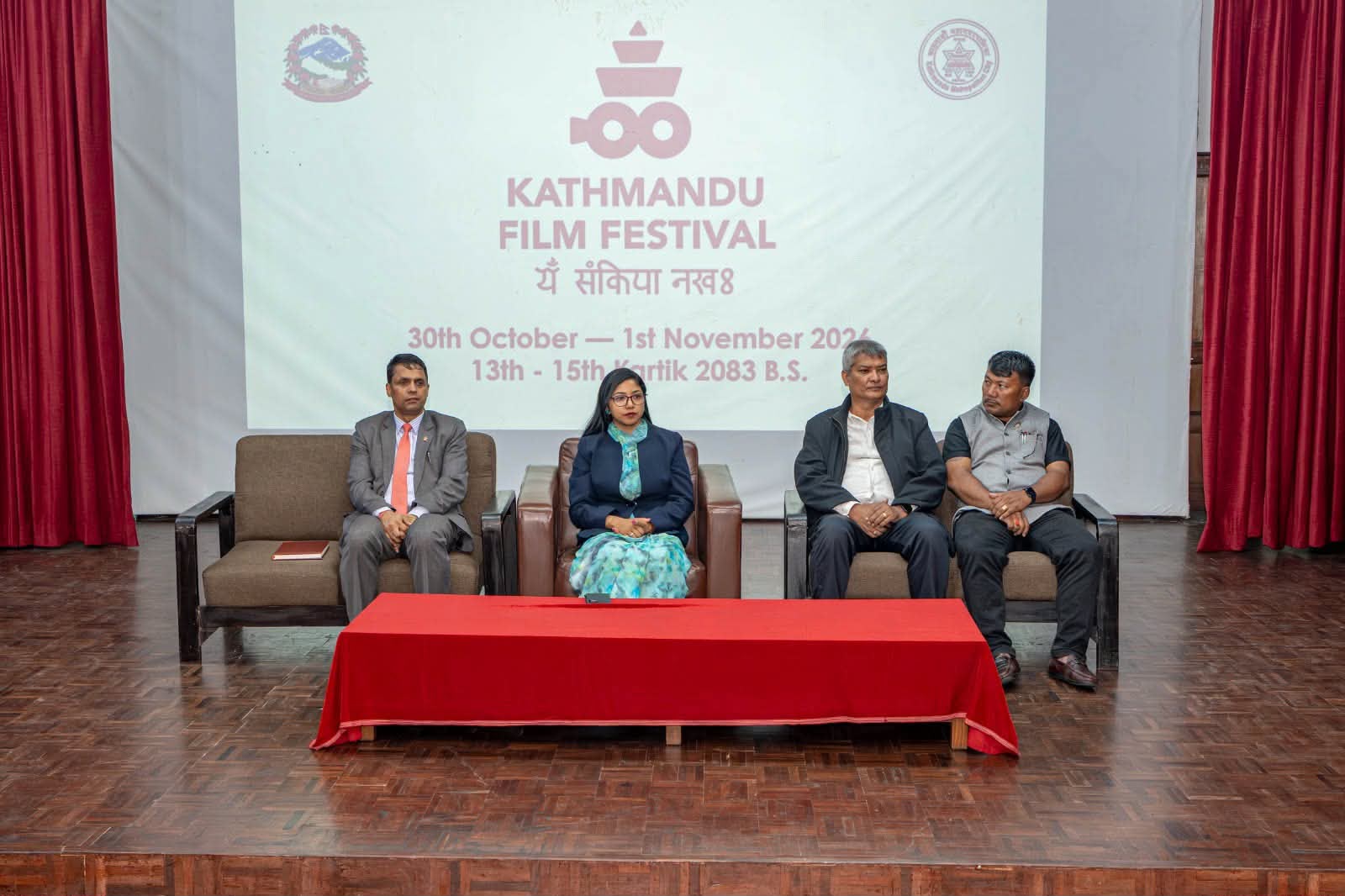
Kathmandu — Kathmandu Metropolitan City has announced the selection of 22 videos for the Youth Video Challenge and Nepal Panorama sections of the Kathmandu Film Festival 2083. The festival will showcase more than 40 films from 10 countries, highlighting Nepal’s cultural heritage, independent filmmaking and international cinema.
The results were announced during a press meet at the Nepal Tourism Board. Of the 22 selected videos, 12 are from the Youth Video Challenge, with a maximum duration of five minutes, while 10 are from Nepal Panorama, with a maximum duration of 30 minutes.
The Youth Video Challenge, organised under the theme “My Culture, My Heritage,” received 35 submissions from filmmakers aged up to 40. The Nepal Panorama section received 75 submissions in documentary, fiction, animation and experimental categories.
Kathmandu Metropolitan City Acting Mayor Sunita Dangol said the city holds numerous untold stories connected to its historical monuments, cultural traditions, local food, clothing, languages, literature and creative practices. She said the festival aims to preserve and promote these stories through cinema while providing local artists with opportunities to reach international audiences.
The selected films under Nepal Panorama include Rihana by Suraj Paudel, Manki by Sarita Shah, Ashubh Ashtami by Sudarshan Yonjan, Doors Are Still Closed by Shyambahadur Limbu, A Letter in Winter by Purnabahadur Gurung, Home Is Not a Place by Lakpa Chhoden Lama, Chumpa: A Doll Under the Basket by Rajesh Prasad Khatri, Sapsu: A Solemn Promise by Alin Kattel, Nar by Aakash Dhimal and Marichha by Sarjun Rai.
The Youth Video Challenge selections include Cigarette by Raj Dong, Happiness by Shailesh Hamal, A City Like a Garden by Dhritika Tiwari, Diyo by Karan Blon, Indra Jatra: The Biggest Festival of Kathmandu by Dinesh Maharjan, Jhingu Chhen (My Home) by Saugat Sapkota, Behind the God by Narjung Budhathoki, The Last Journey by Keshav Sarki, Bhakunde Bhoot by Jeevan Sunuwar, Sachika: A Thread That Ties You Home by Krimin Tuladhar, The Soul of Guthi by Anubhav Shrestha and Chhan Lwah Mansan by Sajil Basnet.
Films selected in both categories will be screened at the National Assembly Hall on November 1 (Kartik 15). Winners of the Youth Video Challenge will receive Rs. 150,000 for first place, Rs. 100,000 for second place and Rs. 50,000 for third place. Each film selected under Nepal Panorama will receive an incentive award of Rs. 100,000.
The festival will also feature international films, independent productions, documentaries, short films and special screenings of classic Nepali cinema. The classic film showcase will include Kumari, Ke Ghar Ke Dera and Sindoor, produced during the 1970s and 1980s.
The International Panorama section will present films from countries including China, India, Australia, France, South Korea, Singapore and the United States. Short films from Yamagata, Japan, a UNESCO Creative City of Film, will also be screened.
The main festival programme is scheduled for October 30 to November 1 (Kartik 13–15), featuring a cultural Heritage Walk, open-air film screenings, a red-carpet event and the Nepal Panorama awards ceremony. A Heritage Run is also planned for October 25, following a route through Basantapur, Handigaun and the Pashupatinath area.
According to Aashaman Sangat, coordinator of the metropolitan city’s Heritage and Tourism Committee, the festival is part of a broader effort to strengthen Kathmandu’s cultural identity and raise its international profile.
As a member of the UNESCO Creative Cities Network, Kathmandu Metropolitan City is promoting cinema as a means of connecting education, communities and creative industries. Through the festival, the city aims to support local filmmakers, encourage innovation, create opportunities for cultural exchange and contribute to the growth of the local creative economy.