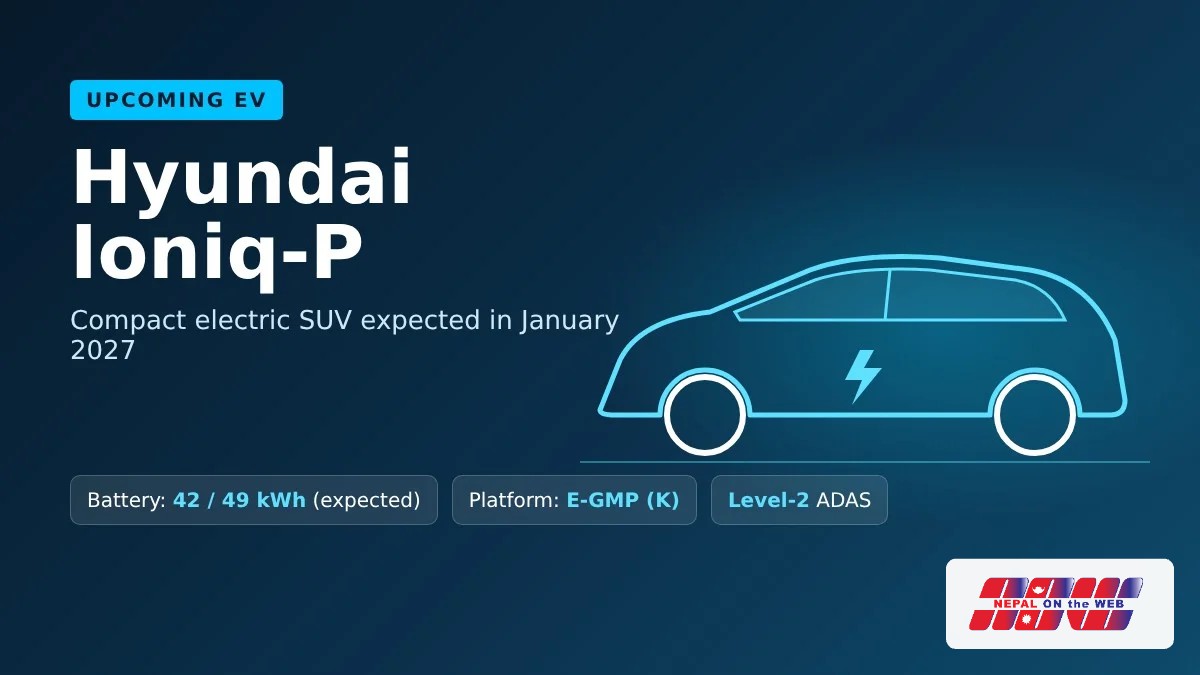
Kathmandu – Hyundai is preparing a smaller, more affordable electric SUV, and it may be called the Hyundai Ioniq-P. If priced right, it could become an interesting new option for Nepal’s fast-growing EV market.
The South Korean carmaker mentioned the new model in its third-quarter 2026 financial results, released on October 29. The Ioniq-P name has been reported by Autocar India, but Hyundai Motor India has not yet confirmed what the vehicle will officially be called.
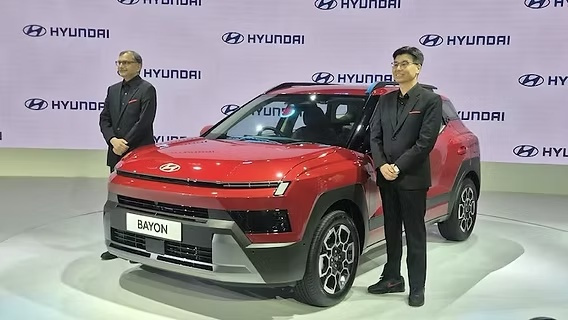
The compact electric SUV is being built in India and is expected to be unveiled in January 2027. It is aimed at making Hyundai’s Ioniq electric brand cheaper and more accessible to a wider range of buyers, and is expected to sit after the Bayon in the company’s line-up.
The SUV is expected to be based on Hyundai’s E-GMP (K) platform. Two battery options, 42 kWh and 49 kWh, are being discussed. Hyundai has not announced a range figure yet, but the Hyundai Inster, which uses a similar battery, offers up to 355 km on the WLTP cycle, giving a rough idea of what to expect.
Features are also expected to include a new-generation infotainment system and Level-2 advanced driver assistance systems (ADAS). Details such as the motor, dimensions, seating and price have not been revealed.
In India, the Ioniq-P will take on popular models such as the Tata Nexon EV, Mahindra XUV 3XO EV and Kia Syros EV.
In Nepal, its chances will largely depend on price and features. The compact EV segment is already crowded, with the Tata Nexon EV, Kia Syros EV, BYD models and a growing number of Chinese brands competing for buyers. Hyundai’s established sales and service network could work in its favour.
For now, there is no confirmation of a Nepal launch. Whether the Ioniq-P succeeds here will depend on Hyundai’s Nepali distributor bringing it in with competitive pricing, suitable battery options and attractive technology.