Academic session on Chinese modernization held in Kathmandu Highlights China-Nepal cooperation

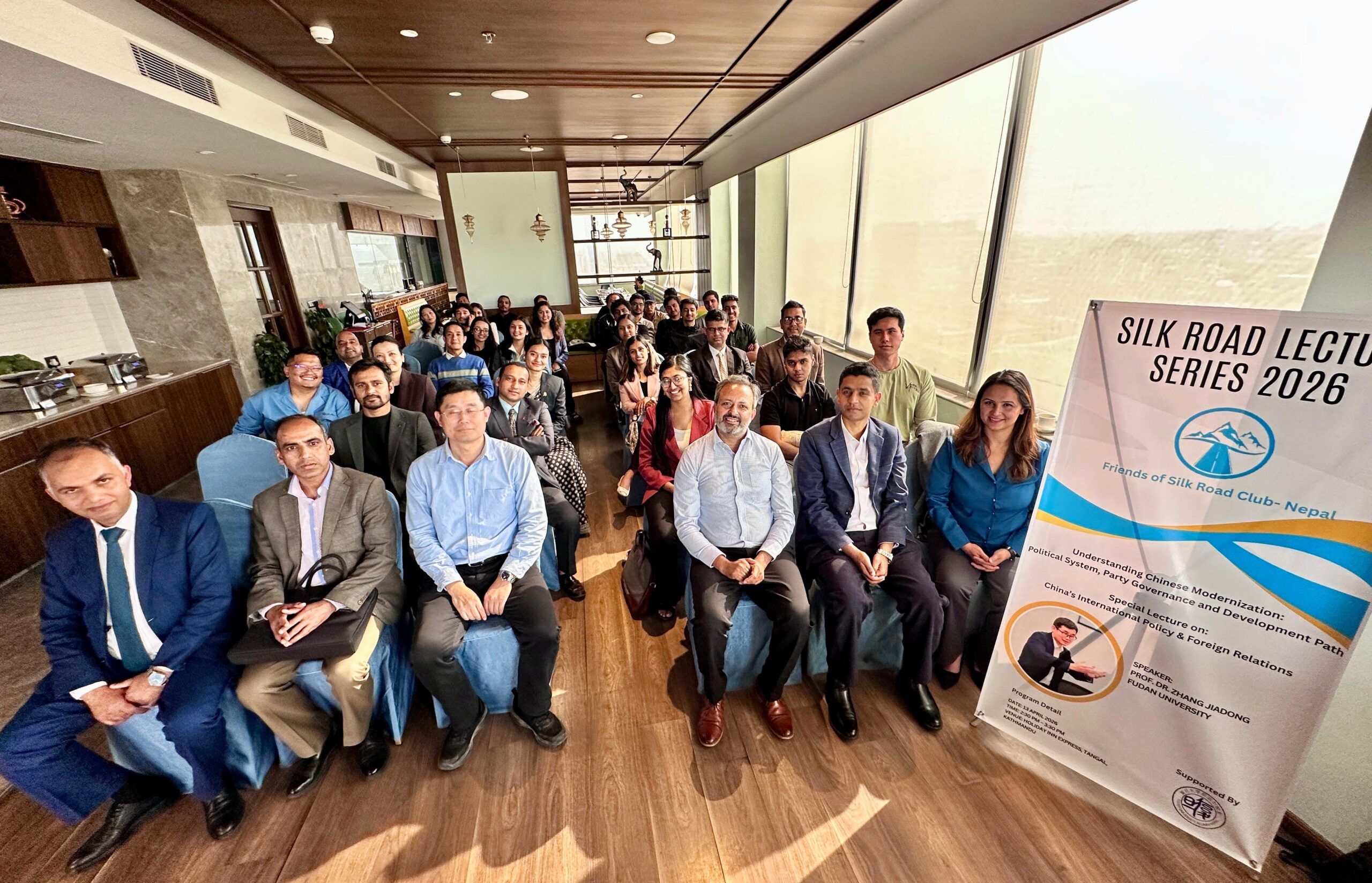
Kathmandu-An academic session focusing on Chinese modernization and governance was successfully held in Kathmandu on Monday, bringing together scholars, students, and policy experts for an engaging exchange of ideas.
Organized by the Friends of Silk Road Club–Nepal, the lecture titled “Understanding Chinese Modernization: Political System, Party Governance, and Development Path” took place at Holiday Inn Express Kathmandu Naxal. The event aimed to deepen understanding of China’s development model and its broader global implications.
The keynote speaker, Zhang Jiadong, highlighted the distinctive features of China’s modernization process. He emphasized that China’s rapid economic growth over the past four decades has been driven by gradual reforms, strong institutional capacity, and centralized political leadership under the Communist Party of China.
Professor Zhang elaborated on how this governance model has enabled large-scale poverty reduction and significant technological advancement. He also discussed key elements of China’s foreign policy, including the vision of building a “community with a shared future for mankind” and principles such as mutual benefit, inclusiveness, sincerity, and regional cooperation.
A key focus of the session was the evolving relationship between China and Nepal. The speaker underscored long-standing historical ties, growing economic collaboration, and increasing people-to-people exchanges between the two nations. He noted that initiatives like the Belt and Road Initiative present new opportunities for regional connectivity and sustainable development.
The program witnessed the participation of more than 50 attendees, including academicians, students, and professionals from various sectors. An interactive question-and-answer session allowed participants to engage in meaningful discussions on governance systems, economic sustainability, and Nepal’s strategic engagement with China.
The event concluded with a vote of thanks, with organizers expressing appreciation for the speaker’s insights and the active involvement of participants. The session forms part of the organization’s ongoing efforts to promote academic dialogue and enhance understanding of regional and global developments.
Related Stories