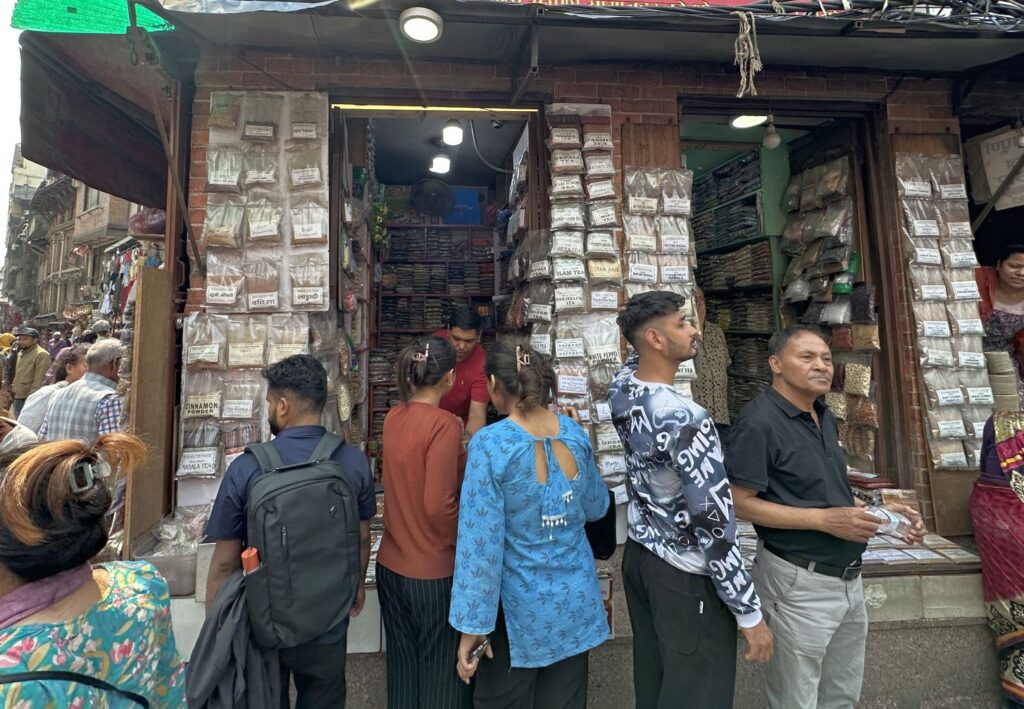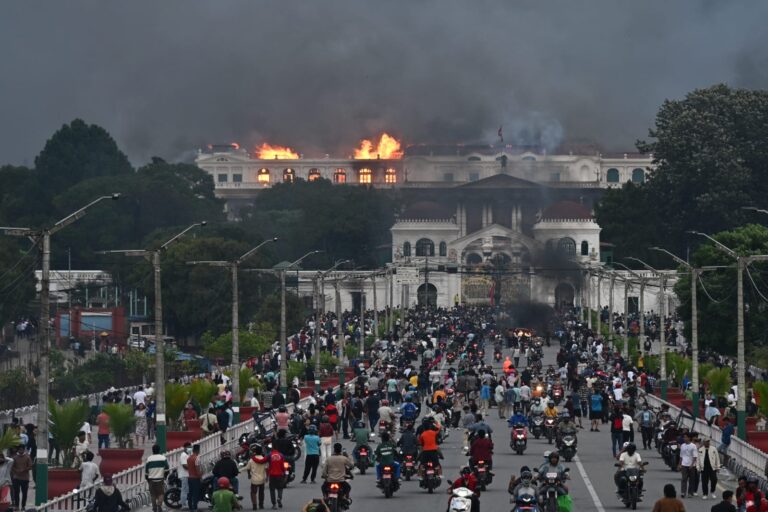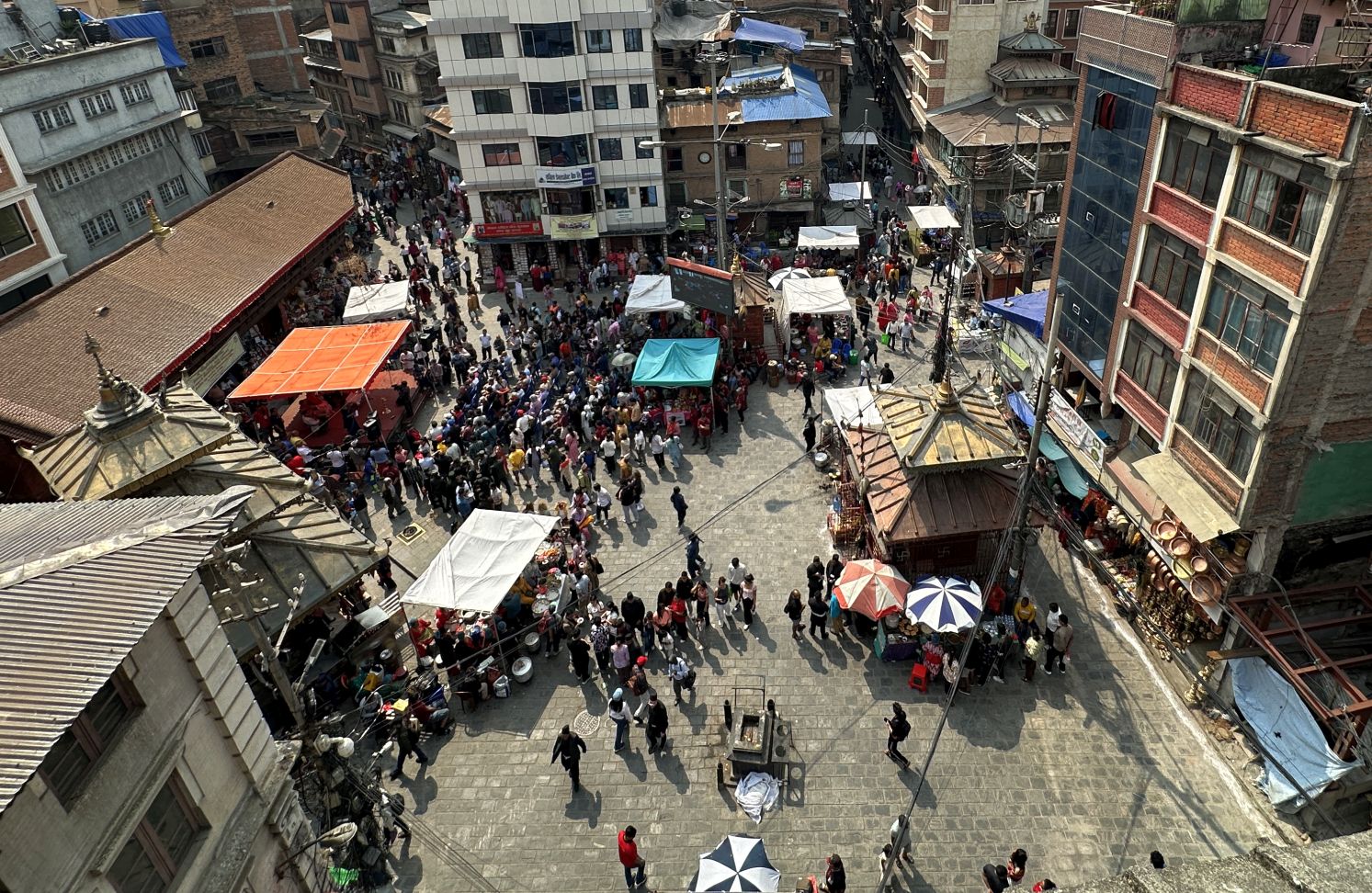
This morning, Macha Kaji Maharjan, 56, was mildly surprised as he wandered along the narrow streets around the downtown area of Ason. He found the ancient market of Ason breathing differently. The streets that usually echo with speedy, noisy motorcycles and impatient drivers now carried a softer rhythm. For once, pedestrians did not cling to the edges of the street, they own it.
As Rashmila Tuladhar, 17, a teenage local girl of the same Ason area, looked out of her window, she was struck with the abnormal quietness that prevailed in the square outside below.
This is the new reality of Kathmandu’s historic commercial hub, where a no-vehicle zone has been implemented every Saturday from today . The initiative, introduced by Kathmandu Metropolitan City, aims to restore Ason’s cultural and social essence. From 5 Baisakh 2083, vehicles have been restricted during designated hours along all entry points, all six of them namely Kamalachhi, Bhotahity, Mahabouddha, Balkumari, Nhaikantala and Tyouda.
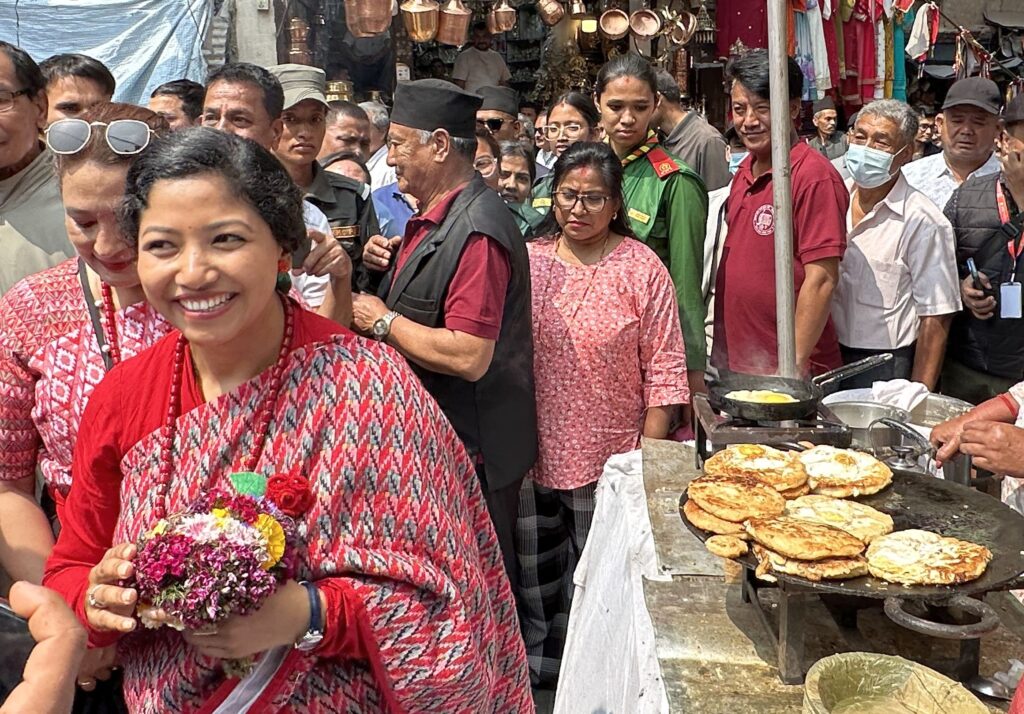
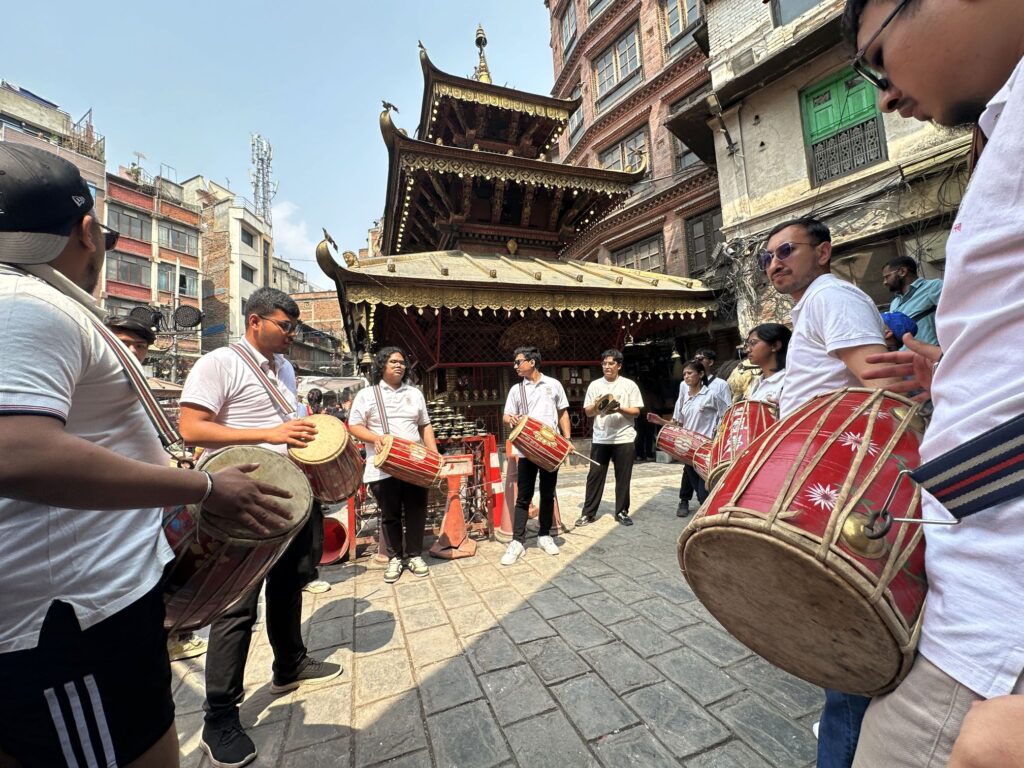
The event was inaugurated by Ms Sunita Dangol, the acting mayor of the city, as she went around the area in a short journey on foot. She was accompanied with local musical group.
The move is not just about traffic, it’s about identity. Ason, long considered a lifeline of daily life, has been under pressure from congestion and pollution. By removing vehicles, even if temporarily, the city hopes to bring back what was slowly being lost: human interaction, heritage, and breathable space.
For vendors, the change is both strange and refreshing. “I can finally breathe freely,” tells a spice seller, arranging turmeric and cumin in neat pyramids. Without vehicles blocking the view, stalls seem more inviting, more alive.
Shoppers, too, linger longer. A mother walks with her child without fear of speeding bikes. Elderly locals, once hesitant to navigate the chaos, return to familiar shops with renewed ease.
Still, not everyone is convinced. Some traders worry about reduced accessibility for bulk buyers. Others question whether a once-a-week change can truly solve deeper urban issues.
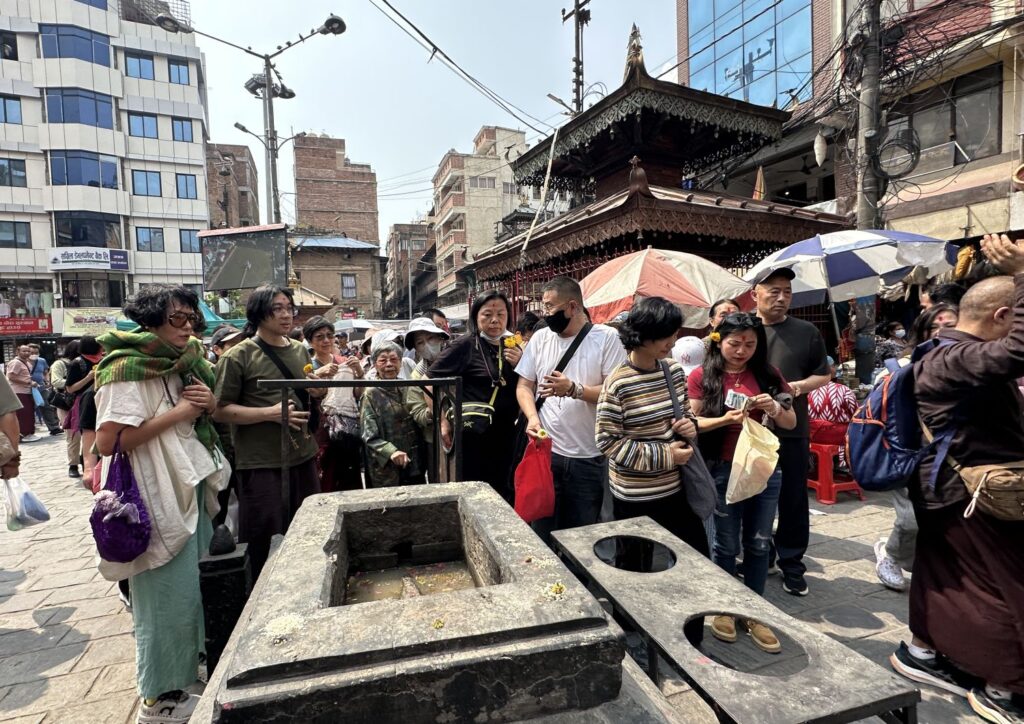
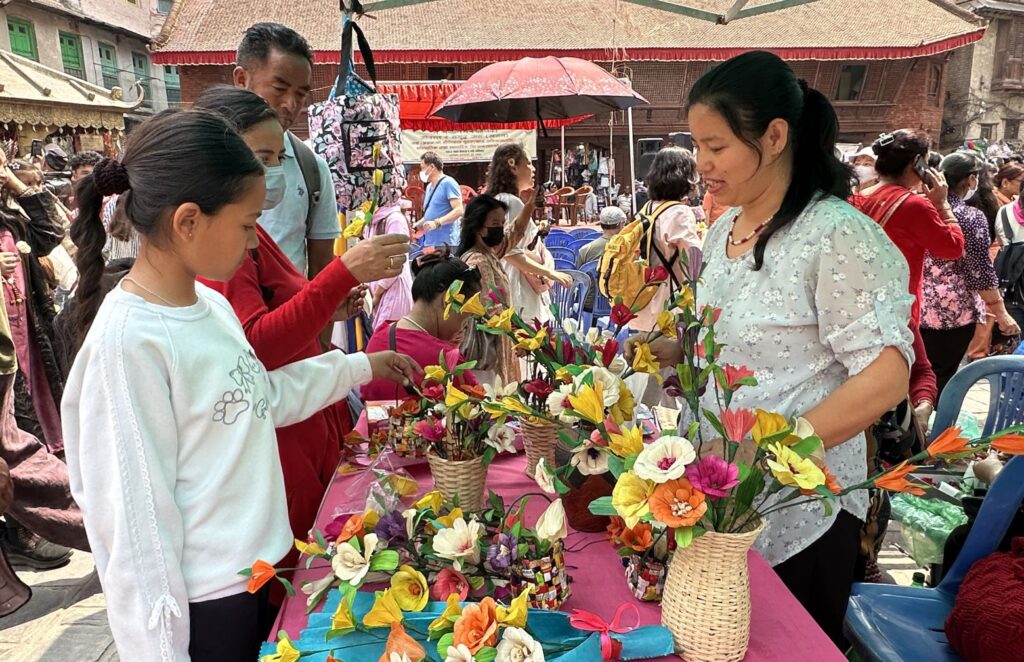
The vehicle-free zone is also envisioned as a cultural corridor. Plans include traditional performances, exhibitions of local crafts, and community-led activities that celebrate Ason’s heritage. Ason Daboo, a raised platform in the middle of the square, can serve as the natural stage for live performances of local art, music and dances.
City officials argue that this transformation could boost local businesses—not by speed, but by experience. Instead of rushing through, visitors might stay, explore, and connect.
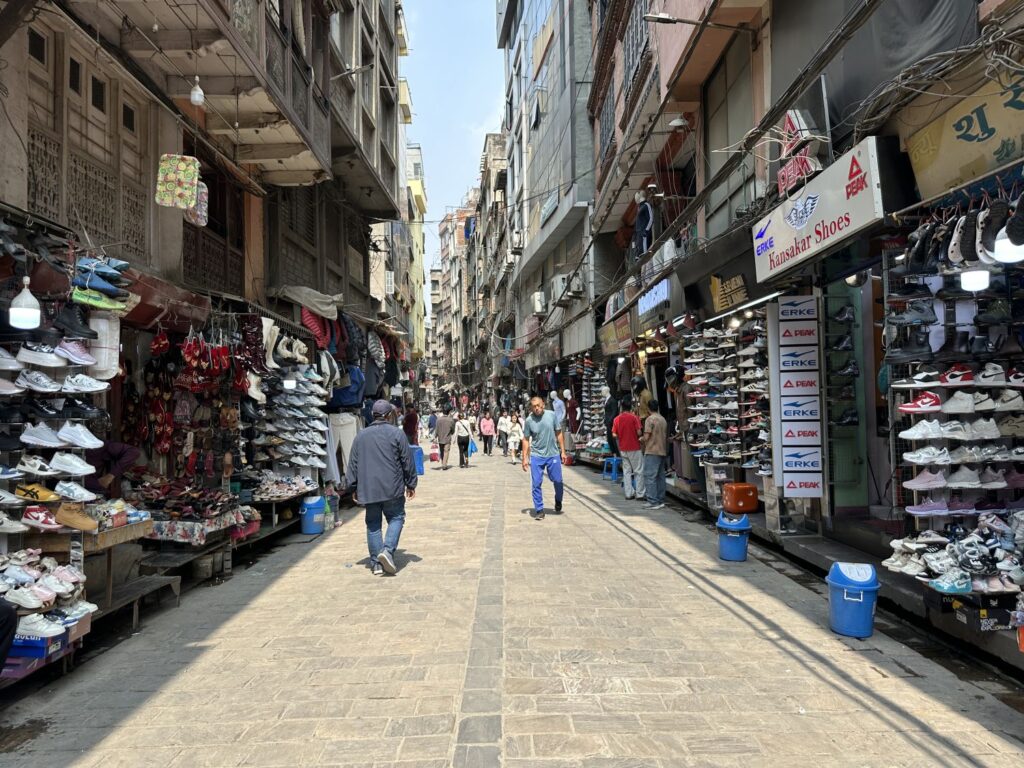
There’s also an environmental angle. Reduced traffic means less air and noise pollution in one of Kathmandu’s most congested inner-city areas.
As the sun climbs higher, the streets gradually fill—not with vehicles, but with life. Street vendors call out prices, children weave through crowds, and tourists on a heritage walk pause to take photos of a Kathmandu that feels both old and new.
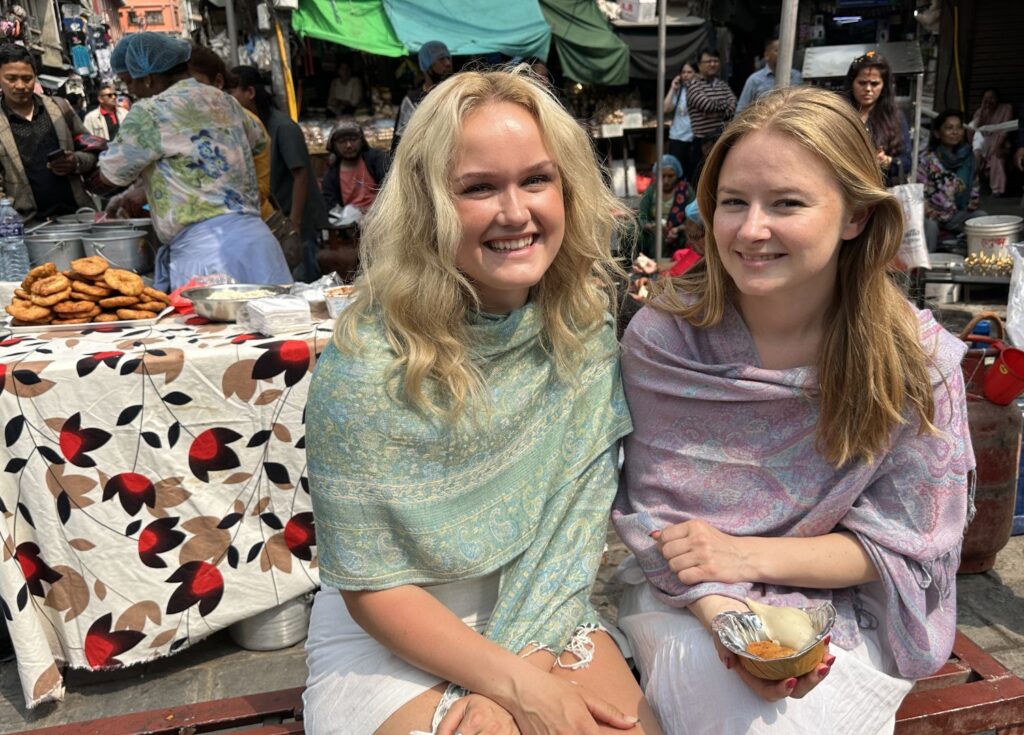
Ingrid Hansen, who recently arrived from Norway, reminisced about her recent visit to one of her home towns. “We also do have such vehicle-free zones implemented in our towns of cultural heritage.” She said.
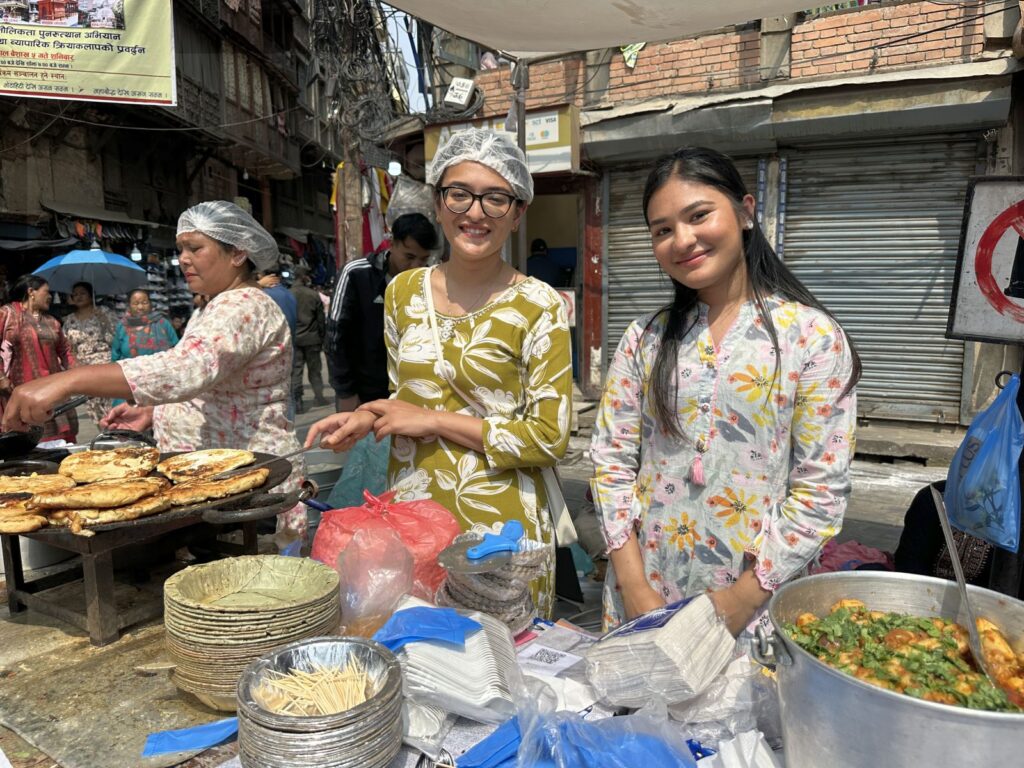
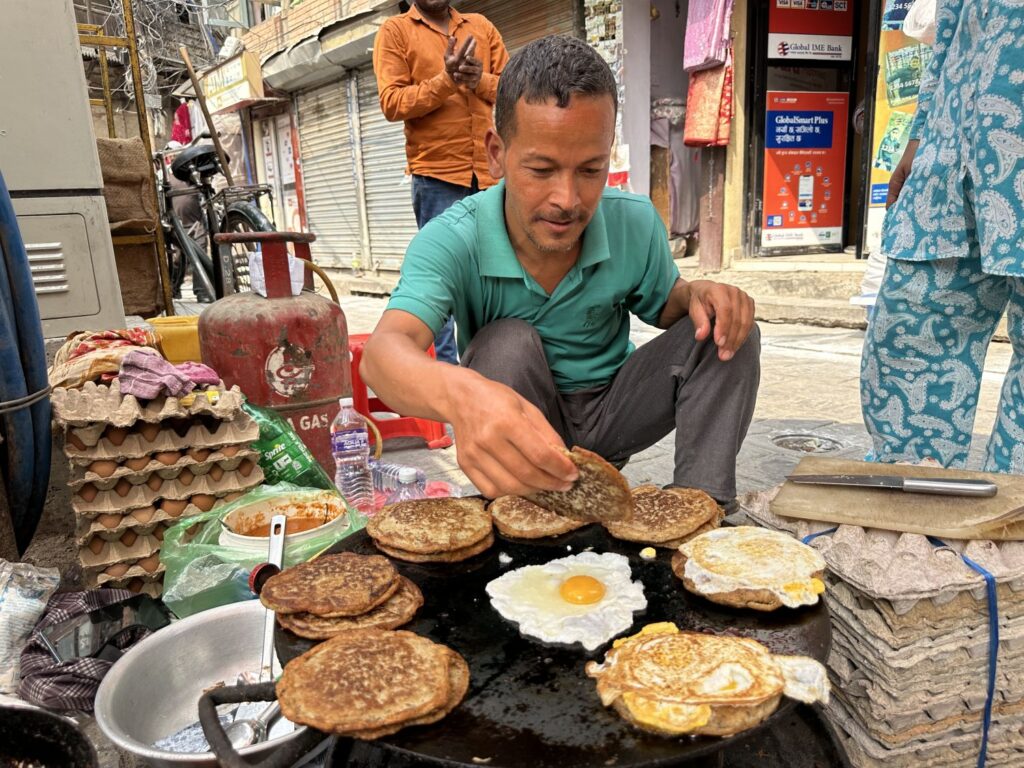
There were also some stalls selling local culinary dishes and handicraft items. People were especially attracted to Yomari and Bara, local Newari delicacies, among others, though some people around were of the opinion that such stalls would have been better left for some other occasions.
There are also some doubts expressed by local residents. Mukesh, 35, was wondering, “How do I handle emergency situations without access to vehicles around my home?” People worry that some other overcrowding activities may replace the congestion caused by the vehicles, thus making the situation remaining the same.
The success of this initiative remains to be seen. Authorities plan to expand it to nearby areas if it works. But for now, every Saturday offers a glimpse of possibility: A city where people come before traffic, a market where culture is not overshadowed by congestion.