For nearly a decade, the heart of Kathmandu didn’t beat, it was buried. Under piles of construction debris, the wheels of a temporary bus park, and the weight of illegal concrete stalls, Khula Manch, literally the “Open Theatre”, was a misnomer. But today, the dust has settled, the padlocks are gone, and a vibrant green carpet has replaced the gray asphalt of urban neglect.
In mid-April 2026, Kathmandu’s iconic open ground officially reopened to the public, marking the end of a long-fought battle between civic activists and administrative apathy.
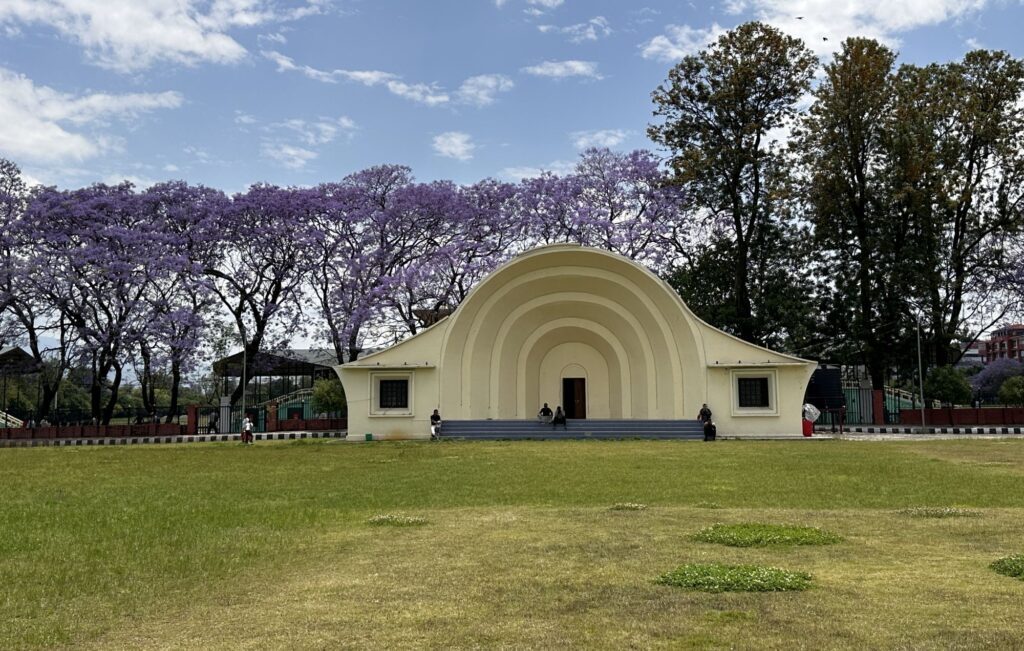
To understand the significance of Khula Manch, one must look at the soil beneath the new Bermuda grass. This 48-ropani plot has been the silent witness to every major tectonic shift in Nepali politics. In 1980, B.P. Koirala stood here to demand a multiparty system during the referendum. In 1990, it was the epicenter of the movement that toppled the 30-year Panchayat rule. In 2006, Hundreds of thousands gathered here to celebrate the end of the monarchy.
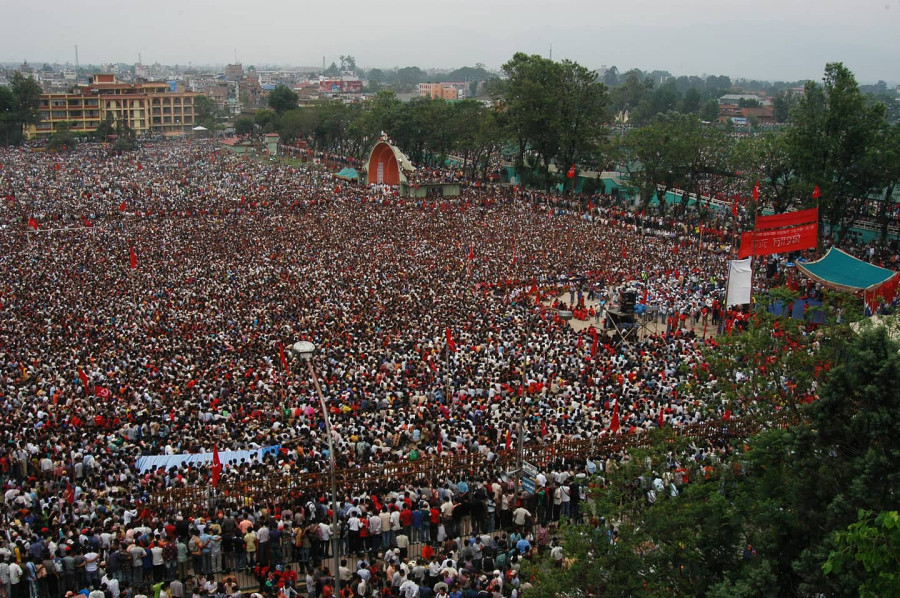
For generations, Khula Manch was more than just a field; it was a democratic safety valve. It was the one place where a citizen could stand and be heard without blocking traffic or asking for a royal audience.
The decline began after the 2015 earthquake. What was meant to be a temporary sanctuary for displaced families and a storage site for the reconstruction of Bir Hospital and Durbar High School turned into a permanent occupation.
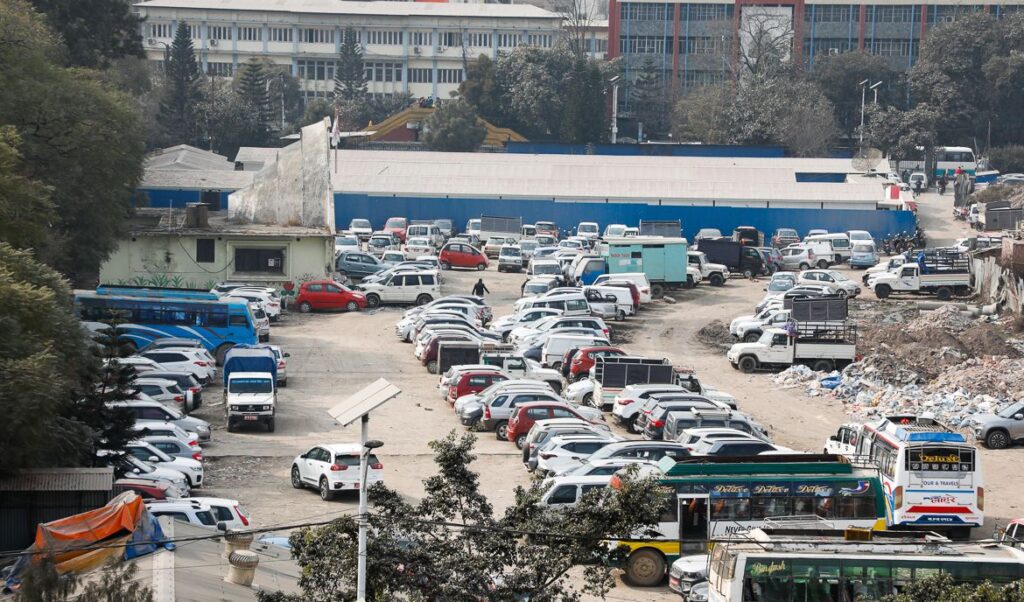
By 2019, half the ground was a chaotic bus park. Illegal shutters and shops began to sprout like weeds, sanctioned by a system that seemed to have forgotten the “public” in public land. The “Occupy Tundikhel” campaign became a rallying cry for heritage activists and locals who refused to let the city’s lungs be choked by concrete. “Khula Manch is not just a piece of land; it is a symbol of civil liberty,” activists often argued during their protests.
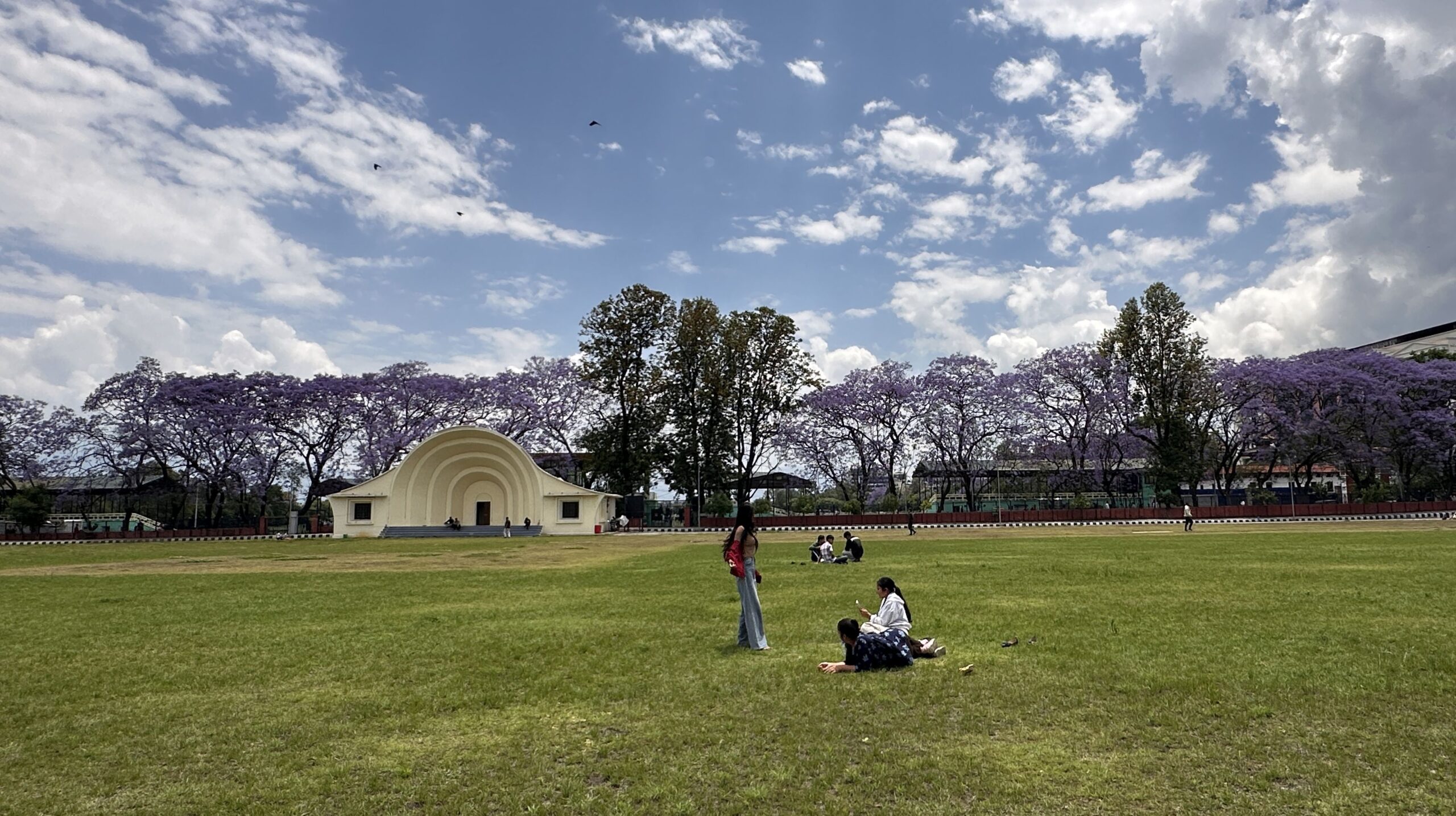
The tide finally turned, when after discarding a controversial plan for an underground parking lot, which faced stiff public resistance, the Kathmandu Metropolitan City committed to a total restoration. Now over 14,600 square meters of natural Bermuda grass have been planted, transforming the dusty bowl into a lush park. A 4-meter-wide walkway circles the perimeter, lined with 21 repurposed electric poles that provide dual-sided lighting for evening strolls. Six deep recharge pits have been installed to manage rainwater and replenish the city’s depleting groundwater.
Unlike its past as a purely political arena, the new space is designated for yoga, meditation, and sound healing sessions in the morning. On the morning of the reopening, Acting Mayor Sunita Dangol joined citizens for a session of yoga on the fresh grass. The scene was a far cry from the shouting matches and bus horns of years past.
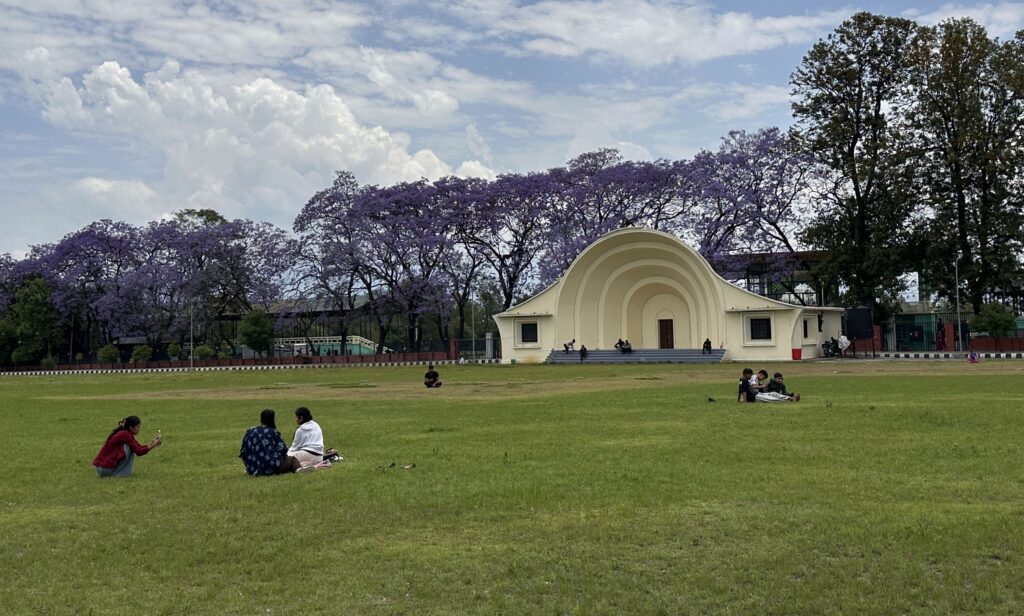
Today, you’ll find elderly residents taking their morning walks, children playing without the fear of moving vehicles, and a city that finally feels it can breathe again. Its daily life has been reclaimed by the people.
In a city rapidly losing its open spaces to the terror of unplanned development, the revival of Khula Manch is a rare victory. It serves as a reminder that in Kathmandu, the most valuable thing you can build is sometimes nothing at all—just an open space where the sun hits the grass and the people can finally stand free.
Photo source : Min Ratna Bajracharya / Onlinekhabar