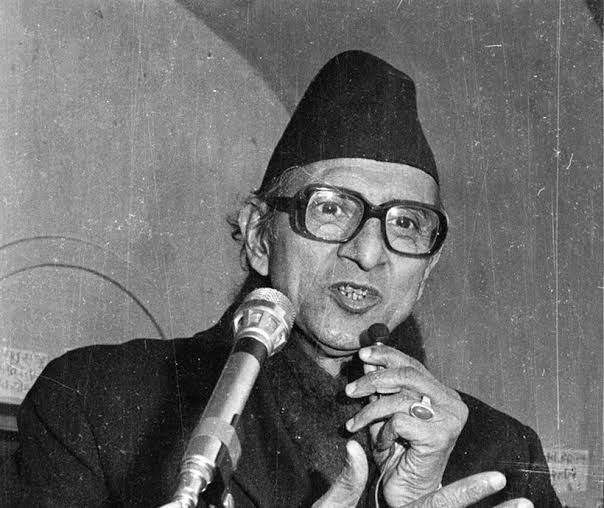
Kathmandu-Forty-five years after his passing, Nepal continues to remember B.P. Koirala not merely because he was the country’s first democratically elected Prime Minister, but because he transformed the way Nepalis understood politics, literature and, above all, humanity. Every year on Shrawan 6, political parties organize memorials, intellectuals revisit his writings, and students read his novels in classrooms. Yet his legacy extends far beyond ceremonial garlands and speeches.
His ideas remain strikingly relevant in today’s Nepal,a country still grappling with political instability, fractured leadership, declining public trust and questions about democratic values.B.P. never believed politics was only about winning elections.Nor did he believe literature existed merely to entertain. For him, both politics and literature served one purpose: to understand people and make society more humane.
The Boy Who Grew Up to Challenge Power
Born on September 8, 1914 (Bhadra 24, 1971 B.S.) in Varanasi, India, into the politically active family of Krishna Prasad Koirala, B.P. grew up surrounded by conversations about freedom and justice.
His youth coincided with India’s independence movement and Nepal’s struggle against the Rana oligarchy. Inspired by democratic ideals and socialist thought, he chose a life of resistance instead of comfort.While many politicians inherit power, B.P. earned public trust through sacrifice.
He spent years in prison.He lived in exile.He battled illness.Yet none of these weakened his conviction that democracy was worth fighting for.His leadership during the 1950 Democratic Revolution helped overthrow the century-long Rana regime and opened Nepal’s path toward constitutional democracy.The defining moment came in 1959, when Nepal held its first democratic general election.The Nepali Congress won a sweeping mandate, and B.P. became the country’s first democratically elected Prime Minister.
Although his government lasted only eighteen months before King Mahendra dissolved Parliament and imprisoned him in 1960, B.P.’s democratic ideals survived long after his administration ended.
Politics with Principles
Unlike many leaders remembered only for holding office, B.P. is remembered for the ideas he introduced.He believed democracy meant far more than periodic elections.To him, democracy required freedom of expression, independent institutions, social justice, equality before the law and respect for dissent.Perhaps his greatest political contribution came after years of imprisonment.Rather than seeking revenge against the monarchy, he introduced the doctrine of National Reconciliation.At a time when political polarization dominated national discourse, B.P. argued that Nepal could move forward only through dialogue, constitutional politics and mutual respect.His famous decision to return to Nepal from exile in 1976-fully aware he would be arrested remains one of the boldest acts in the country’s democratic history.
He chose principles over personal freedom.Even today, when political parties are increasingly divided and public confidence in institutions continues to decline, many political observers believe B.P.’s commitment to dialogue, accountability and national unity offers lessons Nepal has yet to fully embrace.
The Novelist who changed Nepali literature forever
Among B.P.’s literary masterpieces, Sumnima remains one of the most celebrated novels in Nepali literature. Through the relationship between Aryan and Kirati civilizations, the novel explores culture, spirituality, nature, freedom and identity. Decades after its publication, it continues to be taught in universities and remains relevant in debates on cultural coexistence.
His novel Teen Ghumti (Three Turns) was equally revolutionary. At a time when discussions about women’s autonomy were rare, B.P. portrayed a woman struggling between marriage, personal freedom and societal expectations. The novel challenged conventional gender norms and remains one of Nepal’s most important feminist literary works.
In Narendra Dai, B.P. examined love, sacrifice and moral dilemmas, while Modi Ain portrayed rural society, class divisions and social transformation.
His work Hitler ra Yahudi (Hitler and the Jews) expanded the scope of Nepali literature by engaging with global politics, war, racism and humanity, connecting Nepali readers with international historical experiences.His short stories similarly focused on the hidden struggles of ordinary individuals, presenting characters who were emotionally complex rather than morally perfect.
Perhaps B.P.’s greatest literary achievement lies not simply in the stories he wrote but in the questions he dared to ask.His characters are rarely heroes or villains.
Why young Nepal should read B.P. again
Today’s generation knows B.P. largely through political slogans and memorial speeches.
But reducing him to the founder of the Nepali Congress does a disservice to his extraordinary intellectual legacy.His books ask questions that today’s Nepal continues to confront.How should society treat women?Can democracy survive without tolerance? Should identity divide people or enrich them?Can politics exist without ethics?How do individuals remain free within society?These are not questions of the past.They define Nepal’s present.
In an age dominated by social media outrage, political polarization and shrinking public dialogue, B.P.’s writings remind readers to think before reacting and to understand before judging.He believed disagreement strengthened democracy rather than weakened it.He believed literature should challenge society not comfort it. Perhaps that is why his books still feel remarkably modern.
A legacy beyond any party
Ironically, while Nepal commemorates B.P.’s 45th memorial day, the Nepali Congress he founded remains divided into competing factions.Separate memorial events organized by different groups reflect the internal tensions within the party.Yet B.P.’s legacy belongs to far more than one political organization. He belongs to every Nepali who values democracy. To every student discovering Sumnima for the first time. To every reader searching for meaning in Teen Ghumti.To every citizen who believes politics should be guided by principles rather than personalities. In an era searching for principled leadership and meaningful public discourse, B.P. Koirala’s greatest message may be his simplest one: a nation cannot become truly democratic unless its people are free not only to vote, but also to think, question and dream.Although politics and literature may appear to be separate worlds, B.P.’s work reveals they were Forty-five years after his passing, B.P. Koirala is remembered not simply because he became Nepal’s first elected Prime Minister, nor solely because he wrote some of the country’s greatest novels.He is remembered because he believed that a nation could only become truly democratic when its people were politically free, intellectually fearless and emotionally honest.