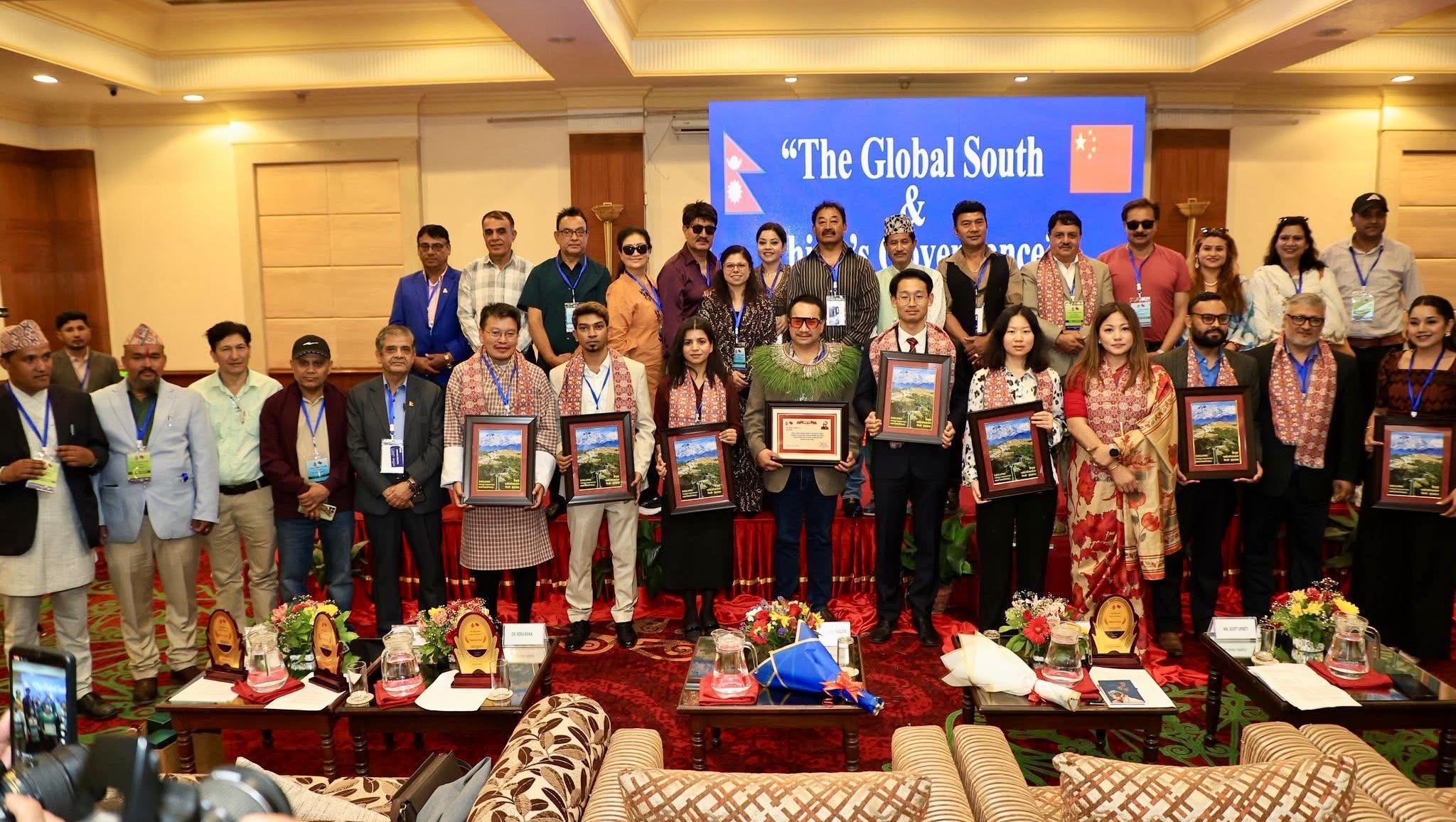
Kathmandu-Experts and representatives from various countries have said that China’s governance and development model has provided important guidance for nations of the Global South.Speaking at a program held in Kathmandu, participants highlighted that China’s development philosophy, targeted poverty alleviation policies, and the Global Governance Initiative (GGI) are highly relevant for developing countries like Nepal.Former Bhutanese minister Karma Dorji said China’s governance and development model offers meaningful direction for Global South countries. He noted strong similarities between Bhutan’s Gross National Happiness (GNH) philosophy and China’s development vision, stating that both place people’s well-being and balanced development at the center.
Sharing his views on China’s governance system and development achievements, Dorji said lifting nearly 800 million people out of extreme poverty under the leadership of the Communist Party of China is an unprecedented accomplishment in human history. He added that Chinese President Xi Jinping’s vision of “common prosperity” and a “shared future for mankind” reflects not only material advancement but also spiritual values and global progress.Referring to the four pillars of Bhutan’s GNH philosophy good governance, sustainable socio-economic development, cultural preservation, and environmental conservation he praised China’s people-centered governance approach.
Meanwhile, Bangladeshi scholar MD Belal Hossain said Nepal and Bangladesh have witnessed significant similarities in recent political challenges and public movements. He noted that waves of change in both countries have reflected people’s aspirations and democratic values.Discussing global politics and development, Hossain said China has emerged as an important development partner for countries of the Global South. He stated that China’s policy of implementing development projects without political interference is appreciated by many countries in the region that seek rapid development while preserving their sovereignty.
He stressed that foreign interference is unacceptable in countries like Nepal and Bangladesh and emphasized the need for homegrown governance and administrative reforms to ensure sustainable development.Hossain also expressed hope for Nepal’s bright future, saying that the exchange of experiences between Nepal and Bangladesh could contribute to regional stability and prosperity.