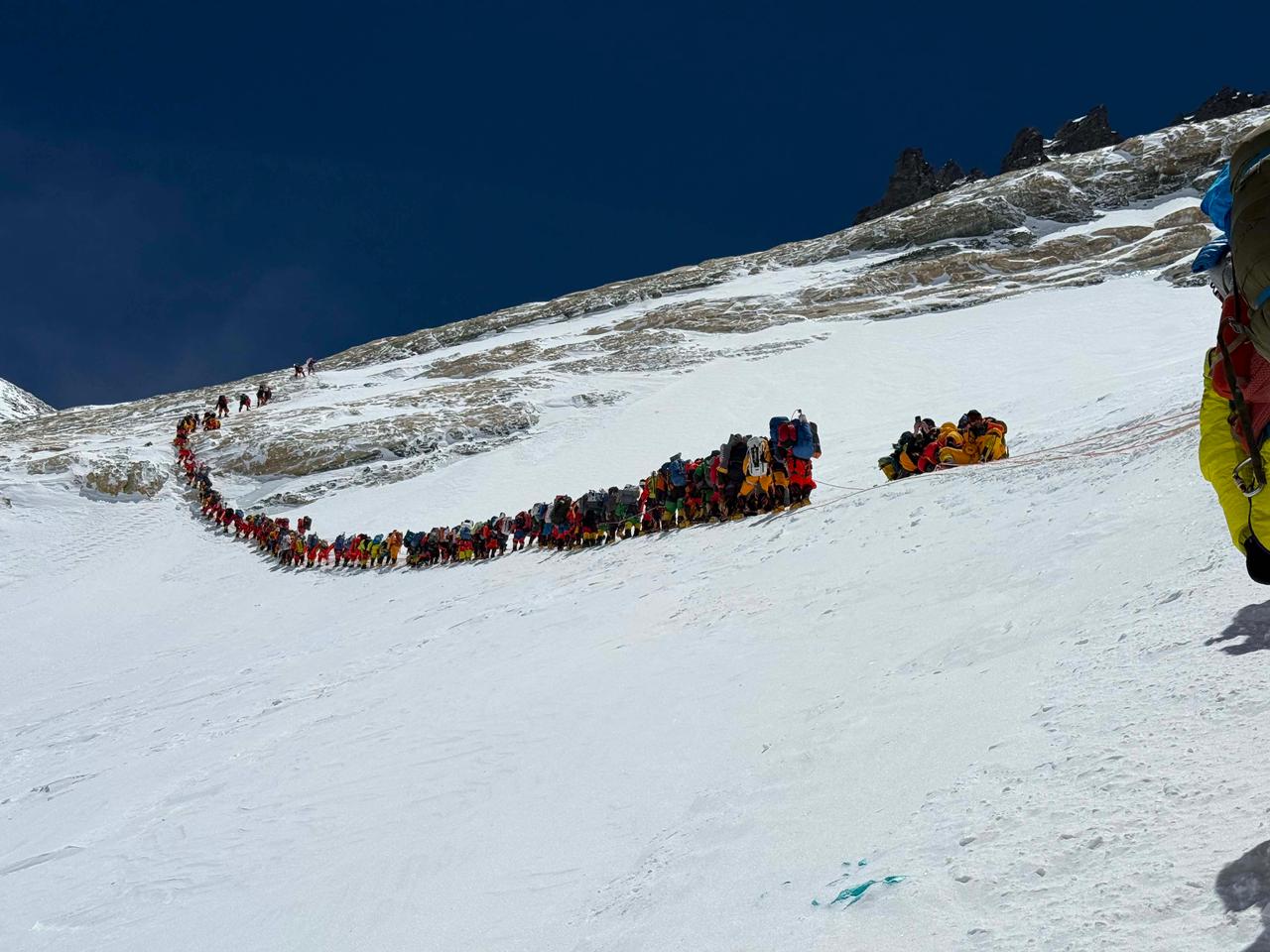
Kathmandu – A record-breaking number of climbers reached the summit of Mount Everest in a single day this week, marking one of the busiest moments in the mountain’s climbing history. According to Nepal’s mountaineering officials and expedition organisers, 274 climbers successfully scaled the world’s tallest peak on Wednesday through the Nepali route, setting a new single-day ascent record from the southern side of Everest. The previous record stood at 223 climbers in 2019. Authorities believe the number could rise further as some expedition teams are still descending from higher camps and have yet to officially report their summit success to base camp officials.
The spring climbing season on Everest is currently at its peak, with climbers taking advantage of a short window of stable weather before conditions deteriorate. This year, the entire focus of Everest expeditions has shifted to Nepal after reports that China did not open the Tibetan side of the mountain for climbers. Officials from Nepal’s Department of Tourism said summit claims are verified only after climbers submit photographic evidence, climbing data and confirmation from expedition leaders. Final numbers are expected after all teams return safely.
Nepal issued 494 climbing permits for Everest this season, generating significant tourism revenue for the country. However, the growing number of climbers on the mountain has once again reignited concerns about overcrowding and safety in high-altitude zones. Mountaineering experts have long warned that congestion near the summit can become dangerous, especially in the “death zone” the area above 8,000 metres where oxygen levels are too low for normal human survival. Long queues in freezing temperatures can force climbers to wait for hours, increasing the risk of altitude sickness, exhaustion and frostbite.Images and videos from Everest over the years have frequently shown climbers standing in narrow lines near the summit ridge, sparking international debate about whether Nepal should limit the number of permits issued each season. Despite the concerns, several expedition organisers argue that crowd size alone does not determine safety. They say proper planning, experienced Sherpa support and sufficient oxygen supplies are more important factors in preventing accidents on the mountain. Adventure operators managing large expedition groups said many teams avoided delays by adjusting their summit schedules and waiting for less crowded climbing windows.
In response to criticism, Nepal has introduced stricter regulations for Everest climbers in recent years, including higher permit fees and tighter expedition management rules aimed at improving safety standards on the mountain.As hundreds continue their ascent attempts during the remaining days of the climbing season, Everest once again stands at the centre of both human ambition and growing debate over the future of high-altitude tourism.
Photo Source: Purnima Shrestha