Kathmandu ranked among world’s top 10 most polluted cities
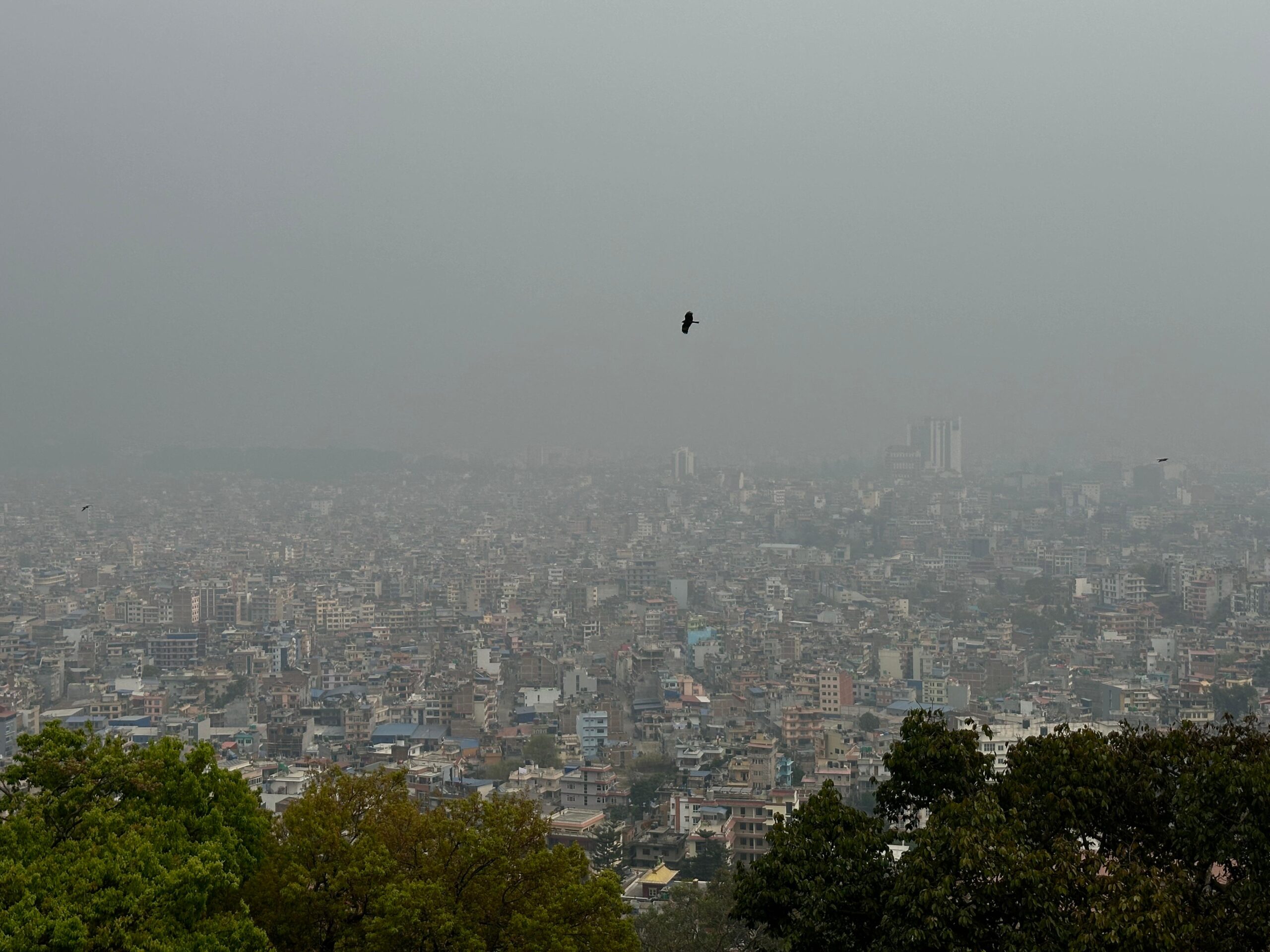
Kathmandu – Air pollution in Kathmandu has worsened significantly, with the Air Quality Index (AQI) approaching 200 and placing the valley among the world’s top 10 most polluted cities.
According to recent air quality monitoring data, the capital’s air has been categorized as “very unhealthy,” with fine particulate matter (PM2.5) identified as the primary pollutant. The high concentration of PM2.5 poses serious health risks, particularly for children, elderly people, and individuals with respiratory or cardiovascular conditions.
The deterioration in air quality has been attributed to a combination of urban emissions and unfavorable weather conditions. Calm winds and the absence of rainfall have limited the natural dispersion of pollutants, allowing smoke, dust, and harmful particles to accumulate in the valley.
Vehicular emissions, especially from diesel-powered vehicles that exceed permitted smoke levels, have been considered a major source of pollution. Industrial activities, construction dust, biomass burning, and the use of household fuels have also contributed to the rising pollution levels.
The situation has been further aggravated by cross-border pollution and seasonal forest fires in neighboring regions. Rapid urbanization, increased transportation demand, and growing industrial activity have added to the concentration of harmful pollutants such as PM2.5, carbon monoxide, and nitrogen dioxide in the atmosphere.
Historical records have shown that air pollution has long remained a major concern in the Kathmandu Valley. In 2024, the city recorded an average PM2.5 concentration of 45.1 micrograms per cubic meter, nearly nine times higher than the World Health Organization’s recommended annual guideline of 5 micrograms per cubic meter.
Over the past 30 days, air quality in Kathmandu has largely remained in the “unhealthy” range, with occasional spikes into “very unhealthy” levels. Experts say improvement may depend on weather changes and stronger enforcement of pollution control measures.
Residents have been advised to limit outdoor activities, particularly during peak pollution hours, while authorities have been urged to implement stricter measures to reduce emissions and protect public health.