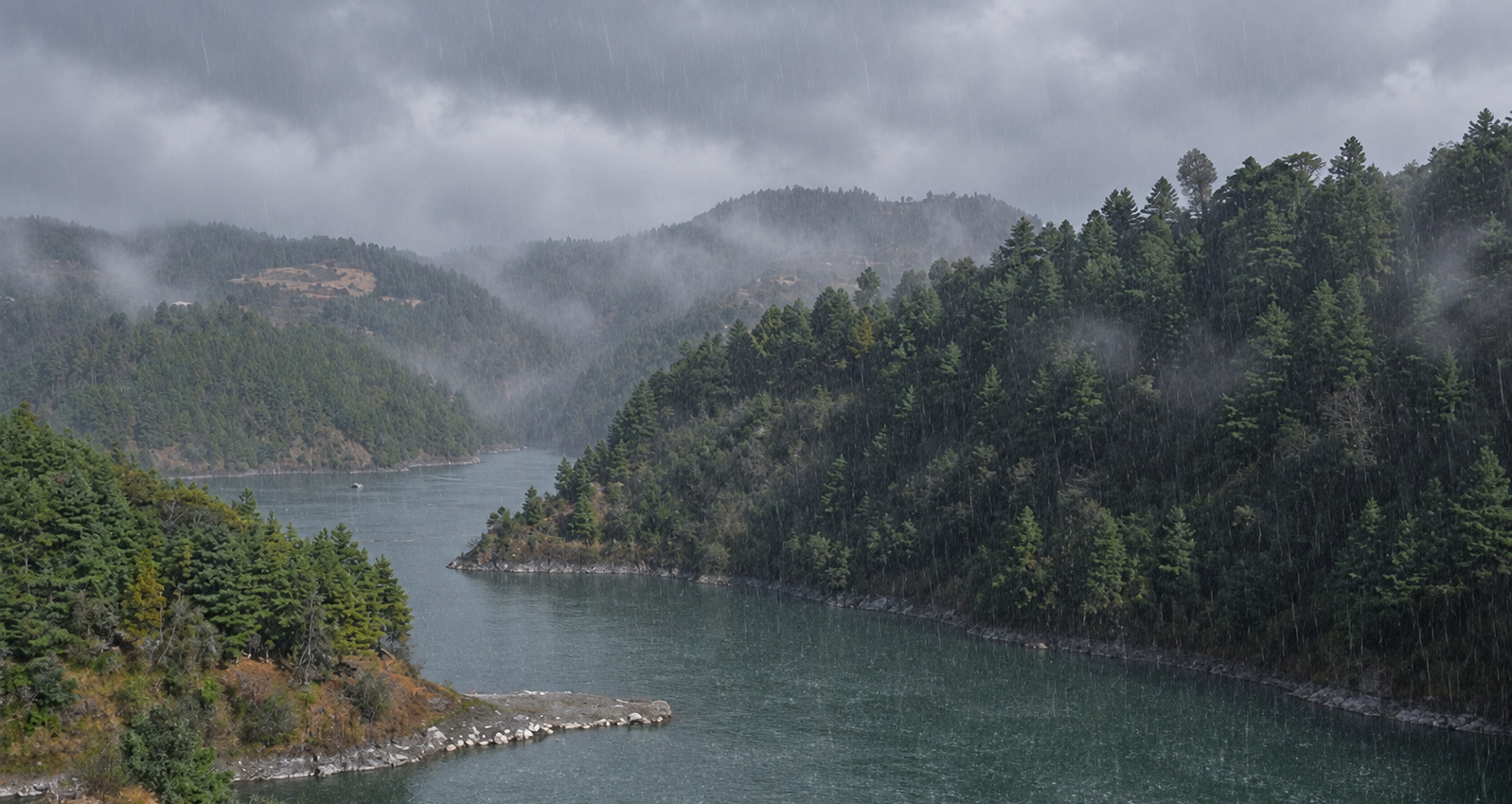
Kathmandu — The water level in the Kulekhani Reservoir has risen rapidly following continuous rainfall throughout the night. According to Madan Timsina, Deputy Executive Director of the Nepal Electricity Authority (NEA), the reservoir’s water level reached 1,522.38 metres at 7:15 a.m. on Friday.
Timsina said the water level had increased by more than 9 centimetres within the previous one and a half hours. The reservoir’s maximum water level is 1,530 metres, meaning the level recorded at 7:15 a.m. was approximately 7.62 metres below the maximum. With rainfall continuing, the water level is rising rapidly.
The Kulekhani Reservoir supplies the Kulekhani I, II and III hydropower projects. Kulekhani I has an installed capacity of 60 MW. Last year, during heavy rainfall, the reservoir level rose above 1,530 metres, prompting authorities to partially open the dam gates.
As the water level continues to rise, the Kulekhani I Hydropower Centre has intensified preparations to control flood-related risks and respond to a possible emergency. According to the centre, the plant is being operated at full capacity in coordination with the Load Dispatch Centre (LDC) of the Nepal Electricity Authority to prevent the reservoir level from rising further.
An experienced team has been deployed at the dam area, while the diesel generator installed at the dam has been tested and kept in operational condition. The dam control system also includes a siren that can be heard up to five kilometres away.
To provide advance information to local residents in case of an emergency, notices and awareness messages about the siren system have been placed at the Deurali, Simkhola, Heavy, Khanikhola and Sisneri police posts.
The authorities have also made arrangements to operate sirens in the downstream area even if electricity supply is disrupted. Diesel generators have been installed for the electric sirens at the Sisneri Police Post and the new building of Indrasarowar Rural Municipality, and drills have been conducted to ensure they can be operated when necessary.
Two handheld sirens have also been distributed for immediate use during an emergency—one to the Khanikhet Temporary Police Post and another to the Nepal Armed Police Force team in Heavy.
The centre has also collected necessary mobile phone numbers so that warnings can be sent via SMS if the dam gates need to be opened. Contact details of the District Disaster Management Team, focal persons of rural municipalities in Makwanpur, and heads of various government offices have been collected for this purpose. Mobile numbers of a large number of residents living in downstream areas have also been collected.