Kushe Aunsi, a Day Dedicated to Fathers

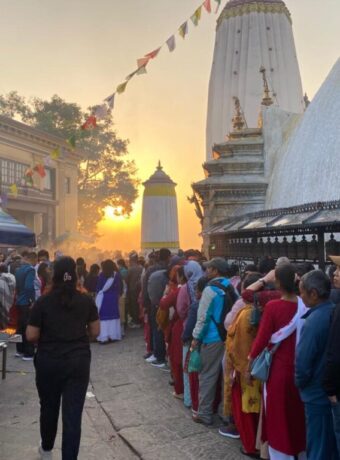
Kathmandu – In every culture, fathers hold a unique and irreplaceable place. They are the silent guardians, the steady hands that guide, the protectors who work tirelessly for their families, and the shoulders that carry unspoken burdens. Gokarna Aunsi or Buwa ko Mukh Herne Din, a day dedicated to the fathers, their unparalleled devotion to their families, their unswerving dedication to their roles, is being celebrated today (August 23), all over the Nepalese community globally. Buwa Ko Mukh Herne Din is literally translated as “the day to see one’s father’s face.” More than a simple day of gifting, Kushe Aunsi is a deeply woven tradition of love, remembrance, and reverence that touches nearly every Nepali household.
Unlike the globally recognized Father’s Day celebrated in June, Kushe Aunsi follows the lunar calendar and falls on the new moon day of the Nepali month of Bhadra, usually in late August or early September. On this day, children return home, no matter how busy their schedules, to honor their fathers with food, gifts, and blessings.
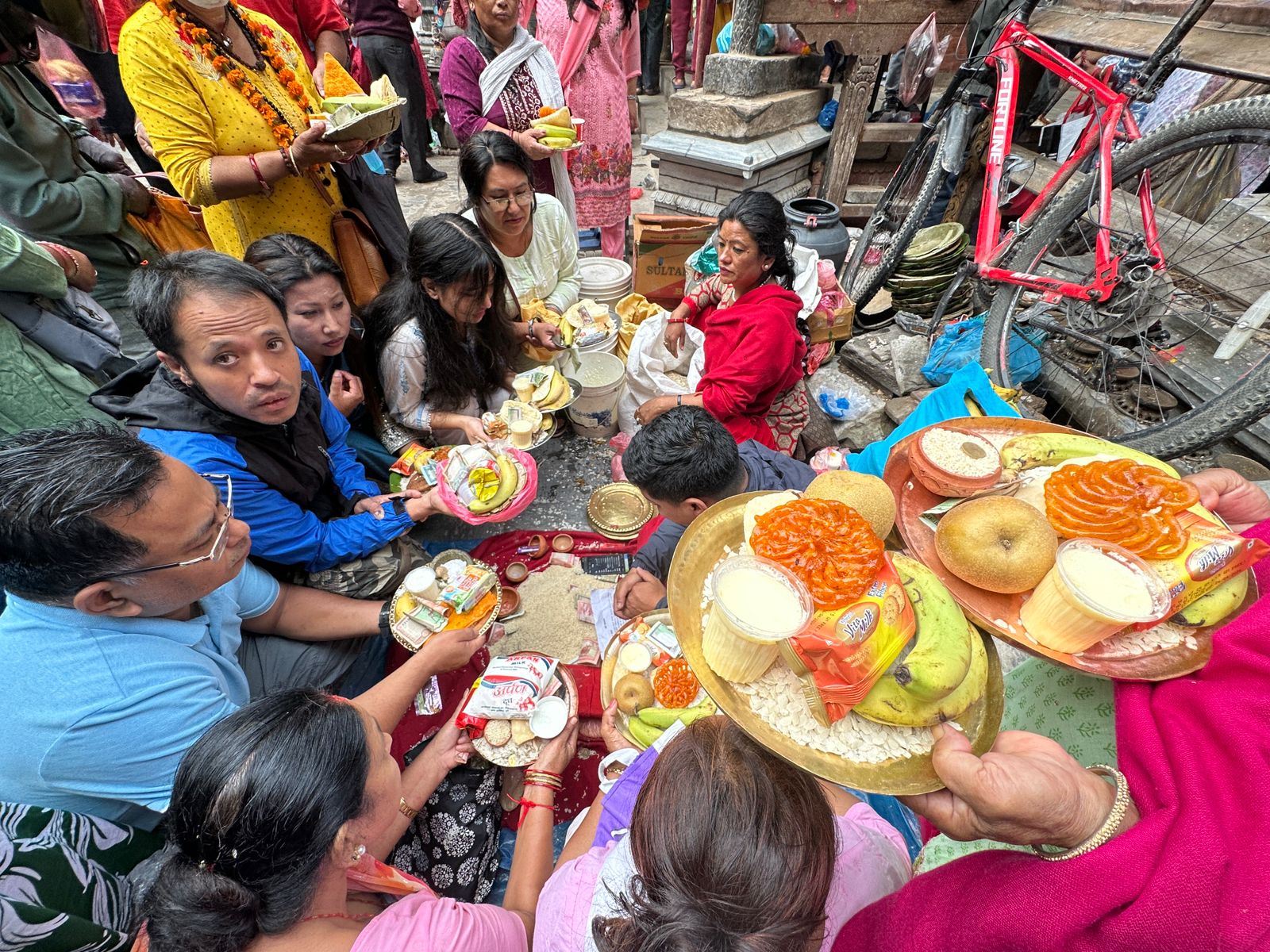
The atmosphere of the day is tender and joyous. Married daughters are often seen walking through the streets, carrying baskets of fruits, sweets, or home-cooked delicacies to their maternal homes. Sons and daughters alike touch their father’s feet in respect, offer tika, and share meals together. It is not just a celebration, but a moment of pause, a reminder of the quiet sacrifices that fathers make throughout their lives.
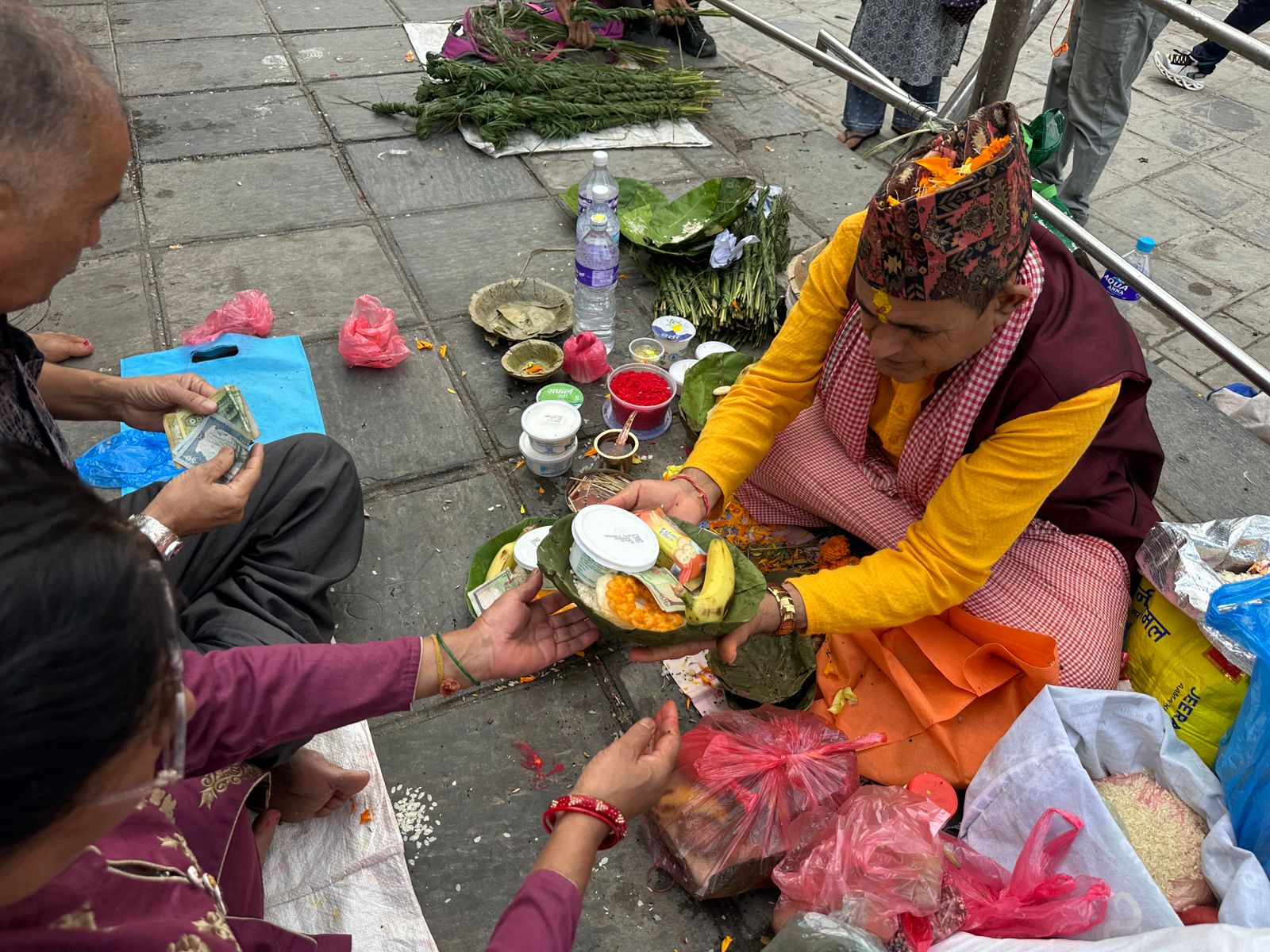
The ritual of giving sagun (a heartfelt gift of traditional assortment that often includes food items sweets and fruits) is an important part of the day. This offering symbolizes prosperity, health, and long life for the father. In return, fathers bless their children with heartfelt wishes for their well-being.
Gokarna Aunsi: Remembering the Departed Fathers
Kushe Aunsi also holds a profound spiritual significance for those whose fathers have passed away. It is then referred to as Gokarna Aunsi, named after the holy temple of Gokarneshwor Mahadev, located northeast of Kathmandu. On this day, sons and daughters whose fathers are no longer alive perform the ritual of shraddha (a yearly ritual to honor the departed).
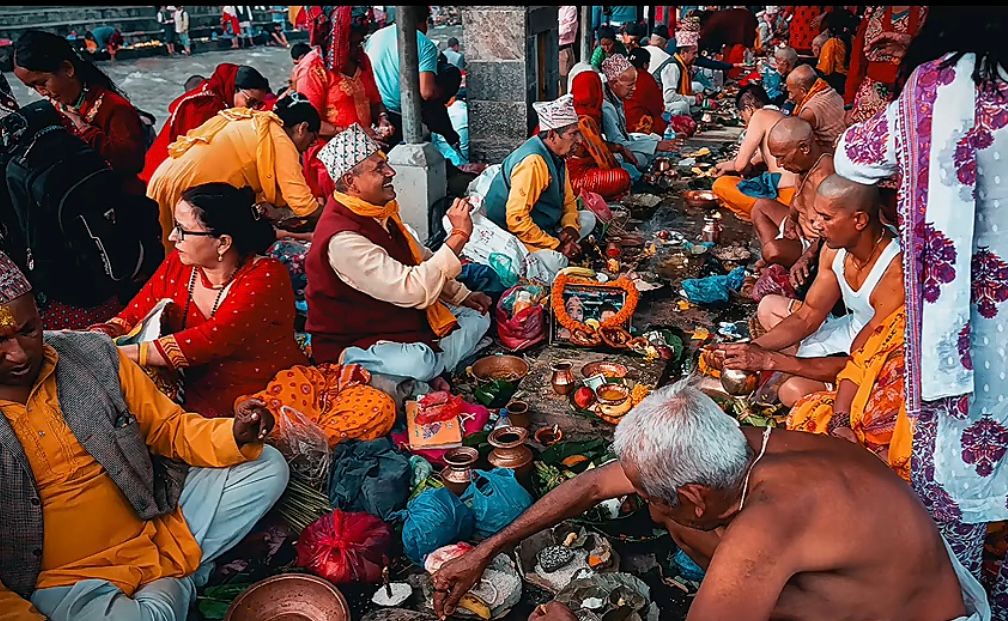
People wake up early, take ritual baths, and visit the Gokarna temple, as well as other sacred sites such as Betrawati in Rasuwa or Bishnupaduka in Dharan. There, they offer water, rice, flowers, and prayers in memory of their fathers. The belief is that these offerings bring peace to the souls of the departed and ensure blessings for the family.
In Nepali culture, there is a saying that those with living parents should not bathe on Aunsi, while those whose parents have passed away must bathe before performing shraddha. This distinction reflects the deep intertwining of love, loss, and spiritual duty that the festival embodies.
The Sacred Touch of Kush
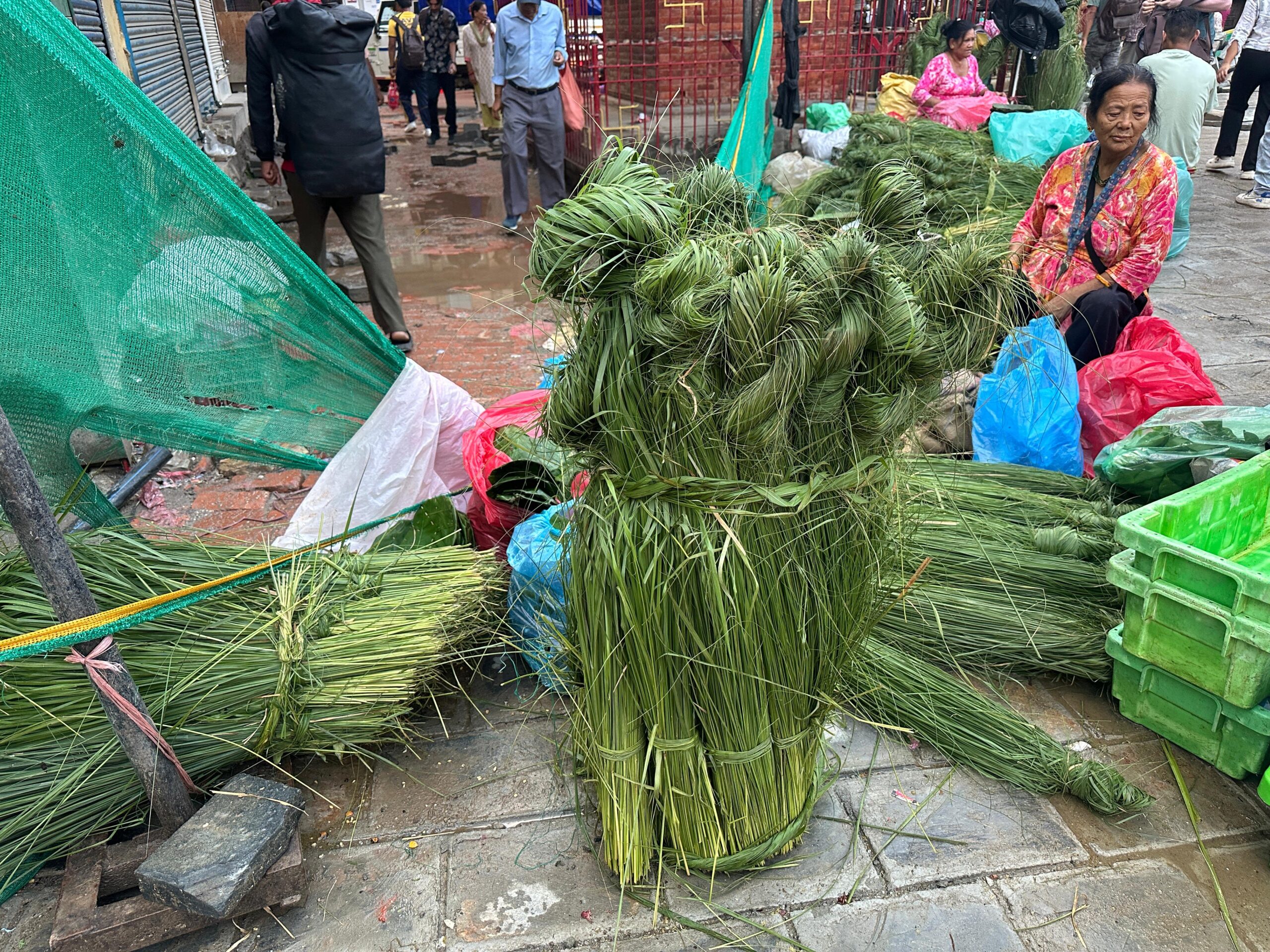
The name Kushe Aunsi comes from Kush, a holy grass considered to be a symbol of Lord Vishnu in Hindu tradition. On this day, families bring Kush into their homes, often cut and distributed by priests. It is believed that Kush carries purity, protection, and good fortune, and keeping it in the household ensures blessings throughout the year.
Thus, while the festival honors fathers directly, it also carries a broader spiritual meaning, linking family love with divine protection.
More than Just a Festival
The beauty of Kushe Aunsi lies in its emotional depth. It is not merely about rituals but about acknowledging the invaluable role fathers play. In Nepal, as in many parts of the world, fathers are often quiet figures, less expressive than mothers, but no less important. They wake early to work in the fields, offices, or abroad. They carry financial pressures, societal responsibilities, and the silent determination to see their children thrive.
Yet, their love often speaks in unspoken ways, a meal provided, school fees paid, a new pair of shoes bought after long hesitation, or a protective presence felt during uncertain times. Kushe Aunsi becomes a moment when children turn back and say, “We see you, we honor you, and we are grateful.”
For those whose fathers are no longer with them, the day brings bittersweet emotions. It is a time of remembrance, prayer, and longing, but also of cherishing the memories that remain alive in their hearts.
The Festival for Nepali Abroad
The emotional weight of Kushe Aunsi extends far beyond Nepal’s borders. For the millions of Nepali working abroad in the Gulf countries, Malaysia, Australia, Europe, or America, the day often comes with a pang of homesickness. Unable to be physically present, they connect with their fathers through phone calls, video chats, or by sending gifts and money home.
These gestures, though distant, carry the same warmth and love. Some send money for medical care, new clothes, or simply to support household needs in honor of their fathers. In doing so, they keep alive the essence of Kushe Aunsi, that fatherhood is a gift that deserves recognition, no matter where in the world one may be.
Kushe Aunsi is more than a festival; it is a heartfelt reminder of love, duty, and connection. It reminds children to express gratitude while there is still time, and it teaches society that fathers, often less celebrated than mothers, deserve equal reverence and affection.
In every offering of sweets, every tika, every shared meal, and every whispered blessing, Kushe Aunsi ties together generations. It connects the living with the departed, the present with tradition, and the earthly bond of family with the spiritual belief in divine guardianship.
As the new moon night of Bhadra arrives each year, homes in Nepal light up not with lamps, but with the glow of love and gratitude for fathers, the unsung heroes of countless lives.