Kathmandu, Today, May 2, marks Nepal’s National Information and Communication Technology (ICT) Day. Celebrated across the country with various programs under the theme “Expansion of Information Technology: Foundation of Sustainable Development,” this day commemorates the historic arrival of computers in Nepal and highlights the progress the country has made on its journey toward digital transformation.
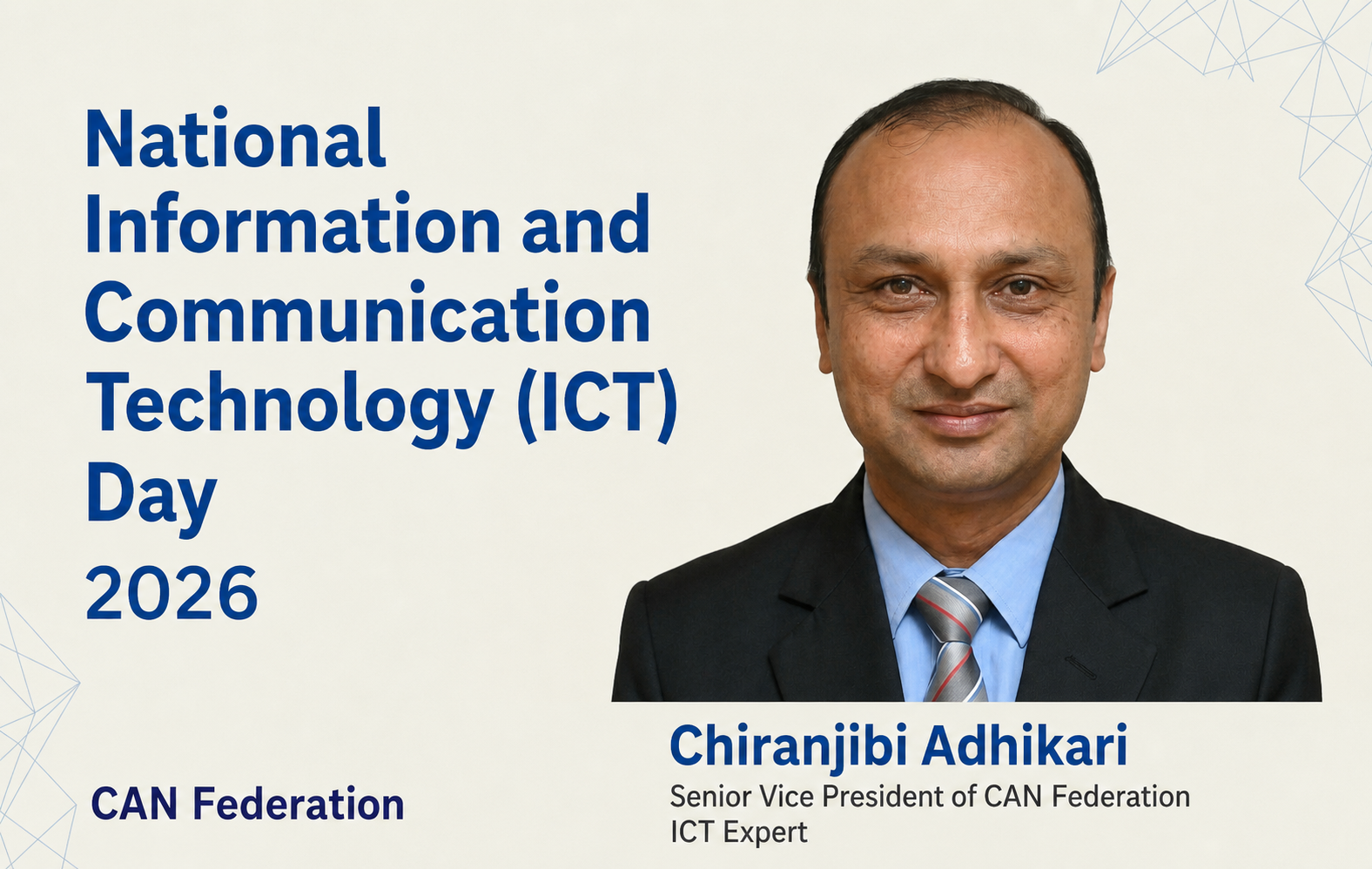
On this special occasion, we present a feature article based on the insights of Chiranjibi Adhikari, Senior Vice President of CAN Federation and IT expert —and a roadmap for Nepal’s digital future:
1. Historical Context and Relevance of ICT Day
Nepal’s history with technology is relatively recent. In 1971 (B.S. 2028), the IBM 1401 computer was introduced for the first time to conduct the national census. That historic event, combined with the founding of CAN Federation in the month of May, became the basis for observing May 2 as National ICT Day.
This observance, championed by CAN Federation for over a decade, is now widely celebrated at the government level as well — a clear sign that the state recognizes the importance of the technology sector. The ICT Week, which begins as early as April 24, has played a vital role in spreading digital awareness to communities across the country.
2. Technology’s Leap: From Alarm Clocks to AI
Technology has brought fundamental change to everyday life in Nepal. A society that once woke to the crow of a rooster now rises to the alarm of a smartphone.
- Digital lifestyle: Online banking, e-commerce, telemedicine, and online education are no longer luxuries — they have become necessities.
- Remarkable tools: From checking health metrics on a smartwatch to applications in robotics and Artificial Intelligence (AI), Nepal is steadily aligning itself with global trends.
- Economic contribution: The technology sector’s share of Nepal’s GDP and the potential for software exports are showing strong growth.
3. Policy Reforms and the Dream of “Digital Nepal”
According to CAN Federation Senior Vice President Chiranjibi Adhikari, policy stability is essential for the growth of the technology sector.
“If we are to make Nepal prosperous through information technology, the government can no longer afford to delay increasing investment and removing policy barriers. Technology is no longer a luxury — it is the engine of development.” — Chiranjibi Adhikari
The draft National AI Policy 2026 and the E-Commerce Directive 2082, recently submitted to the government under Adhikari’s leadership, have helped chart the course for Digital Nepal. Developing domestic tech hubs and promoting startups to prevent the brain drain of skilled professionals abroad remain the foremost challenges of today.
4. Cybersecurity and Responsible Use
As technology advances, so too do misuse and digital risks. Adhikari has consistently emphasized compliance with the National Minimum Security Standards (NMSS).
- Education: Cybersecurity education must be made compulsory from the school level onward.
- Awareness: Since the misuse of technology poses risks to personal privacy and national security, vigilance is essential.
- Security infrastructure: Robust firewalls and data centers are needed to protect both government and private data.
5. Conclusion: The Road Ahead
There is an urgent need to work toward making Nepal a leading technology-exporting nation in South Asia by 2030. The dream of Digital Nepal can only be realized through collaboration between the public and private sectors under a PPP (Public-Private Partnership) model.
May this ICT Day inspire us all to make proper use of technology as we work together to build a prosperous and well-governed Nepal.