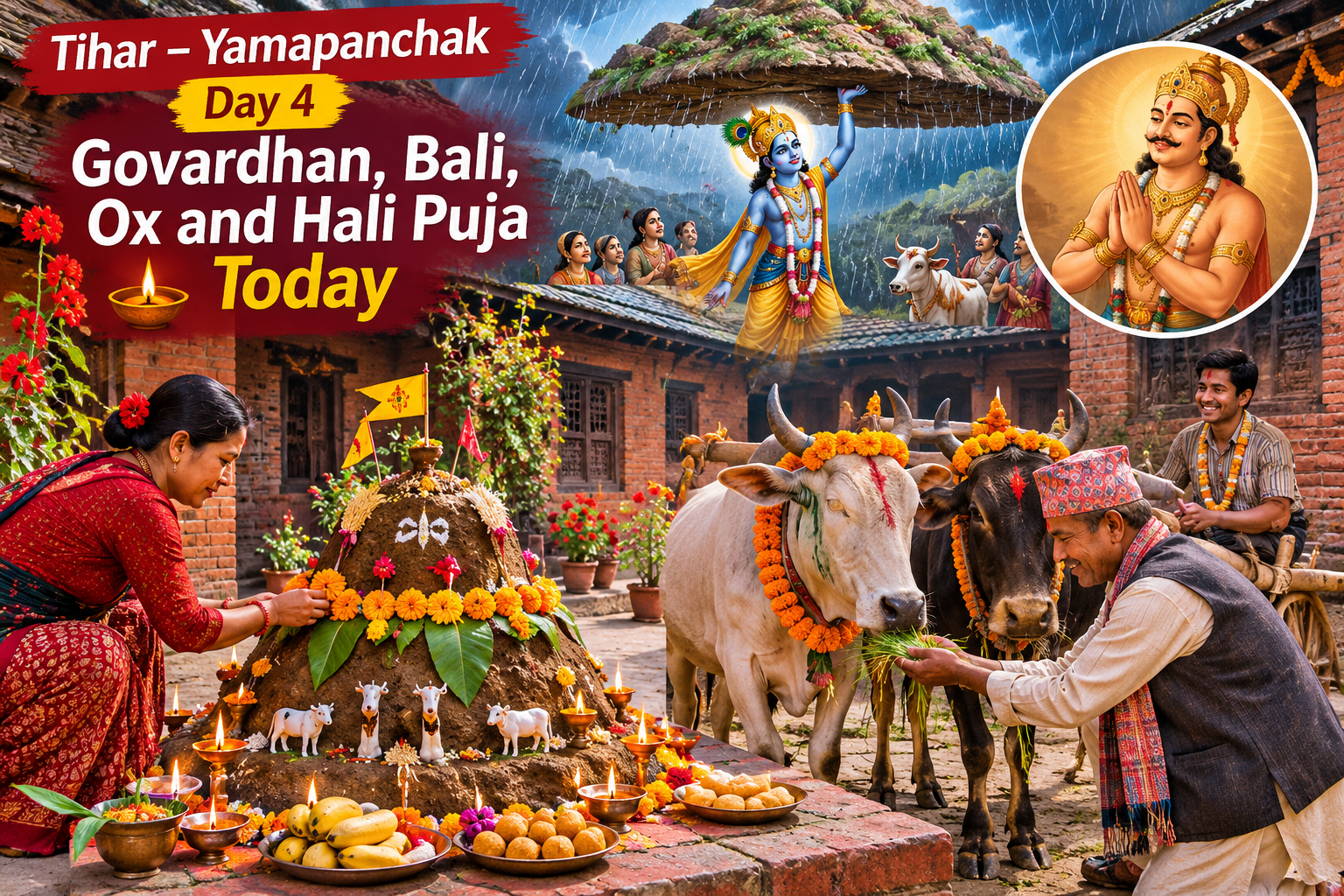
Kathmandu – Hindus across Nepal are observing Govardhan Puja, Bali Puja, Goru Puja and Hali Tihar on the fourth day of Yamapanchak, the five-day Tihar festival.
The rituals fall on Kartik Shukla Pratipada and recognise religious traditions as well as the contribution of oxen and farmers to agricultural life.
For Govardhan Puja, families clean and prepare their courtyards and make a symbolic mountain from cow dung. The mound is decorated and worshipped as Govardhan Hill.
According to Hindu tradition, Lord Krishna lifted Govardhan Hill to shelter the people of Gokul from heavy rainfall. Worshippers observe the festival in remembrance of that act of protection.
Devotees also honour King Bali. Religious tradition holds that Lord Vishnu permitted Bali to rule the earthly realm during the five days of Yamapanchak. The popular Deusi verse about being sent by Bali Raja is associated with this belief.
Oxen, which have traditionally helped farmers plough fields throughout the year, are worshipped and offered special food. The animals are also associated with Nandi, the bull regarded as Lord Shiva’s vehicle.
Farmers and ploughmen are likewise recognised for their work in food production. This observance is known as Hali Tihar, highlighting the importance of agricultural labour and the relationship between people, animals and the land.
Together, the rituals reflect Tihar’s combination of devotion, gratitude and respect for the living beings and livelihoods that support communities.